

If you need to push dirt and grade a site, a mini bulldozer might be your first thought. Until you realize you also need to dig, load, and move material around the same site. That is where skid steers and excavators win out. Here is how to decide which one actually fits your work.
What Is a Mini Bulldozer?
A mini bulldozer is a small tracked machine with one job: pushing and grading dirt. It has tracks for grip, a blade up front, and not much else.
In practice, that means jobs like these:
- lot grading
- backfilling
- landscaping prep
- driveway shaping
- trail dressing
- light land clearing
- surface soil movement on private land
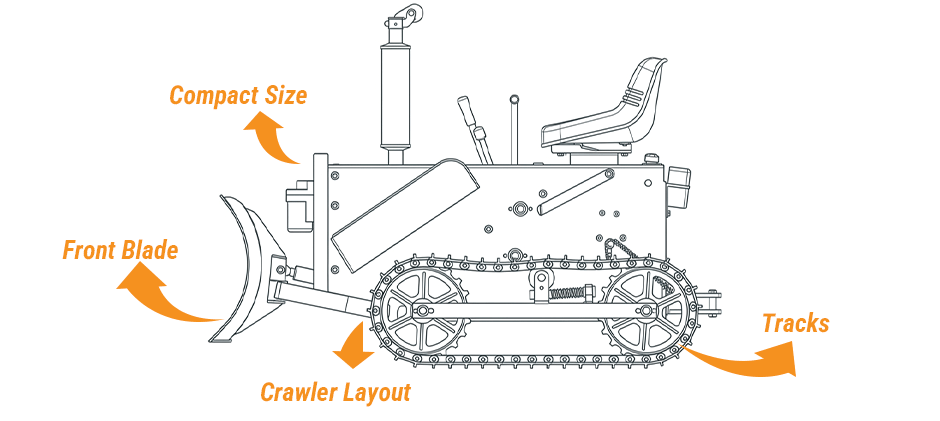
The main traits of a mini bulldozer are not complicated. It is a compact tracked machine with a blade, designed to stay close to the ground and do steady surface work.
Main Traits Of A Mini Bulldozer
| Feature | What It Means In Real Work |
|---|---|
| Tracks | Better grip on dirt, mud, and uneven ground |
| Front blade | Better control in pushing and grading |
| Compact size | Easier work in small lots and narrow access areas |
| Crawler layout | Good balance and traction in low-speed ground work |
| Narrow job focus | Best for steady surface work, not every job on site |
That last point matters most. A mini bulldozer can be very effective when the work repeats around grading and pushing. But if the machine also needs to load, carry, dig, or run many different tools through the same week, its narrow job focus becomes a limitation.
There is also an important size difference within the dozer category. Large crawler dozers are built for much heavier work. A mini bulldozer sits much lower in size, making it easier to move, easier to fit into smaller sites, and more practical for residential-scale or light commercial ground work.
Why Are Mini Bulldozers Rare?
Mini bulldozers are rare because compact equipment needs have changed. The issue is not that a mini dozer stopped being useful. The issue is that many jobs now demand one machine that can cover more types of work.
A mini bulldozer is strongest when the work stays centered on the blade. It pushes well, grades well, and works effectively in steady surface shaping. But many small-job situations also include loading material, carrying supplies, trenching, stump removal, attachment work, and cleanup. Once those needs become part of the same workflow, a dedicated dozer becomes harder to justify as the first machine.
What Changed In The Market?
Three changes made mini bulldozers less common in everyday use.
Tracked skid steers became more flexible
A tracked skid steer can grade, carry, load, backfill, and run many attachments. That gives one machine a broader role across changing jobs.
Mini excavators became the first choice for digging work
When the work involves trenching, drainage, roots, footings, or ditch cleanup, a mini excavator is usually the more direct and efficient option.
One-machine decisions became more important
On many properties and small work sites, one machine has to cover as much work as possible. That naturally favors machines with wider capability.
This shift did not remove the mini dozer from the market. It simply pushed it into a more specialized role.
What Replaced the Mini Bulldozer for Most Small Jobs?
Tracked skid steers and mini excavators replaced the mini bulldozer for many small jobs. They did not replace it everywhere, but they became the more common choice in situations where one compact machine has to do more than push soil. If you are looking for mini bulldozer alternatives, these two machines are usually the first to consider.
A tracked skid steer usually takes over mixed surface work. A mini excavator usually takes over when digging is the priority. If you have spent any time comparing a mini bulldozer vs a tracked skid steer, you already know the main trade-off: blade control versus versatility.
Tracked Skid Steers Took Over Mixed Surface Work
A tracked skid steer is often the better option when the work changes from one task to the next. It can handle grading, loading, carrying, cleanup, and attachment work in one machine.
With a bucket, forks, rake, or 6-way dozer blade skid steer setup, a tracked skid steer can handle:
- lot cleanup
- finish grading
- driveway repair
- backfilling
- moving bulk material
- loading and carrying
- snow work
- brush work
With the right tracked skid steer attachments, one machine can handle grading, loading, carrying, and cleanup without switching machines. On many properties and small jobs, the tracked skid steer has become the more practical choice. But versatility also means more wear—on the undercarriage, hydraulic system, and attachment points. Keeping it running reliably starts with using quality skid steer parts. Whether you’re operating a full-size unit with rubber tracks or a compact machine for tighter spaces, finding reliable tracked skid steer parts is just as important to prevent unnecessary downtime.
A mini bulldozer may still feel more dedicated to pushing and shaping soil, but for covering most of the weekly workload, a skid steer usually wins.
Mini Excavators Took Over Digging First Decisions
A mini excavator did not replace the blade function of a dozer. It replaced the need to choose a dozer first when the real work starts below grade. If the jobs involve trenches, drainage, footing prep, roots, stumps, or ditch cleanup, a mini excavator is usually the better first machine. But the machine is only as reliable as the parts that keep it going—from the undercarriage to the bucket attachment. Whether it’s a track motor, a cylinder seal kit, or a set of bucket teeth, having access to quality aftermarket mini excavator parts makes the difference between finishing the job and waiting on repairs.
This point should stay very clear: If the main need is to dig trenches, choose a mini excavator before looking at a mini bulldozer.
Even Small Dozer Buyers Often Mean Something Else
Not every mini bulldozer is aimed at the same kind of work. Some smaller ride-on machines are used more for private land maintenance than for standard jobsite use.
That is where machines like the Struck S-Series often come into the conversation. These smaller ride-on machines can be useful for:
- grading a driveway
- garden work
- light snow plowing
- pulling logs
- private property maintenance
Some can also use tools such as:
- rippers
- blades
- rakes
- box scrapers
- draw-bars
- receiver hitches
This does not make them the right answer for every job. It simply shows that the mini bulldozer category can include smaller machines intended for lighter, more personal land work as well as standard compact dozers.
Mini Bulldozer vs Tracked Skid Steer vs Mini Excavator
The right machine depends on the work that comes up most often. If you match the machine to the task that repeats every week, the decision becomes much clearer.
Quick Comparison Table
| Machine | Best Main Use | Best Fit For | Main Limitation |
|---|---|---|---|
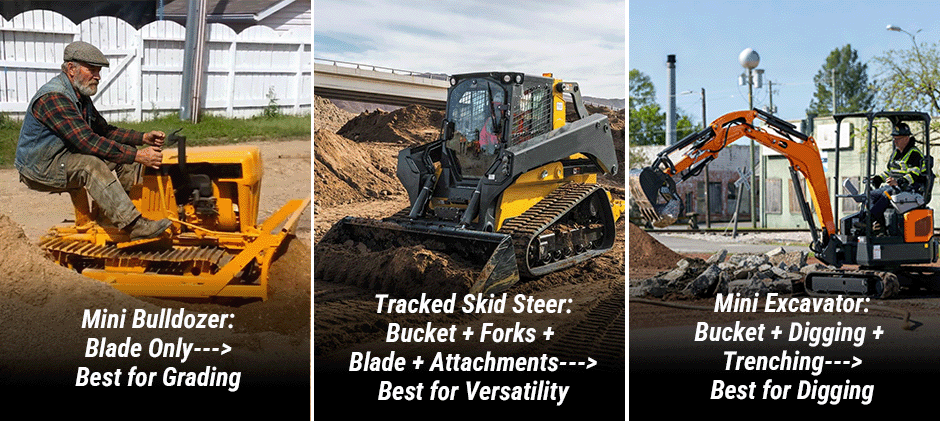
| Mini Bulldozer | Pushing and grading | Steady soil shaping and backfilling | Less flexible across many job types |
| Tracked Skid Steer | Multi-use surface work | Grading, loading, carrying, attachments | Weaker in deep digging |
| Mini Excavator | Digging and trenching | Utility work, drainage, roots, narrow access digging | Slower for broad surface grading |
The table shows the quick comparison. Now let us match each machine to your actual work.
Choose A Mini Bulldozer If
Choose a Mini Bulldozer if the work is mainly steady pushing, shaping, and grading.
Good examples include:
- lot grading
- backfilling
- landscaping prep
- driveway shaping
- trail dressing
- surface soil movement on private land
A mini dozer makes the most sense when the blade is the center of the job. If the work begins with pushing and ends with a shaped surface, this machine still has a clear role.
Choose A Tracked Skid Steer If
Choose a tracked skid steer if one machine must cover grading, loading, carrying, and attachment work.
This is often the strongest option when one compact machine needs to do the work of several.
Typical reasons to pick it:
- one machine must do many surface tasks
- loading matters as much as grading
- attachment flexibility matters
- the machine works across changing properties or crews
If the work changes often, the tracked skid steer usually brings more overall value than a dedicated mini dozer.
Choose A Mini Excavator If
Choose a mini excavator if the main need is trenching, digging, stump work, or drainage.
Typical reasons to pick it:
- trench work comes first
- utility lines are common
- digging in tight areas matters
- below-grade work is more frequent than grading
This is the clearest dividing line. If the work starts underground, a mini excavator is usually the right first answer.
The skid steer vs mini excavator decision is straightforward. If your work stays on the surface, choose the skid steer. If it goes below grade, choose the excavator.
When a True Mini Bulldozer Still Makes Sense?
A true mini bulldozer still makes sense when the work keeps returning to blade control, traction, and surface shaping.
It still makes sense when:
- the machine stays on one property
- most tasks involve grading or shaping soil
- another machine already handles trenching
- loading is not a daily need
- simple crawler blade work is more useful than attachment variety
That can apply to residential construction support, lot grading, landscaping prep, backfilling, and driveway work. It can also fit smaller ride-on use for garden work, snow plowing, or light land maintenance.
Closing Thoughts
Trenching is your main job? Start with an excavator. If your week mixes grading, loading, and carrying, a skid steer makes more sense. And if you mostly push dirt and shape driveways, a mini dozer is still worth owning. For parts support across compact and off-road equipment, FridayParts is a practical option to check. It supplies aftermarket parts for many heavy equipment brands, including XCMG mini excavator parts, with affordable pricing, broad compatibility, and a large inventory that can help keep work moving.
