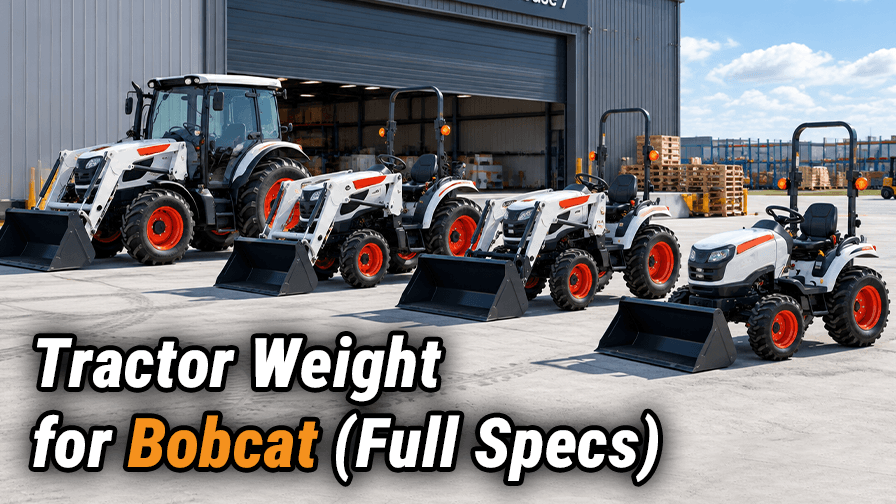
Bobcat tractor weight. Base operating weight is where the arithmetic starts, not where it ends. Anything travelling with the tractor belongs in the total the trailer has to carry. Build the number in stages. Base operating weight. Tractor with fluids, no attachments. Operating weight with loader. Base plus front loader frame, arms, bucket, and quick-attach. Operating weight with backhoe and ballast. Previous stage plus rear backhoe or ballast box. Actual transport weight. Previous stage plus fuel, tools, and any mounted implements. For each attachment, pull the specification sheet for the exact model you plan to mount. A front loader for a CT2025 does not weigh the same as a loader for a CT5558. Published loader and backhoe weights are available from Bobcat for each matched combination. Use those numbers, not estimates. With an actual transport weight in hand, two totals need to be kept separate. Trailer load equals tractor actual transport weight. Combined tow weight equals trailer load plus trailer empty weight. Mix them up, and the rest of the calculation goes wrong. Start with the machine. 4,685 lb. Add the equipment trailer. 2,200 lb. That is 6,885 lb combined, before fuel, tools, or chains. Two numbers then have to work. The trailer’s payload rating covers the machine on the deck. The tow vehicle’s GCWR covers the whole combination. Trailer GVWR must exceed the combined tractor and attachment weight plus trailer tare. Payload capacity, not GVWR alone, must cover the load on the deck. Trailer axle ratings must support the loaded weight on each axle. Electric or hydraulic brakes should be rated for the maximum towed weight.