

For a beginner around 5 feet tall and 110 pounds, the best ATV for beginners is usually a 250cc to 400cc model with an automatic CVT. Not a big 4×4 utility quad, and not a powerful manual sport model. If the plan is to ride gravel roads and rocky mountain trails, a smaller rec-utility ATV is usually easier to control at low speed than a sport model. Just as important, it is easier to stop, turn around, and recover when the trail gets awkward. Below, the choice is narrowed down clearly, including 400EX vs Raptor 350 vs TRX250X, whether a 400-class automatic utility quad is actually the better option, what to do if manual shifting never clicks, and a simple height and weight fit table.
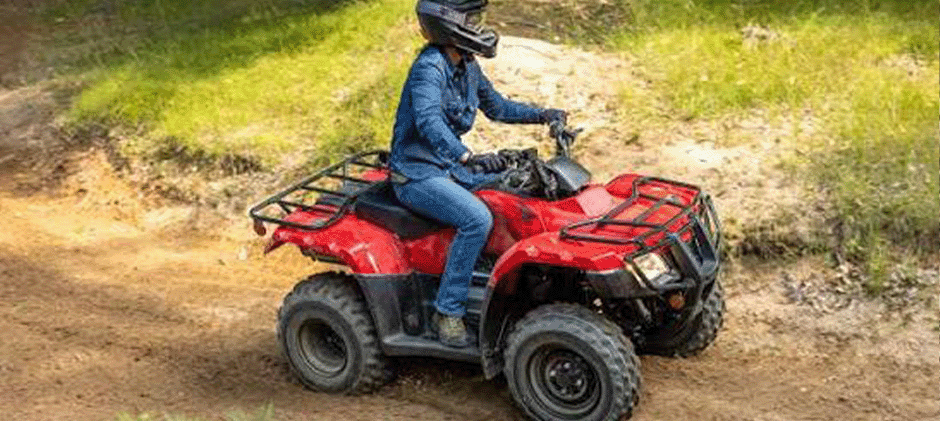
What Size ATV Is Best For Beginners?
The best first ATV feels easy before it feels fast. That matters most for smaller adults and anyone with little off-road time. Balance when stopped, light steering, and predictable throttle are worth more than squeezing the biggest machine into your budget.
For this body size, the most useful checkpoints are:
- Low or manageable seat height
- Slim midsection
- Predictable throttle
- Light steering effort
- Reasonable overall weight
- Easy reach to controls
- Confident footing at stops
This is why a smaller ATV can be the best quad for small riders, even if its engine size looks modest.
Is a 250cc ATV Big Enough for an Adult Beginner?
Yes. For riders under 130 pounds, a 250cc ATV is often enough for beginner trail riding, including rocky ground and gravel roads. A lighter machine is easier to recover from a tip-over, easier to turn around on narrow sections, and less tiring over a full ride.
Good examples in this range include the Honda Recon 229cc and Honda TRX250X 229cc. A compact rec-utility model such as the Recon can be a very practical starting point for an adult beginner who values control more than speed.
Height And Weight Fit Table
| Rider height and weight | Best starting engine range | Best transmission | Best ATV style | Buying note |
|---|---|---|---|---|
| Under 5’1″ and under 130 lb | 200cc to 300cc | Automatic preferred | Small rec-utility or mild sport | Best for confidence and easy control |
| 5’1″ to 5’5″ and 120 to 160 lb | 250cc to 400cc | Automatic or mild manual | Rec-utility or beginner sport | Most flexible range |
| 5’5″ and up with some experience | 300cc to 500cc | Automatic or manual | Wider mix of trail ATVs | Fit still matters more than cc |
| Small rider on steep loose trails | 250cc to 400cc | Automatic preferred | Rec-utility, 2WD or light 4WD | Choose traction without too much bulk |
For a rider at 5’0″ and 110 pounds, the strongest starting range is usually 200cc to 300cc, with 250cc to 400cc working if the ATV still feels narrow and manageable in person.
Which Is Better: 400EX, Raptor 350, or TRX250X?
If the choice is only between Honda 400EX, Yamaha Raptor 350, and Honda TRX250X, the TRX250X is the best fit for this rider profile.
Direct Ranking for a 5-Foot, 110-Pound Beginner
- Honda TRX250X
- Yamaha Raptor 350
- Honda 400EX
Why the TRX250X Comes First
The TRX250X has a 229cc engine, a relatively light chassis, and a friendlier power delivery than the other two. It still gives a sport-quad feel, but it’s less likely to overwhelm a smaller beginner on gravel or rocky roads. If a sport quad is the goal, this is the safest of the three.
Why the Raptor 350 Comes Second
The Raptor 350 gives more power than a TRX250X and can work for riders with some clutch confidence. Still, for a small rider who is fully new to ATVs, it adds more engine and more demand than the situation really needs.
Why the 400EX Comes Last
The 400EX is a very capable ATV, but for this rider profile it is usually too much machine to start on. It asks for better throttle discipline, better line choice, and more confidence when traction gets loose. For a first ATV on mountain gravel, that is not a good trade. For riders who do choose a sport platform, quality sport ATV/UTV parts help keep the machine reliable over time.
Quick Comparison Table
| Model | Engine class | Transmission | Beginner fit for 5’0″, 110 lb rider | Verdict |
|---|---|---|---|---|
| Honda TRX250X | 229cc | Manual | Best of the three if choosing sport quads | Good with caution |
| Yamaha Raptor 350 | 350cc class | Manual | Manageable for some, but less forgiving | Second choice |
| Honda 400EX | 400cc class | Manual | Too much for most small first-time riders | Not recommended |
Is a 400-Class Automatic Utility Quad the Better Choice?
In many cases, yes. A 400-class automatic utility quad is often the better first ATV for this exact rider, as long as the machine does not feel too heavy or bulky in person.
That is the key. Automatic helps, but only if the overall machine still fits the rider.
Why It Is Often the Better Answer
A CVT automatic removes the hardest part of the learning curve for many beginners. Instead of thinking about clutch timing and hill restarts, the rider can focus on:
- Throttle control
- Braking smoothly
- Picking lines through rocks
- Staying relaxed on climbs
- Reading loose gravel and changing traction
On mountain trails, those skills matter more than learning to shift on day one.
When a Utility Quad Wins
A smaller or mid-size utility quad is often the better answer if the rider wants:
- Easier starts on hills
- Better comfort on rough terrain
- Less stress in stop-and-go riding
- More stable low-speed control
- A simpler learning process
This is why models such as the Arctic Cat Alterra 300, Kawasaki Brute Force 300, Kymco MXU 270i, and CFMOTO CFORCE 400 are easier entry points than a manual sport quad for many first-time riders.
When It Is Not the Better Answer
A utility quad is not the better choice if:
- It feels top-heavy
- The rider cannot shift weight easily
- The bars and bodywork feel too wide
- One-foot stops feel awkward
- The ATV is hard to reposition on uneven ground
So, is a 400-level automatic utility quad the better choice here?
Usually yes, but only if it feels physically manageable. If the 400-class model feels bulky, a 300-class automatic utility ATV is often the smarter buy.
Routine service after the first months of trail use often centers on brake pads, drive belts, and CV axle parts, especially on automatic trail ATVs that see dust, gravel, and repeated hill starts.
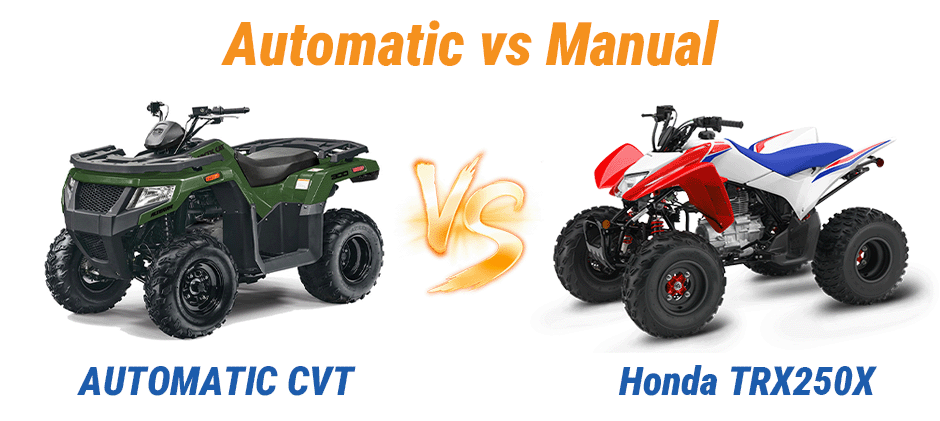
If the rider is worried about learning to shift, that concern should be taken seriously. For most new riders, an automatic ATV for beginners is the better choice.
A CVT automatic removes one task from the learning process. On loose climbs and rocky trails, that helps the rider focus on:
- Throttle control
- Braking timing
- Body position
- Picking clean lines
- Reading traction changes
Manual sport quads still have a place, but they ask more from a beginner on day one.
What If She Cannot Learn Manual?
Then do not force a manual first ATV.
That is the most direct answer. A new rider does not need to start on a clutch machine to become a good trail rider. If manual shifting causes stress, stalls, or panic on a hill, it gets in the way of the skills that matter most.
The better plan is simple:
- Start on an automatic CVT ATV
- Build confidence on gravel and trail terrain
- Learn braking, line choice, and throttle control first
- Move to manual later only if there is still interest
That path is safer and usually faster in the real world. Plenty of capable riders stay with automatic ATVs long term because they suit the terrain and riding style better.
When Manual Still Works
A manual machine can still make sense if the rider:
- Already rides dirt bikes or motorcycles
- Wants a lighter sport feel
- Will ride smoother terrain
- Actually enjoys learning shifting skills
The Honda TRX250X is one of the better beginner-friendly sport choices because it stays light and manageable. Still, for rocky trail use, manual shifting is often the extra complication a smaller beginner does not need.
Utility Quad Vs Sport Quad on Gravel and Rocky Trails
This buyer question usually comes down to two paths:
- Sport quad – Lighter, quicker steering, more playful
- Utility quad – More stable, more comfortable, often automatic, often better on rough ground
For a small beginner rider, the choice is not simply sport versus utility. It is whether the machine helps or fights the rider in slow technical terrain.
Quick Comparison Table
| ATV type | Best for | Main trade-off |
|---|---|---|
| Small sport quad 200cc to 250cc | Light handling, easier body movement, fun trail use | Often manual transmission |
| Mid-size rec-utility 250cc to 400cc | Beginner control, comfort, light work, rocky trails | Heavier than sport models |
| Full-size utility 500cc+ | Big loads, rough work, more power | Often too heavy for smaller beginners |
A 400EX or Raptor 350 can be fun, but both push the rider toward a sport platform with more skill demands. A TRX250X is easier to manage than larger sport quads, but it is still a manual machine. On broken gravel roads and mountain trails, a smaller automatic utility model is often the easier and smarter first choice because it reduces stress and lowers the workload.
2WD Vs 4WD for Trail Riding
A lot of people assume a 4WD ATV for trail riding is always the right answer. It is useful, but not always necessary for a 110-pound beginner.
Choose 2WD if:
- Trails are mostly dry
- The terrain is rocky but not muddy
- Lower weight matters more than max traction
- The rider is still building confidence
Choose 4WD if:
- Climbs are steep and loose
- Trails stay wet or rutted
- The route includes mud, washouts, or slick rock
- Traction matters more than agility
The catch is simple: 4WD often adds weight and bulk. That can help traction but hurt confidence for a smaller rider. For many beginners, a compact 2WD or light-duty 4WD rec-utility ATV is a better first machine than a large full-size 4WD utility quad.
What To Check When Buying a Used Beginner ATV
For a first ATV, used can be a smart buy if the machine is clean and simple. It becomes a bad buy when the ATV has hidden wear from mud, towing, or neglected maintenance.
Used ATV Checklist
Check these before purchase:
- Cold start behavior
- Smooth idle
- Clean takeoff from a stop
- Brake feel and stopping consistency
- Tire wear pattern
- Steering play
- Suspension looseness
- CV boot cracks or grease leaks
- Bent frame tabs or skid plate damage
- Signs of water ingestion or heavy mud use
For Automatic CVT Models
Pay extra attention to:
- Belt engagement feel
- Jerky launches
- Slipping under load
- CVT housing condition
- Service history for drive belt replacement
For 4WD Utility Models
Inspect:
- Front differential operation
- Axle clicks on turns
- Torn boots
- Wheel bearing play
- Condition of front CV axles
A clean smaller ATV with honest maintenance is usually a better first machine than a bigger, flashier quad with unknown abuse.
Final Words
For a beginner around 5 feet and 110 pounds, start with a smaller automatic utility ATV. If a manual is a must, the TRX250X is the stronger sport-quad choice. The 400EX is not a good first pick, and the Raptor 350 is more than most new small riders need. Start with fit, calm power, and easy control. When routine service comes up, FridayParts is worth a look for affordable aftermarket parts, wide compatibility, and a broad inventory of trail-use items such as brake pads, drive belts, and CV axle parts.
Also read: ATV Weight Guide: Average Weight and Limits
