

Does the way you install your mower blade matter? Absolutely yes. We’ll go over the difference between rotational timing and vertical orientation, explain the correct lawn mower blade position, show you which way do mower blades go on, and discuss some common installation mistakes.
Which Way Do Mower Blades Go On?
This is the most important part of fitting blades. Get this wrong and your grass will turn out badly. It can also cause bad vibration and put extra stress on your mower engine and deck parts.
Which Side of the Lawn Mower Blade Is Up?
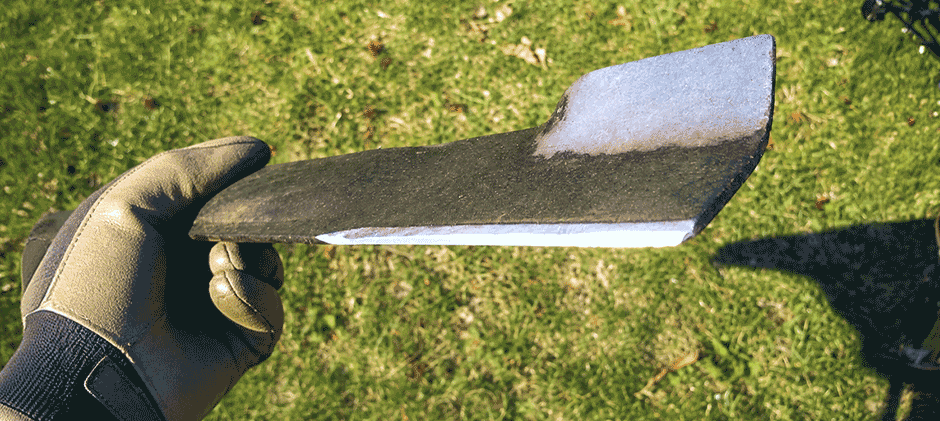
Take a side look at the blade. Each end has a little upward bend on the back edge. People usually call this the “wing” or “sail”. The side with those bent‑up wings always faces up, towards the mower deck. Think of it like a fan. When the blade spins fast, those wings create lift and suction. That pulls grass blades up so the sharp edge can cut cleanly. Flip the blade backwards and the wings push air down. Grass gets pressed flat and won’t cut right.
How to Know If Mower Blade Is Upside Down?
Still not sure? Try these quick checks:
- Check the wings: Like we said, those curved lift wings point up toward the deck, away from the ground. The sharp cutting edge sits on the other side, facing down at the grass.
- Check for stamped marks: Lots of brands stamp notes right onto the blade. Keep an eye out for “GRASS SIDE”, “BOTTOM”, or “THIS SIDE UP”. These marks can wear off over time, but they’re a sure reference on new blades.
- Find the cutting edge: The sharp angled edge needs to hit grass first as the blade spins. The thicker, dull edge trails behind. When you fit it right with wings up, the sharp edge lines up perfectly for cutting.
- Feel the dull top edge: If mounted correctly, the side facing the mower deck is the dull, non‑sharpened edge.
Does Blade Placement Matter?
Let’s make this simple and split “blade placement” into two separate things:
- Vertical Orientation (which side goes up or down): If you flip the blade upside down, it won’t actually cut grass. It will just bash and rip the grass leaves, leaving your lawn ragged and damaged. Mower blades are built a certain way — they have a sharp cutting edge and that lift wing for airflow. Both need to face the right direction to work properly.
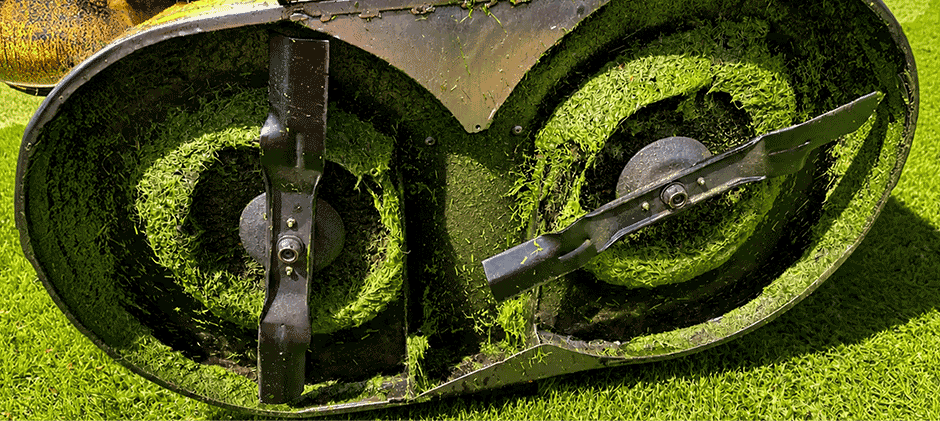
- Rotational Position (timing the blades): This is about how your blades sit next to one another, like lined‑up parallel or set at 90 degrees. For almost all regular and mid‑grade riding mowers, this doesn’t matter at all. Most mower decks run on a V‑belt that spins the blade spindles. The belt slips a little every time you turn the blades on. Even if you line every blade up perfectly by hand, their positions will move around just a few minutes after you start mowing.
The only exception is certain commercial or special‑use mowers with a timed deck. These use a cogged/toothed belt with zero slip, so blades stay locked in place relative to each other. Blades on these decks overlap, so timing is critical to keep them from crashing into one another. If your mower doesn’t have that cogged drive belt, you don’t need to mess with blade timing.
Blade Position on 3 Blade Mower
This same rule holds true for regular 3‑blade mowers. You don’t have to worry about how the blades line up against each other. You can fit them any way you want — all pointing forward, arranged like a Y, or totally mixed up. Since the V‑belt slips, they won’t stay lined up no matter how you set them.
Now, some owner manuals show pictures with blades set in a certain position, and people often get the wrong idea. That diagram is not telling you how to line blades up every time you install them. What it actually means is you should swap blades between spindles whenever you sharpen them. It’s just like rotating your car tires. This trick makes all your blades wear down more evenly over time. Blades near the discharge or trim side usually take more hits and wear out faster. Moving them to different spots helps your whole set last longer.
Blade Position on 2 Blade Mower
If your two‑blade mower uses a regular V‑belt, it follows the exact same rules as a three‑blade deck. The two blades sit offset from each other so their cutting paths overlap a little, but there’s enough space between them. They can never hit one another, no matter which way they spin.
So there’s no need to set them perpendicular or parallel to each other. Just bolt each blade on tight, and your mower will work fine. Don’t stress about lining the blades up with one another. What really matters is making sure every single blade is mounted the right way on its spindle.
Common Mower Blade Installation Mistakes
Watch out for these typical mistakes so you can mow safely and get nice clean results:
- Putting the blade in upside down: You’ll end up with ragged, torn‑up grass. Always double‑check the lift wings are pointing toward the mower deck.
- Tightening the bolt wrong: If the bolt is too loose, you’ll get heavy vibration. Worse still, the blade could fly off while you’re mowing, which is really dangerous. Cranking it way too tight stretches the bolt, ruins the spindle threads, and makes it super hard to take off later. Grab a torque wrench and tighten it to what the manufacturer recommends.
- Blade not sitting properly on the spindle: Most spindles have raised shapes, usually star‑shaped or notched circles. The hole in your blade has to lock fully onto this. If the blade doesn’t sit flat, it sits off‑kilter. That leads to terrible shaking and patchy cutting.
- Grime stuck under the blade: Built‑up grass gunk and dirt between the blade and spindle mess up the balance and stop the blade from lying flat. Scrape everything clean under the deck and on the spindle mount before fitting the new blade.
- Mixing different blade styles: When replacing blades, replace the whole set all at once. Don’t pair brand‑new blades with worn‑out old ones, and never mix high‑lift blades with mulching blades. This throws everything out of balance. You’ll get bad cuts and lots of shaking.
Conclusion
Blade timing and positioning might sound confusing, but it’s really easy for most mowers. Don’t waste time trying to line blades up with each other. Just focus on the two key things: correct vertical direction and proper installation. Make sure the lift wings point up toward the mower deck. Double‑check every blade sits fully on the spindle and is tightened to the right torque. Get these basics right, and you’ll get safer mowing, a healthier lawn, and better performance from your machine. Need new blades? FridayParts have plenty of high‑quality aftermarket blades at great prices that fit most popular mower brands.
FAQs
3‑blade mower orientation for John Deere?
Got a John Deere or any other 3‑blade mower with a regular V‑belt drive? It doesn’t matter how the blades line up against each other. Just make sure every blade is installed the right way, wings pointing toward the deck, and torque each bolt properly on its spindle.
Which side of the lawn mower blade goes up?
The curved lift “wings” or “sails” face up toward the mower deck. The sharp cutting edge points down toward your grass.
Do mower blades need to go back into their original spots?
Nope. You don’t have to put each blade back on the exact same spindle, and you don’t need to match their old spin position. Actually, it’s smart to swap blades to different spindles every time you sharpen them. This helps all blades wear out at about the same rate.
