

You can buy beet juice for tractor tires from certified local agricultural tire dealers and specialized farm supply stores. If you struggle with a light rear end on your loader or deal with frozen water in your wheels during winter, this heavy, non-toxic liquid is the ultimate fix. In this guide, we will show you exactly how to source it, what it costs, and why it easily beats traditional weighting methods.
What Is Beet Juice for Tractor Tires?
To get the best performance from your heavy equipment, you need good traction. If your machine can pull and lift more than its empty weight allows, the tires will just spin. That’s when tire ballast helps.
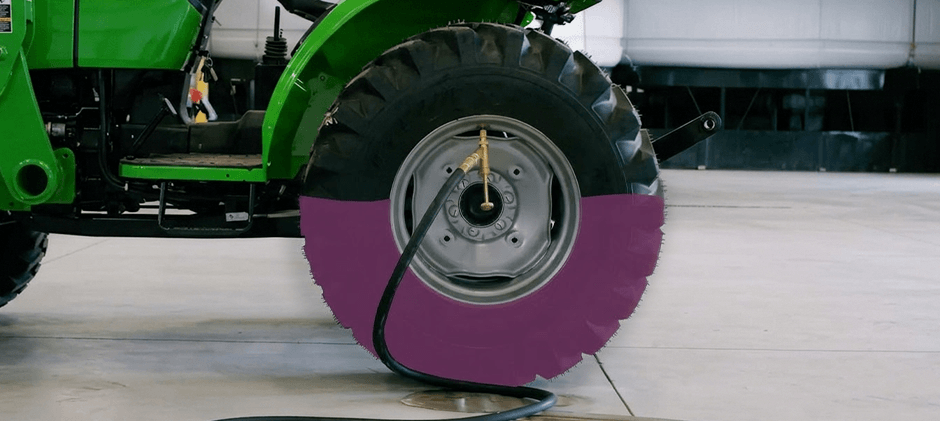
Beet juice is a natural liquid ballast for tractor tires. It’s a leftover byproduct from making sugar from beets. After sugar gets extracted, the thick red syrup left behind works great as tire weight.
The big benefit is extra weight. One gallon weighs about 10.7 pounds — 25% heavier than water. Its high density lets you fit lots of weight inside your tires. It’s non-toxic, breaks down naturally, and mixes with water. It won’t freeze until -35°F (-37°C), so it works even in very cold weather.
Pros and Cons of Using Beet Juice in Tractor Tires
Before you pump hundreds of gallons of liquid into your tires, let’s go over the main upsides and a few small downsides of beet juice ballast.
Pros
- Better traction and performance: Tire ballast adds weight right at the tire-ground contact point. It drops your machine’s center of gravity and keeps wheels from spinning in mud, ice or snow.
- No rust: Unlike old chemical ballast mixes, this natural liquid won’t eat away at your steel rims. You don’t need to stress about rust ruining your costly wheels over time.
- Safe for land and livestock: Tractors work on farms and ranches. If a tire gets punctured and leaks, this fluid won’t kill grass or hurt your animals. It’s food-safe. Goats, cows and other farm animals can lick spilled juice with no health issues.
- Won’t freeze solid: You don’t have to fear a 35-gallon block of ice forming inside your tires in cold winter weather.
Cons
- Higher upfront price: It costs more at the start than plain water or cheap windshield washer fluid.
- Trickier to install: Beet juice is thicker than water. You need the right transfer pump, and it takes time to bleed air out of the tire while filling.
- Smell: Many users say it has a distinct sweet odor; some compare it to dirt or a rum distillery.
“Tire ballast boosts your machine’s pushing and pulling power, especially on grass, ice and snow. It puts weight exactly where the rubber touches the ground.”
Where to Buy Beet Juice for Tractor Tires?
Finding this product requires looking past your standard auto parts store. Because it is a specialized agricultural product, you have a few distinct avenues to purchase it.
- Certified mobile tire services in your region. Many mobile technicians carry large IBC totes of this fluid on their service trucks. They will drive directly to your farm or job site, pump out your old fluid, and inject the new ballast right in your driveway.
- Check with large agricultural tire dealerships. Shops that sell massive rear tires for combines and heavy loaders almost always stock commercial beet juice ballast.
- Find it is to visit the official websites of major tire ballast manufacturers. They usually feature a “Find a Dealer” portal. You simply fill out a short form with your zip code, and they will email you the contact information for the five closest certified installers in your area.
How Much Does It Cost to Put Beet Juice in Tractor Tires?
The price of adding beet juice for tractor tires breaks down into two categories: the cost of the fluid itself and the labor to install it.
Generally, the raw fluid costs around $5 per gallon. The total cost depends entirely on the size of your tires. A small compact tractor might only need 10 gallons per side. A massive industrial loader might require up to 275 gallons in a single tire. If you hire a mobile service to come to your property, a typical installation for a mid-sized machine ranges from $300 to $500. This includes the fluid and the labor.
Let us compare this to buying solid cast-iron wheel weights from a dealer. A factory wheel weight kit might cost $1,000 but only add 200 pounds of total weight to your machine. By spending just $400 on liquid ballast, you can easily add 700 pounds of weight. Liquid ballast is vastly cheaper per pound than solid iron weights.
How to Fill Tractor Tires with Beet Juice?
If you want to save money on labor, you can pump the fluid yourself, but you must follow a strict mechanical process. You cannot just pour it in.
- Prepare the Machine: Jack up the rear of the vehicle so the tire can spin freely. Rotate the wheel until the valve stem sits at the very top (the 12 o’clock position).
- Deflate the Tire: Let the air out of the tire, but stop when you reach about 5 PSI. You must leave a little air pressure inside so the tire bead stays seated on the rim. If the tire pops off the rim, you will have a massive mess on your hands.
- Hook Up the Pump: You need a strong transfer pump and a special tire fill valve adapter. This adapter connects to your Schrader valve and has two ports: one for the liquid going in, and one to let air out.
- The “Burping” Process: Start pumping the heavy liquid into the tire. Because the fluid is displacing the air inside, pressure will build up quickly. Every few minutes, you must stop the pump, close the liquid valve, and open the air release valve. This “burps” the trapped air out of the tire.
- Check the Level: Continue this cycle of pumping and burping. You will know the tire is full when liquid, rather than air, starts spitting out of the release valve. A properly ballasted tire is filled to about 75% capacity, which aligns right with the top of the metal rim.
Beet Juice vs. Other Tractor Tire Ballast Options
Let’s compare this red liquid with the older ballast options mechanics used for years to see why it works so well.
- Water: Plain water weighs around 8 pounds per gallon. It’s cheap and easy to get. But it freezes solid at 32°F (0°C). If you live somewhere cold, frozen water can wreck your tires and make your tractor undrivable.
- Calcium Chloride: This salt mix was the go-to choice for decades. It’s very heavy and won’t freeze until -58°F. But it’s toxic and eats metal fast. If it leaks, it kills grass and poisons livestock. Even worse, it rusts steel rims from the inside and ruins them. You also have to follow special rules to get rid of it as hazardous waste.
- Antifreeze (Methanol Mix): Some folks mix water with car antifreeze or windshield washer fluid. It keeps liquid from freezing, but it’s lighter than plain water. That defeats the whole point of adding ballast weight. It’s also very poisonous to farm animals.
All things considered, beet juice is the clear winner. It delivers the heavy weight of calcium chloride without rust, and it gives you freeze protection like antifreeze, with no toxic chemicals.
Conclusion
Pick beet juice for your tractor tires to get better traction and more stable lifting. It safely adds plenty of weight, lowers your center of gravity, and keeps steel rims from rusting. You can hire a service tech or pump it yourself. Need reliable replacement parts for your tractors? Shop FridayParts for high-quality aftermarket components now.
