

If you are staring at a massive wall of snow and trying to decide what equipment to buy, the main difference between a 2-stage vs 3-stage snow blower comes down to how they collect and throw the snow. A two-stage model uses an auger and an impeller to move snow, while a three-stage model adds an extra accelerator to speed up the clearing process. In this guide, we will break down exactly how these machines work. We want to help you choose the right tool to keep your paths clear.
2-Stage vs. 3-Stage Snow Blowers: Key Differences
To pick the right snow blower for your place, let’s break down how these machines work inside. Both pack plenty of power to clear snow, but they handle heavy winter snow differently.
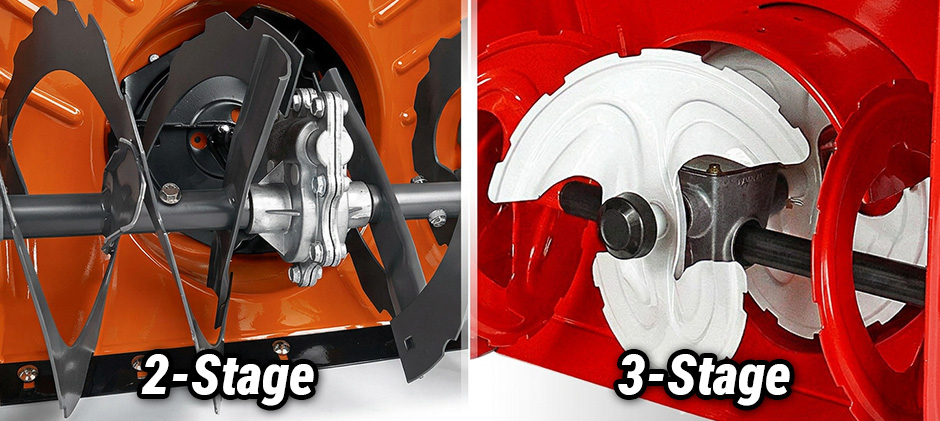
A two-stage snow blower uses a simple, time-tested two-step process. First, the metal auger spins to break up snow and ice, pulling it toward the middle of the housing. Next, a fast-spinning fan called an impeller shoots the snow up and out through the discharge chute. Since the front auger doesn’t touch the ground, you can run it on gravel or rough dirt paths without flinging rocks everywhere.
A three-stage snow blower uses that same basic setup, but adds one extra moving part right in the center of the housing.
- Step 1: The outer augers scoop snow and push it toward the middle.
- Step 2: A center accelerator (the third stage) chops the snow and shoves it fast toward the impeller.
- Step 3: The impeller blasts the snow out the chute and off your driveway.
This extra accelerator works like a drill. It cuts through packed ice and deep snow drifts. It moves slush through the machine quicker, so in theory it can clear your path faster than a regular two-stage snow blower.
Pros and Cons of 2-Stage Snow Blowers
Lots of homeowners and pros use two-stage snow blowers for regular winter snow clearing. They’re the industry standard, and for good reason.
Pros
- Solid reliability: Fewer moving parts inside the housing means less to break when it’s freezing outside. Simpler builds usually last longer.
- Works for many situations: It easily handles 6 to 12 inches of snow. As we said, adjustable skid shoes make it great for gravel driveways and bumpy ground.
- Simple to fix: This design is everywhere. You can quickly get shear pins, belts or auger parts. Local repair shops all know how to work on them.
- Nice weight balance: Heavy enough to bite into snow, but light enough to steer without wearing you out. It moves well in tight spots.
Cons
- Slower in deep snow: If you get two feet of wet, heavy slush, you’ll need to walk slower. Walk too fast and the engine can stall. The impeller can’t throw that heavy snow quick enough to keep up.
Pros and Cons of 3-Stage Snow Blowers
The added accelerator totally changes how the machine works in harsh winter conditions. But this extra piece also brings new issues you need to think about.
Pros
- Crushes ice well: That center accelerator cuts through thick, hard ice piles left by road plows at the end of your driveway. It breaks up big solid chunks that would clog regular snow blowers.
- Clears slush faster: When dealing with deep, wet snow, this extra stage stops snow from stacking up inside the housing. The accelerator shoves heavy snow straight into the impeller, so you can keep a steady walking speed instead of stopping every few feet.
Cons
- Clogs easily in light snow: With dry, fluffy powder snow, the accelerator sometimes pushes snow forward instead of pulling it in. That causes annoying jams and leaves messy snow behind.
- Cheaper build to save weight: To balance the extra weight from the third stage, some manufacturers use thinner sheet metal and more plastic body parts. The lighter body makes the front float on top of heavy snow instead of cutting down to the pavement.
- Trickier to turn: All those extra parts make the front bulkier. You lose some agility, so turning at the end of your driveway is harder.
- More maintenance work: More moving parts equal more chances for something to break. Replacement parts for three-stage blowers cost more, and local shops almost never keep these special parts in stock.
Is a 3-Stage Snow Blower Really Better Than a 2-Stage Model?
When comparing 2-stage and 3-stage snow blowers, a lot of shoppers wonder if the third stage is just a marketing trick. The answer isn’t simple — it really depends on which model you pick.
For certain tough jobs, like clearing 20 inches of heavy wet slush, the 3-stage design keeps the engine from bogging down. That extra speed moves the slush through the discharge chute smoothly. Even so, many seasoned users say a well-built, heavy-duty 2-stage blower beats a cheap 3-stage unit easily.
“The three-stage works great in heavy wet snow the first year. But with lighter snow, that third-stage prop just pushes snow instead of pulling it in. I’ve dealt with constant clogs and jams ever since, and you can’t find replacement parts locally.”
This real user story points out a big weakness. If you feed the machine too fast into deep snow drifts, you have to ease the drive lever constantly just to avoid clogs. Most of the time, dropping a solid 2-stage blower into a lower gear handles deep snow better without straining the engine. On top of that, commercial-grade 2-stage blowers usually have thicker steel, tougher gearboxes and bigger engines. Better build quality makes them a smarter long-term pick than plastic-heavy 3-stage machines.
Which One Should You Choose?
Picking between a 2-stage and 3-stage snow blower all depends on your local weather, storage room, and how much ground you need to clear.
If you get huge storms with heavy wet snow every year and have a long paved driveway, a 3-stage unit could save you time. Its extra speed and ice-cutting power let it blast through deep snow drifts. It’s a specialty tool built for extreme winter weather.
But for most people, a 2-stage snow blower is the better pick. It works really well, handles easier, and rarely clogs with light powdery snow. A solid 2-stage blower can deal with almost any winter snow, as long as you use the right gear and keep a steady pace.
The Bottom Line
A three-stage machine offers extra speed for tackling deep, heavy, and icy snow, but it may require more maintenance and struggle with light powder. A two-stage machine provides steady, reliable power for most winter snow removal needs. At FridayParts, you can find quality replacement parts for your snow blower and get the parts you need to keep it running through the winter.
