

SPN 110 FMI 0 is a critical engine protection code. The ECM has confirmed coolant temperature above the safe operating ceiling, the red STOP lamp is on, torque is already being pulled, and a timed shutdown is seconds away. On construction and ag machines, the sensor is almost never the real cause. Blocked cooling cores. A tired fan drive. Degraded coolant. Those are the usual ones. What the code actually does inside the ECM. The real-world failures that trigger it. A field-tested diagnostic order. And the parts that normally end the repair. That is what the sections below cover.
What Does SPN 110 FMI 0 Mean?
SPN 110 is the standard identifier for engine coolant temperature. FMI 0 adds severity: data is valid but above the normal operating range, the most severe level. The ECM is not guessing. It trusts the sensor reading and has decided the engine is hot enough to damage itself.
Different engine families publish the same condition under their own fault numbers. The code behind SPN 110 FMI 0 maps to:
| Engine Family | Common Fault Code |
|---|---|
| Cummins ISB, ISC, ISL, QSB, QSX | 151 |
| Detroit DD13, DD15, DD16 | EEC 61 / 110-0 |
| Navistar MaxxForce, N13, A26 | SPN 110 FMI 0 (native) |
| Cat C-series (J1939) | E361 or CID 110-FMI 0 depending on tier |
| John Deere PowerTech | 110.00 |
Once the code sets, three things happen in sequence. The red stop lamp lights right away. Peak torque is cut and keeps dropping the longer the condition stays active. Maximum engine speed is capped. Shutdown is enabled in calibration. The lamp starts flashing. About 30 seconds later, the engine stops. That gap is a courtesy. Not a diagnostic window. Use it to clear the machine from traffic. Or get the attachment out of the cut. Do not use it to keep working.
Related Codes You Should Not Confuse
Owners often see several SPN 110 codes in the same session. Each FMI points somewhere different.
- FMI 0 – Temperature above critical limit, shutdown pending.
- FMI 3 – Signal voltage too high, usually an open circuit or disconnected sensor.
- FMI 4 – Signal voltage too low, usually a short to ground.
- FMI 15 – Temperature high, warning level only, no derate yet.
- FMI 16 – Temperature high, moderate severity, derate active.
If FMI 15 or 16 showed up first and you kept working, FMI 0 is the predictable next step.
Why This Code Fires on Working Machines?
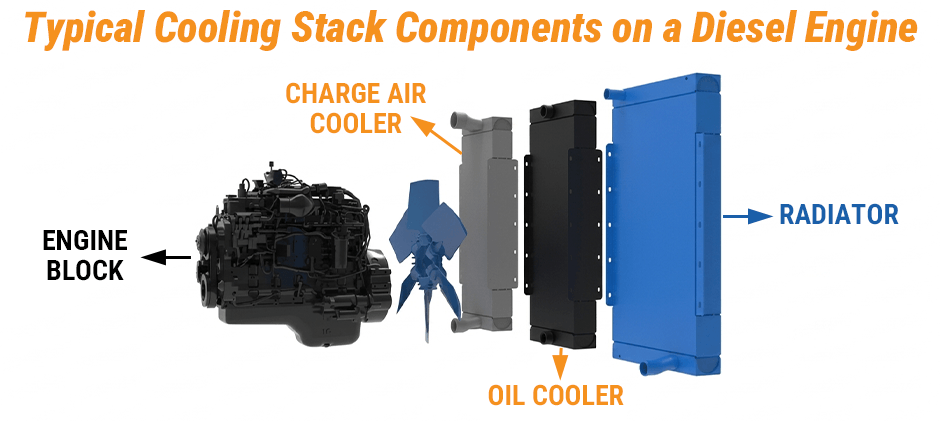
Highway trucks and job-site machines fail this code for different reasons. On a tractor, skid steer, or excavator, dust, chaff, and hydraulic fan hardware are usually ahead of the sensor on the suspect list. Here are the real root causes, ranked by how often they stick on a work order.
1. Loaded radiator and cooler stack.
Forestry mulchers, combines, and demolition excavators pack their cores with debris in hours, not weeks. A core that looks clean from one side can be blocked solid between the fins. Airflow drops, coolant stays hot, and the sensor reports the truth.
2. Fan drive problems.
Viscous clutches slip as they age. Hydraulic reversing fans lose pressure through a worn pump or stuck proportional valve. Electric fan hubs fail open. A classic fingerprint: coolant temperature is normal at idle but climbs fast under load.
3. Coolant condition.
Wrong mix ratio, extended-life coolant that’s old and out of additives, or air trapped in the system after a service — all of it hurts heat transfer. A refractometer and a fresh set of test strips will tell you the answer in a few minutes.
4. Thermostat stuck closed or lazy.
A thermostat that’s partially stuck will let the engine warm up fine, then fail to open all the way once load comes on. You’ll see the temperature spike under heavy pulls and settle back down at idle.
5. Water pump wear.
Eroded impellers or a loose impeller on the shaft moves less coolant than the gauge suggests. Flow drops, temperature rises, especially at high RPM where the pump should be moving the most.
6. Combustion gas intrusion.
A failing head gasket or cracked head pushes exhaust into the coolant. The surge tank bubbles with the radiator cap off and the engine running. A chemical block tester confirms it.
7. Sensor or wiring fault.
This is where other guides start. On working machines, it is usually the last thing to find, not the first. A failed sensor more often throws FMI 3 or 4, not FMI 0.
Field Diagnostic Procedure Step by Step
Work the list in order. Skipping ahead is how shops replace parts that were not broken.
Step 1 – Let it cool and verify the reading.
Never open a pressurized cooling system hot. Once safe, point an infrared thermometer at the thermostat housing and the upper radiator hose. If the ECM says 115 °C and the housing reads 85 °C, the problem is in the sensor circuit. If both agree, the engine really is overheating.
Step 2 – Walk the cooling package.
Pull the side panels. Shine a drop light through the stack from the fan side. Any dark patches are blocked fins. Clean the whole stack with low-pressure air or water, not high-pressure, and clean the oil cooler, charge air cooler, and hydraulic cooler the same way. Our selection of radiators and cooling components covers the full stack when a core is beyond cleaning.
Step 3 – Test the fan drive.
Once the engine’s up to operating temperature, the fan should be pulling hard enough to hear it clearly. If a viscous clutch spins free by hand when cold but still won’t lock up when hot, it’s finished — replace it. On hydraulic fans, stick a gauge on the test port and check the reading against the service pressure range in the machine manual.
Step 4 – Check coolant level, mix, and condition.
Only top up with the coolant type the engine was built around. Mix OAT and conventional coolant, and you get a gel that clogs the small passages. 50/50 is the normal mix; push past 60 percent glycol, and you’re actually losing cooling capacity.
Step 5 – Test the thermostat.
Pull it out, drop it in a pot of water on a hot plate with a thermometer. It should start opening within 3 °C of the stamped rating and be fully open about 10 °C above that. A thermostat that opens late or not at all gets replaced.
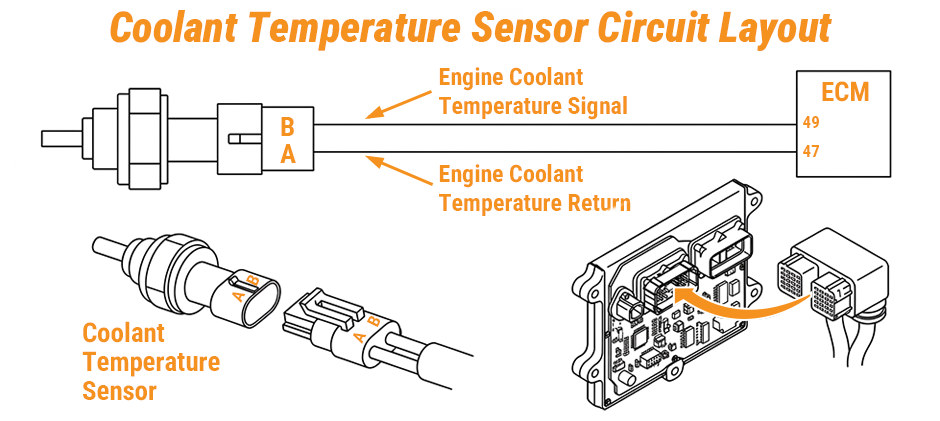
Step 6 – Verify the sensor circuit.
With the key on and the sensor unplugged, you should read about 5 volts on the signal pin to ground. Plug it back in, warm the engine, and compare live resistance to the chart below. Negative temperature coefficient sensors drop in resistance as temperature rises.
| Coolant Temp | Typical Resistance | Signal Voltage |
|---|---|---|
| 20 °C / 68 °F | 2,500 to 3,500 Ω | 3.2 to 3.6 V |
| 50 °C / 122 °F | 800 to 1,100 Ω | 2.0 to 2.4 V |
| 90 °C / 194 °F | 230 to 290 Ω | 0.9 to 1.2 V |
| 105 °C / 221 °F | 150 to 190 Ω | 0.6 to 0.8 V |
Values vary a little between engine families. Always confirm against the service manual for your specific build.
Step 7 – Check the ECM calibration.
Older calibrations sometimes misread the sensor curve or trip the protection limit early. If the hardware all checks out, a calibration update may be the fix.
Repair Parts That Usually Close the Ticket
Once the diagnosis is clear, order by machine PIN or engine serial, not by model year. Emissions tier changes mean two identical-looking machines can take different sensors and thermostats.
- Coolant temperature sensors and pigtail connectors for the ECM circuit.
- Thermostats, housings, and seals sized to the engine family.
- Water pumps and gasket kits when flow has dropped.
- Fan clutches, hubs, and blades for viscous and electric drives.
- Radiator cores, surge tanks, and pressure caps for cooling system replacement parts.
- Hoses, clamps, and the correct coolant chemistry for a full refill.
- Head gasket sets if combustion intrusion is confirmed.
Our catalog of cooling system parts covers each category above across the common engine families used in construction, agricultural, and forestry machines.
Keep This Code Off the Dash
On machines that actually work for a living, prevention runs on hours, not calendar months. A simple rhythm covers most of what triggers the SPN 110 FMI 0 fault code.
Daily walk-around. Check coolant level in the surge tank sight glass. Give the radiator face and trash screen a look. If the duty cycle is heavy, pull the screen and knock the debris loose.
Every 50 hours. Check belt tension and condition. Listen for the fan drive kicking in as the engine warms. If the fan stays quiet at operating temperature, that’s your warning.
Every 250 to 500 hours. Pull a coolant sample. Check the freeze point with a refractometer, and the additive level with test strips. Pressure-test the cap. Back-flush the cooling package before hot season hits.
Annually or at major service. On high-hour engines, swap the thermostat even if it still passes a bench test. Clean the sensor connectors and hit them with dielectric grease. Look back through the stored fault history for FMI 15 and 16 events — they were pointing at this problem months ago.
Trending coolant temperature through telematics is the single biggest advantage over waiting for a lamp. A baseline that creeps up two or three degrees over a few weeks is the real early warning. By the time SPN 110 FMI 0 sets, the engine has already seen temperatures that shorten head, liner, and bearing life.
Final Notes
This is a protection code. Not a nuisance alert. Shut the machine down. Cool it off safely. Work the cooling package first. Touch the sensor last. The parts that normally fix it are straightforward. Sensors. Thermostats. Water pumps. Fan clutches. Hoses. Radiator components. FridayParts stocks aftermarket replacements for all of them. Cummins, Cat, Detroit, Navistar, Deere, and other common engine lines. Wide inventory. Prices that keep working machines earning without stretching the repair budget.
