

When a diesel engine on an excavator, loader, or tractor fails, the replacement is not always a full engine assembly. In many cases, the supplier may offer a short block, a long block, or a complete engine. The difference matters because each option includes a different level of parts, and that affects both installation work and total cost. For most equipment owners, the real question is long block vs short block, and what each one actually includes.
Quick Answer
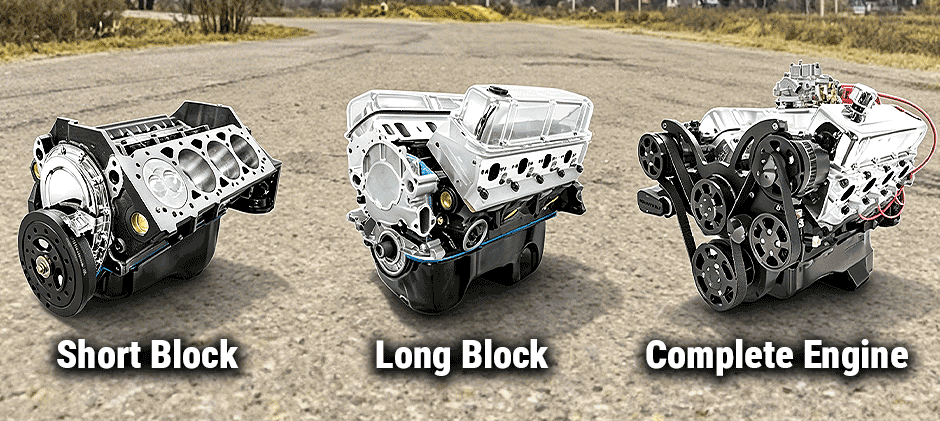
These aren’t three competing products. They are built levels. Each one adds more parts on top of the last.
In short: short block → long block → complete engine. A short block is the bare lower end. A long block adds the cylinder head on top. A complete engine adds the accessories.
| Build Level | What You Get | Ready to Run? |
|---|---|---|
| Short Block | Block + rotating parts | No |
| Long Block | Short block + cylinder head | No |
| Complete Engine | Long block + most accessories | Usually |
The difference becomes clearer when you look at the actual parts.
What Is a Short Block?
A short block is the lower half of the engine. It is the base assembly that the rest of the engine builds on.
A short block usually includes:
- Cylinder block
- Crankshaft
- Pistons, rings, and liners
- Connecting rods
- Main and rod bearings
It does not include the cylinder head, valvetrain, or any accessories. Shops choose a short block when they plan to reuse or upgrade their own top-end parts. For many buyers, it only makes sense when the top-end parts are still worth reusing.
This is also where machine condition matters. If the engine spun a rod bearing or scored a cylinder, the damage usually sits in the lower end. In that case, a short block fixes the root problem while letting you keep a head that is still in good shape. But it leaves more work in your hands, since the head has to be inspected, cleaned, and bolted on before the engine can run.
What Is a Long Block?
A long block builds on the short block. It adds the upper end and is the level most people mean when they ask about long block vs short block.
In most cases, it adds the cylinder head and valvetrain to the short block. Some assemblies also include the oil pan.
A long block usually includes:
- Everything in the short block
- Cylinder head
- Valvetrain (valves, camshaft, springs)
- Oil pan (in many listings)
But here’s the part that trips people up.
A long block is much closer to a full engine than a short block, but it is still not a ready-to-run assembly. It does not come with injectors, a turbocharger, an alternator, or a starter.
So you’ll still need to move your accessories over.
One field note for off-road machinery: packaging can vary a lot by engine type and supplier, so it is best to compare listings within the same engine family.
What Is a Complete Engine?
A complete engine assembly is the closest option to a drop-in replacement. It usually includes the long block plus the major external systems needed to install and run the engine.
A complete engine adds:
- Fuel system and injectors
- Intake and exhaust manifolds
- Turbocharger, where used
- Alternator and starter
Even so, buyers should still confirm exactly what comes with the assembly, especially the fuel system, starter, alternator, and emissions-related parts where they apply. On newer machines, sensors and emissions hardware are easy to overlook, and a missing part here can hold up the whole install.
Key Differences
The main difference is simple.
A short block is the lower end only. A long block adds the cylinder head and valvetrain on top. Neither one includes the turbo, fuel system, or accessories—that’s what the complete engine covers.
In practice, a short block makes the most sense for a rebuild where the top end will be reused or replaced separately. A long block is a better fit when the lower end and head both need attention, but the external components are still usable. A complete engine is usually the simplest path when reducing labor and downtime matters more than reusing parts.
Put simply, long block vs short block comes down to one thing: whether the cylinder head is part of the deal or still your job.
Which One to Order?
Match the build level to the parts you plan to keep.
- A short block makes sense if you’re rebuilding and want to reuse or upgrade your own cylinder head and accessories.
- A long block is usually the better option when your lower end and head are worn, but your fuel system, turbo, and accessories are still good.
- For buyers who want a near drop-in and don’t want to swap parts one by one, a complete engine is often the simplest choice.
Before ordering, list the parts you expect to reuse and compare them with the supplier’s included parts list. If a quality starter motor or a new alternator is available on that list, adding it now ensures reliable cold starts and avoids reopening the job later.
It also helps to weigh labor against parts. A complete engine costs more up front, but it can pay back in less downtime if the machine needs to be working again fast.
Mistakes to Avoid
Most ordering mistakes come from two assumptions.
First, treating a long block as a complete engine. In many cases, a lower price simply means a lower build level, not a better deal.
Second, assuming every supplier defines these terms the same way. They don’t. Two listings, both labeled “long block,” can differ on whether the valvetrain or timing parts are included.
Always ask for a written parts list before you buy. Don’t trust the label alone—confirm exactly what’s in the box and what isn’t.
That one check can clear up a lot of confusion before the order is placed.
FAQ
Is a long block a complete engine?
No. A long block usually includes the short block, cylinder head, and valvetrain. Some assemblies also include the oil pan, but supplier definitions vary. It does not include the injectors, turbo, alternator, or starter.
What’s the main difference between a long block and a short block?
A short block is just the lower end—block, crank, pistons, rods, and bearings. A long block adds the cylinder head and valvetrain on top of that short block.
Do supplier definitions vary?
Yes. Some include the full valvetrain or timing components; others don’t. Confirm the parts list every time.
Which is right for diesel off-road machinery?
A long block works well if your accessories are healthy. A complete engine is better if you want the fastest, lowest-effort swap.
Conclusion
The key is to match the build level to the repair, not just the label on the listing. A short block, a long block, and a complete engine can look similar at first, but the parts coverage is very different in practice. If replacement engine parts or assemblies are needed, FridayParts offers high-quality aftermarket parts at affordable prices, with a large inventory and wide compatibility across many heavy equipment brands.
