

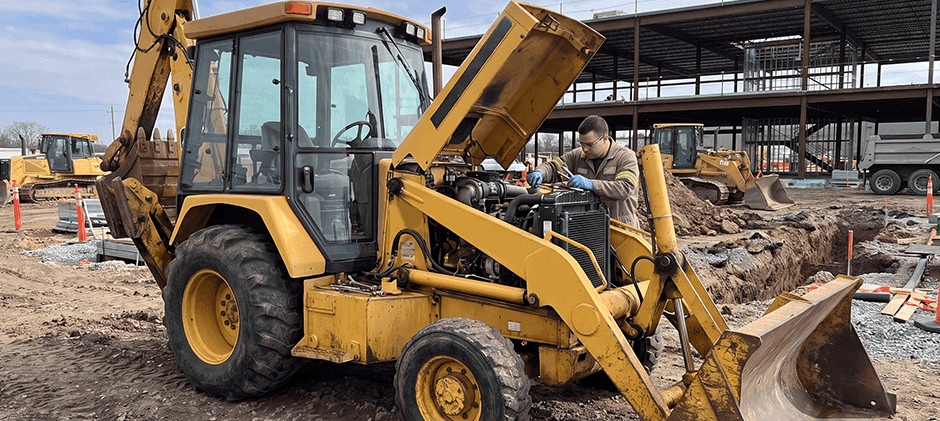
If your John Deere 310D is idling at 1500 RPM and won’t shut off with the key, you are dealing with a high idle speed problem rooted in the fuel control system. These two issues are usually connected. A sticky linkage, a weak spring, or a faulty shutoff solenoid is often the culprit. If those are good, the DB2 injection pump is likely the cause. If the engine surges or revs on its own, check for oil in the turbo and intake first. That is a runaway. Stick with the order here, and you will track it down.
What Should You Check First?
Start with the outside mechanical parts first. This is the safest and fastest way to diagnose a John Deere 310D high idle speed problem.
Most machines with high idle have a simple control issue outside the pump. Common examples include a sticking throttle linkage, a weak return spring, a bad idle stop setting, or a cold-start linkage fault. These checks are quick, practical, and lower the chance of opening a good pump.
Safety Note: If the engine runs rough, surges, revs on its own, or will not shut off, rule out diesel runaway first. Check the turbocharger and intake for oil contamination. If runaway is confirmed, block the air intake at once. Do not rely on the key switch alone.
A no-shutoff complaint is not always just an electrical problem. In some cases, engine oil entering the intake can feed the engine and create a dangerous overspeed condition.
Start with these external mechanical checks
- Inspect the throttle linkage
- Move the lever by hand
- Make sure it returns to idle without delay
- Look for bent rods, stiff pivots, or dirt buildup
- Check the return spring
- Make sure the spring is present
- Look for stretch, rust, or weak pull
- Replace it if lever return feels slow
- Inspect the idle stop
- Confirm the lever rests on the correct stop
- Look for signs of poor adjustment
- Make sure nothing is holding the lever open
- Check cold start or fast idle parts
- Make sure the system releases after startup
- Inspect related rods and levers for sticking
If these external mechanical checks look normal, move to the shutoff and electrical system checks in the next section.
Quick check table
| Item To Check | Why It Matters | What To Look For |
|---|---|---|
| Throttle linkage | Controls fuel lever return | Binding, bent parts, side play |
| Return spring | Pulls lever back to idle | Weak tension, rust, stretch |
| Idle stop | Sets base idle position | Wrong setting, blocked lever |
| Cold start linkage | Can hold fast idle on | Sticking parts, partial return |
If one of these parts is clearly faulty, fix it before going deeper. A sound throttle linkage kit, fresh return spring, or corrected stop setting can solve the problem without pump disassembly.
Why Won’t the Engine Shut Off?
An engine that will not shut off should be treated as a fuel control problem first. On a John Deere 310D, this can be closely linked to high idle speed.
The engine keeps running because fuel is still being delivered.
This usually points to one of four areas:
- The fuel shutoff solenoid is not moving far enough
- The key switch is still feeding power after key-off
- The wiring is back-feeding voltage into the shutoff circuit
- The internal pump linkage is sticking
Breaking it down this way makes troubleshooting easier.
Stuck shutoff solenoid
A shutoff solenoid can click and still fail to move the control fully. Partial travel often leads to confusing symptoms.
Check for:
- Full pull-in movement
- Heat damage
- Corrosion at the connector
- Drag in the solenoid plunger
A replacement fuel shutoff solenoid is often a practical fix when movement is weak or inconsistent.
Bad key switch
A bad key switch may continue feeding the circuit after it is turned off. That can prevent proper shutoff.
Check for:
- Voltage after switch-off
- Loose terminals
- Burned contacts
- Inconsistent switch feel
A good key switch is important because a faulty one can look like a pump fault.
Wiring back-feed
Old harnesses can feed voltage into the wrong circuit. This is common on machines with splices, wear spots, or past repairs.
Inspect:
- Harness rub points
- Old splices
- Corroded terminals
- Ground connections
A clean wiring harness connector and proper routing help prevent repeat faults.
Internal pump linkage drag
If the solenoid has full travel and the key circuit tests correctly, the problem may be inside the pump.
This pattern often points deeper:
- Outside linkage feels normal
- Solenoid works correctly
- Engine still does not shut off
- Idle may also stay high
A no-shutoff complaint can also be an early clue that the DB2 injection pump needs attention.
How Can a DB2 Injection Pump Cause High Idle?
A DB2 injection pump can cause high idle when internal control parts do not return to the proper fuel position. This becomes more likely after the external checks and shutoff tests pass.
Inside the pump, fuel delivery depends on smooth and precise movement. If a small part sticks, drags, or wears badly, the engine may idle too high or fail to shut down cleanly.
Common internal pump faults
Top cover linkage sticking
The top cover linkage can hang because of varnish, corrosion, or dirt. When that happens, the fuel lever may not return fully to idle.
Look for:
- Slow return after throttle input
- Linkage outside the pump feels normal
- High idle stays the same hot or cold
Governor spring problems
Governor parts help control RPM under changing load. A weak or damaged spring can hold speed too high or make RPM unstable.
Possible signs:
- Unsteady RPM
- High idle with uneven response
- Speed drift after warm-up
Metering valve drag
The metering valve must move freely. If it drags, fuel delivery may stay above idle even after the lever returns.
Possible signs:
- High idle after sitting
- Delayed speed drop
- Idle speed changes without lever input
Internal wear or contamination
Old fuel residue, dirt, or worn internal parts can affect movement inside the pump. This is why clean fuel service matters before pump work begins.
Useful checks before deeper pump service:
- Replace the fuel filter
- Inspect diesel for water or debris
- Check fuel line condition
- Confirm clean fuel flow
5 Steps to Troubleshoot High Idle Speed on a John Deere 310D
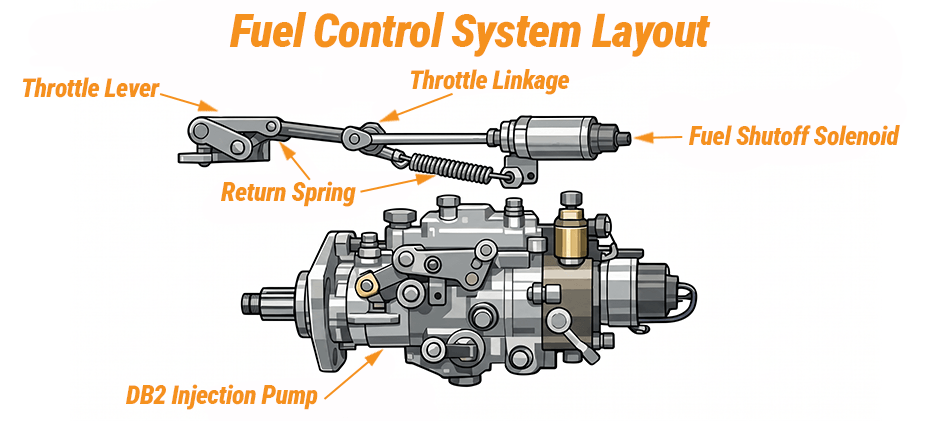
Use a clear route. In most cases, high idle happens because either an outside control part is holding the fuel lever open or an internal DB2 injection pump part is not returning correctly. The goal is to rule out the simple causes before moving into pump diagnosis.
Step 1: Confirm safe operating conditions
If the engine surges, smokes heavily, revs on its own, or will not shut off, check for oil entering the intake first. Inspect the turbocharger and intake piping. Rule out runaway risk before normal troubleshooting continues.
Step 2: Check all external mechanical controls
Inspect the throttle linkage, return spring, idle stop, and cold start parts. If the lever does not return cleanly, repair those items first.
Step 3: Test the shutoff system
Test the fuel shutoff solenoid, key switch, and harness. Make sure the circuit changes correctly with key-on and key-off.
Step 4: Verify fuel condition and pump response
Replace the fuel filter if service is due. Check for dirty fuel, water, or old diesel. Then watch how the engine responds after service.
Step 5: Move to DB2 pump diagnosis only if needed
Pump diagnosis becomes more likely when these points are true:
- The throttle linkage returns normally
- The return spring is good
- The idle stop is not misadjusted
- The shutoff solenoid has proper travel
- The key switch and wiring test correctly
- High idle remains
If all of those checks pass, inspect the DB2 injection pump next. Internal linkage, governor parts, or the metering valve then become the more likely cause.
Conclusion
A John Deere 310D high idle speed problem should be checked in a safe order. Start with runaway risk, then inspect external controls, test the shutoff circuit, and move to the DB2 injection pump only when needed. If parts are required, we recommend FridayParts for affordable aftermarket options, broad inventory, and wide compatibility across heavy equipment brands.
Also Read: Diesel Engine Idling Rough: Causes and Fixes
