

If your engine is losing power, burning oil, or making unusual noises, it may be time for an overhaul. One of the first decisions you’ll need to make is whether to choose an in-frame vs an out-of-frame overhaul. While both can help restore engine performance, they differ in cost, repair scope, and downtime. In this guide, we’ll explain the differences and help you decide which option is right for your machine.
What’s the Difference Between In-Frame And Out-of-Frame Overhaul?
- An in-frame overhaul is performed while the engine block remains inside the equipment’s frame.
- An out-of-frame overhaul requires removing the entire engine from the machine for a complete teardown.
This fundamental difference dictates the cost, labor time, and the extent of repairs that can be done. Understanding this is the first step in choosing the right path.
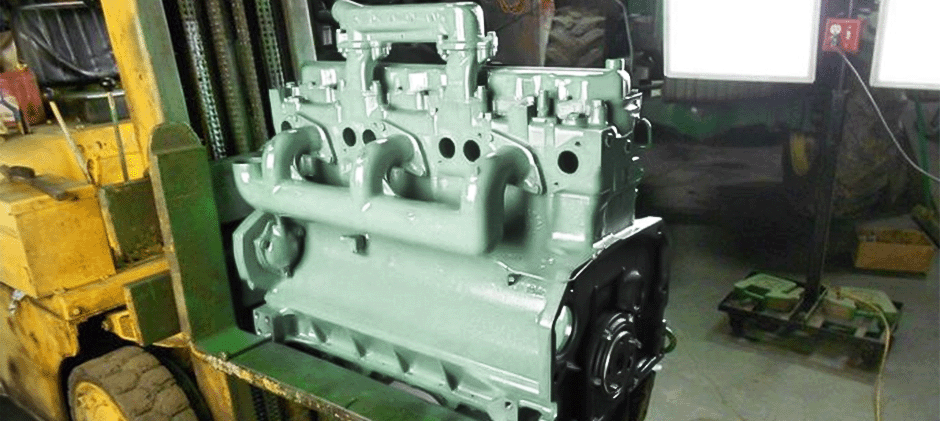
What is an In-Frame Overhaul?
Mechanics access the engine’s internal components by removing the cylinder head and the oil pan. This allows them to work on the upper and lower sections of the engine while the main block stays bolted in place.
When is an In-Frame Rebuild the Right Call?
This option is ideal for engines that are still running but are showing clear signs of age-related wear and tear. It’s a proactive measure to restore performance, not a solution for catastrophic failure. You should consider an in-frame rebuild if you’re experiencing:
- Loss of compression: The engine feels weak and struggles under load.
- Increased oil consumption: You’re constantly topping off oil due to worn piston rings or seals.
- Excessive smoke: Blue or white smoke from the exhaust points to internal wear.
- Preventative maintenance: Your engine has high hours, and you want to extend its life before a major failure occurs.
What Parts Are Typically in an In-Frame Kit?
An in-frame kit focuses on the most common “wear items” in an engine. Because the engine isn’t fully removed, the work is centered on parts accessible from the top and bottom. A typical kit includes:
- Pistons and Piston Rings: These are critical for maintaining compression and controlling oil. Worn rings are a primary cause of power loss and oil burning.
- Cylinder Liners (Sleeves): These provide the smooth surface for the pistons to travel in. They can become scored or worn over time.
- Rod Bearings: These cushion the connection between the connecting rods and the crankshaft.
- Main Bearings: These support the crankshaft within the engine block.
- Gasket Sets: Includes the head gasket, oil pan gasket, and other seals needed to put everything back together without leaks.
The key here is what’s not included. An in-frame overhaul does not typically address the crankshaft or camshaft, as those parts are extremely difficult or impossible to remove with the engine in the frame.
What is an Out-of-Frame Overhaul?
An out-of-frame overhaul is far more intensive. It starts by disconnecting everything from the engine—fuel lines, electrical harnesses, cooling systems, and the transmission—and using a hoist to lift the entire engine out of the machine.
Once you mount the engine on a stand, you can completely disassemble it down to the bare block. You can then clean, inspect, measure, machine, or replace every component.
When Do You Need an Out-of-Frame Rebuild?
This is the go-to solution for severe engine damage or for anyone wanting to return an engine to a true “like-new” condition. You have no choice but to perform an out-of-frame rebuild if the engine has suffered:
- Catastrophic Failure: This includes a spun bearing, a thrown rod, or a cracked engine block.
- Severe Crankshaft Damage: If the crankshaft is scored, bent, or worn beyond repairable limits, it must be removed.
- Low Oil Pressure Problems: If issues in the block’s oil galleries are suspected, a full teardown is the only way to diagnose and fix them.
- End-of-Life Restoration: For a machine with extremely high hours, an out-of-frame rebuild is the only way to guarantee a complete refresh and ensure reliability for years to come.
What Parts Are in an Out-of-Frame Kit?
It includes everything in an in-frame kit, plus the deeper engine components that can only be accessed during a full teardown. These often include:
- A complete overhaul gasket set for the entire engine.
- Front and rear crankshaft seals.
- Often, new or remanufactured components like the oil pump and water pump.
- The option to easily replace the camshaft and its bearings.
Most importantly, this process allows you to send the engine block and crankshaft to a machine shop for inspection and reconditioning, ensuring your engine has a solid foundation.
What Should You Consider When Choosing an Engine Overhaul?
Let’s put them head-to-head on the factors that matter most.
Cost
- In-Frame: Significantly lower. You save on labor because the engine isn’t removed, and the parts kit is less extensive.
- Out-of-Frame: Much higher. Labor costs can be double or triple due to the complexity of removal and reinstallation, plus potential machine shop fees.
Downtime
- In-Frame: Shorter. The job can often be completed in a matter of days, getting your machine back to work faster.
- Out-of-Frame: Longer. Expect weeks of downtime, accounting for engine removal, disassembly, machine shop work, and reassembly.
Scope of Repair
- In-Frame: Limited. Excellent for top-end and bearing wear, but cannot fix issues with the block, crankshaft, or camshaft.
- Out-of-Frame: Comprehensive. Check every single part and replace as needed. It is the only way to restore an engine to factory specifications.
Finding the Right Parts for Your Rebuild
An in-frame overhaul is often the best choice for engines with normal wear, offering lower costs and less downtime. If the engine has serious damage or very high hours, an out-of-frame overhaul is usually the better long-term solution. At FridayParts, you’ll find reliable diesel engine parts and overhaul kits to help keep your equipment running strong.
