

Oiling your chainsaw chain is crucial to extend its service life. This includes oiling the chainsaw chain and chainsaw bar. For manual oiling, the process is as simple as putting a little chainsaw oil directly on the chain links and spreading the oil over the whole chainsaw chain with a small brush. But how to choose the oil? How often to change the chain oil? This guide will cover how to oil a chainsaw with detailed instructions.
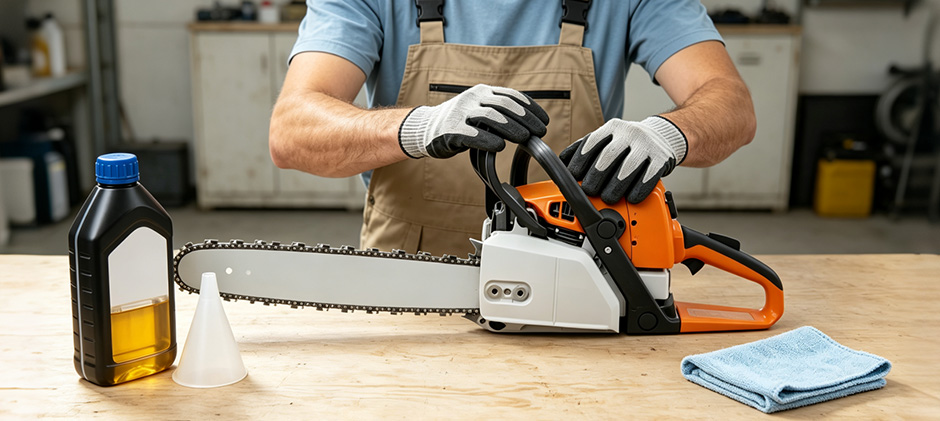
How to Oil A Chainsaw Chain?
Proper chainsaw chain oiling can reduce friction and extend the lifespan of your chainsaw greatly. Many modern chainsaws feature automatic oiler systems that continuously deliver oil. However, for older models or in emergencies, you may need to oil your chain manually. So, it’s essential to understand both automatic and manual oiling methods to ensure your chainsaw runs properly chain stays properly lubricated.
Steps to Oil Your Chainsaw Chain
Adding oil to your chainsaw chain is straightforward. Here are instructions for you.
- Preparation and safety: Stop the engine and let the chainsaw cool down before oiling.
- Inspection and cleaning: Take off the bar cover and inspect the chainsaw chain for damage or wear. Then, clean any dirt or debris from the bar rails and chainsaw chain links.
- Manual oiling: Apply a small amount of chainsaw oil directly to the links and spread the oil evenly over the whole chainsaw chain with a small brush.
- Distribute oil evenly: Move the chainsaw chain by hand to spread the oil, which ensures that all parts are covered and helps you identify any issues.
- Automatic oiling systems: The automatic oiling systems deliver oil while you work. The oil flow is controlled by engine speed or throttle position. Higher speeds mean more oil.
- Adjusting flow rate: The oil flow rate can be changed. You can adjust it for large jobs and lower it for smaller ones. This saves oil and keeps your chainsaw chain lubricated.

Choosing the Right Chainsaw Chain Oil
Using the right chain oil is essential to keep your chainsaw in optimal condition. It ensures proper lubrication, extended service life and reduced damage. Your owner’s manual will tell you the recommended oils for your chainsaw. Don’t mistake motor oil for chain oil, as the motor oil lacks the special additives your chainsaw needs and can fling off the chainsaw chain quickly. Besides, consider biodegradable options if you work in sensitive areas.
Signs of Lacking Chain Oil
Catching early signs of poor chainsaw chain lubrication can help prevent damage to your chainsaw.
- Visible signs: A poorly oiled chain can get too hot and create sparks while cutting. The chain will look dull and might get stuck in the wood. The blue marks on the bar and chain indicate excessive heat buildup. All these are signs of poor lubrication.
- Audible signs: You may hear weird noises like grinding or squealing from the chain area. These unusual signs indicate your chainsaw chain is not getting enough oil.
- Performance issues: If your chain has poor lubrication, it can affect how well your chainsaw works. You will find it more difficult to cut through wood and notice more kickback.
How Often to Oil A Chainsaw?
The lubrication schedule can be different depending on how and where your chainsaw is used. Frequent use of heavy cutting requires more frequent oil checking than occasional light use.
Regular maintenance can prevent damage from insufficient lubrication. It is recommended by most chainsaw manufacturers to check the oil levels before each use. This can help prevent working without adequate lubrication, potential component damage and detecting system problems at an early stage.
The type of wood and the duration of cutting can also affect the chainsaw oil change interval. Besides, high temperatures can increase oil use, while cold temperatures slow oil flow. Another factor is how sharp your chainsaw is. A sharp chain not only cuts better but also uses less oil compared to a dull chain.
Frequently Asked Questions
What happens if I don’t oil my chainsaw regularly?
Insufficient chainsaw lubrication can cause severe damage and expensive repairs or replacements. Your chainsaw chain will stretch excessively and wear out the bar rails. You will experience increased kickback, poor cutting performance, and potential safety hazards.
Can I mix different brands of chainsaw oil?
We recommend avoiding mixing different brands of chainsaw oil whenever possible. If you have to mix oils, you should make sure they share compatible viscosity ratings and properties. And you’d better empty the reservoir before switching to a different oil brand.
Can I use regular motor oil instead of chainsaw oil?
You shouldn’t use regular motor oil as a replacement for chainsaw oil. Motor oil lacks the special tackifiers that help oil stick to fast-moving chainsaw chains. It also cannot withstand the extreme temperatures generated during chainsaw operation. Using motor oil can lead to inadequate lubrication and premature wear on the chainsaw chain, bar, and oiler system.
Wrapping up
Regular oiling your chainsaw is essential for the service life and smooth operation of your chainsaw. Always choose the right oil recommended in your owner’s manual and avoid using regular motor oil or mixing different types of oils for the process, as it can cause damage to your chainsaw and bring about costly repairs and replacements. At FridayParts, we provide a vast selection of quality chainsaw parts for maintenance and repair. Explore now and get your chainsaw back to its optimal performance.
