

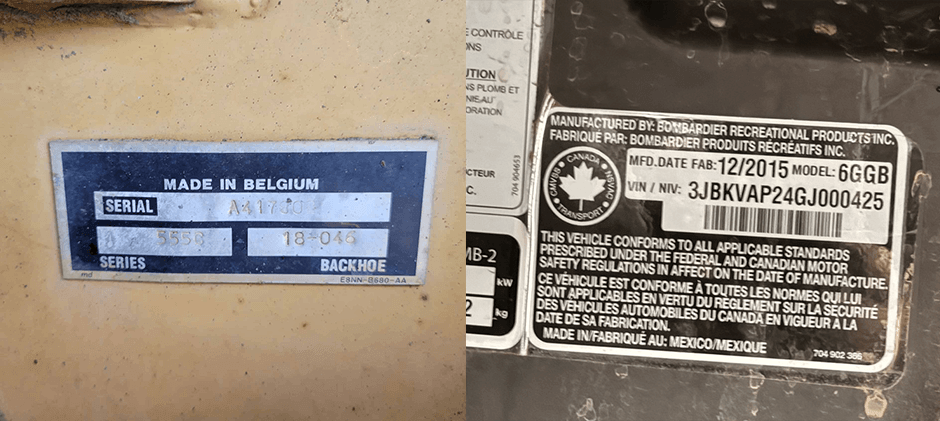
Many off-road machine owners run into the same problem. The plate says one thing, the paperwork says another, and a seller or parts counter may use a third term. That is why chassis numbers vs. VINs cause so much confusion. In simple terms, they can point to the same machine, but they are not always the same number, and on off-road equipment, the number you need often depends on what you are trying to do.
Quick Answer
Here is the short version. A VIN is usually a standard vehicle ID. A chassis number is tied to the frame. On off-road machinery, you may also need a serial number or a PIN.
| Term | Usually means | Common on off-road machinery? | Typical format |
|---|---|---|---|
| VIN | Standard vehicle identification number | Sometimes | Usually 17 characters |
| Chassis / Frame Number | ID linked to the frame | Yes | Varies |
| Serial Number | Unique machine number from the maker | Very common | Varies |
| PIN | Product identification number | Common in some lines | Varies |
For road vehicles, people often mix these up and still get by. With off-road machinery, there can be wrong parts, bad paperwork, or trouble checking a used machine.
Why Does This Get Confusing?
Because one machine can carry multiple valid IDs.
On off-road equipment, these numbers often show up:
- VIN
- Chassis number
- Serial number
- PIN
- Engine number
Some of them may appear on the same machine. Some may be used in daily conversation as if they mean the same thing. They do not always mean the same thing.
The important thing is not the label. It is whether the number matches the machine, the documents, and the parts record.
That is usually where mistakes begin.
What Is a VIN?
A VIN is a standardized vehicle identification number. On many vehicles, it has 17 characters. It also avoids the letters I, O, and Q.
On some off-road units, especially road-legal ones, a VIN may be the main ID used on documents. On others, it is not the number that matters most when service work or parts matching starts.
So if you are looking at chassis number vs VIN, it helps to treat the VIN as one possible ID system, not the only one.
A standard VIN is often split into three sections:
- WMI
- VDS
- VIS
That structure is useful in general. Still, many off-road owners do not need full VIN decoding. What they need is the correct number for the machine in front of them.
What Is a Chassis Number?
A chassis number is usually tied to the frame or main structure. That older way of identifying a machine is still common in the off-road world. It shows up in workshop notes, used listings, and parts questions all the time.
Sometimes a chassis number and a VIN refer to the same machine identity. Sometimes they do not. That is why chassis number vs VIN keeps coming up, especially with older machines, imports, tractors, and equipment that do not follow a standard road-vehicle format.
A simple way to think about it:
- VIN is usually a standard vehicle ID
- The chassis number is often a frame-based machine ID
That will not cover every case, but it is a practical starting point.
Can You Decode It?
Sometimes yes, sometimes no.
If the machine has a normal 17-character VIN, a decoder may show basic information. But this is where people often go too far. They assume off-road equipment follows car rules. Many machines do not.
A few things can happen:
- The number may not be 17 characters
- The year code may not work the way people expect
- The machine may be tracked mainly by serial number
- An older imported unit may use another format
So when dealing with chassis number vs VIN, a generic online decoder is only a rough tool. It is not the final answer.
Don’t rely on a generic VIN decoder for off-road machinery. The number may follow different rules, or it may not be a standard 17-character VIN at all.
That is especially true when checking older equipment.
Where Is the Number?
This is usually the next question. You know you need the number, but where is it?
The answer depends on the machine.
ATV / UTV
Common places include:
- Steering head
- Frame tube
- Front suspension area
- ID label
Tractors
Check around:
- Chassis rail
- Firewall area
- Build plate
- Transmission housing area
Excavators, loaders, skid steers
Look at:
- Main frame plate
- Cab area
- Engine bay
- Stamped frame section
Road-legal off-road vehicles
You may find it on:
- Dash area
- Door or frame area
- Registration papers
Sometimes the label is scratched, dirty, or painted over. That happens a lot with working equipment. In those cases, a stamped number on the frame is usually more dependable than a sticker.
Which Number Should You Use?
This is where the answer becomes practical.
For some jobs, the VIN matters. For others, it does not help much. That is why chassis number vs VIN should be answered by use, not by theory.
Ordering parts
When ordering parts, the model alone is often not enough. This is common with machines that have undergone changes during production.
A few examples make that clear.
That is why parts suppliers often ask for:
- Machine model
- Serial number or PIN
- Engine number when needed
- A photo of the plate
Sending a clear plate photo usually saves time. It also reduces avoidable back-and-forth.
Buying used equipment
When looking at a used machine, compare the number in three places:
- On the frame or stamped section
- On the plate
- In the paperwork
If one of them does not match, do not brush it off too quickly. It may be a simple record issue, but it may also be a warning sign.
Paperwork
For registration, insurance, or import files, use the official number shown on the documents. That may be a VIN. On some equipment, another machine ID is the one that appears in the record.
Ownership checks
A stamped frame number is often more useful than a worn label. If the machine matters to your business, it is worth saving photos of the plate, frame stamp, and engine number while everything is still readable.
What Should You Check First?
If you are still unsure, start with the machine itself.
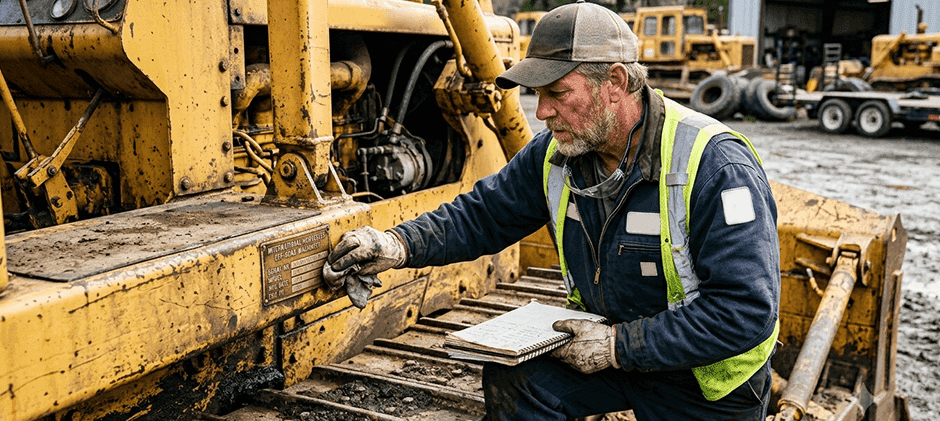
Use this order:
- Find the plate
- Look for a stamped frame number
- Compare both with the paperwork
- Keep the engine number as a backup for engine parts
This simple check solves most of the confusion around chassis number vs VIN before it turns into a parts or paperwork problem.
It also helps when talking to a seller. A clear photo is often more useful than a typed number sent in a message.
FAQ
Is a chassis number the same as a VIN?
No, not always. They may point to the same machine, but on off-road equipment, a chassis number is often frame-based, while a VIN usually means a standardized vehicle identification number.
Where is the VIN or chassis number on an excavator or skid steer?
It is often on the main frame plate, near the cab, inside the engine area, or stamped into the frame. The exact spot depends on the machine.
Can parts be ordered with only a model number?
Sometimes, but not always. For many machine-specific parts, a serial number, PIN, or plate photo gives a safer match.
Does the engine number matter?
Yes. It matters most for engine-related parts, especially when the same machine model is used with more than one engine version.
Conclusion
The answer to chassis number vs VIN is not just about wording. On off-road machinery, the right number depends on the task, whether that is parts, paperwork, or machine verification. Check the plate, frame stamp, and documents together. If you need replacement parts, we recommend FridayParts for affordable aftermarket products, wide compatibility, and a large inventory for many heavy equipment brands.
