

Can a Bad Fan Clutch Cause a Rough Idle? The answer is Yes. While it isn’t the most common reason, a damaged clutch can make the engine feel shaky, slow, or uneven at idle. This guide explains how a bad one affects the engine, what symptoms to look for, and how to test it so you can keep your equipment running smoothly in the field.
What Is a Fan Clutch and How Does It Work?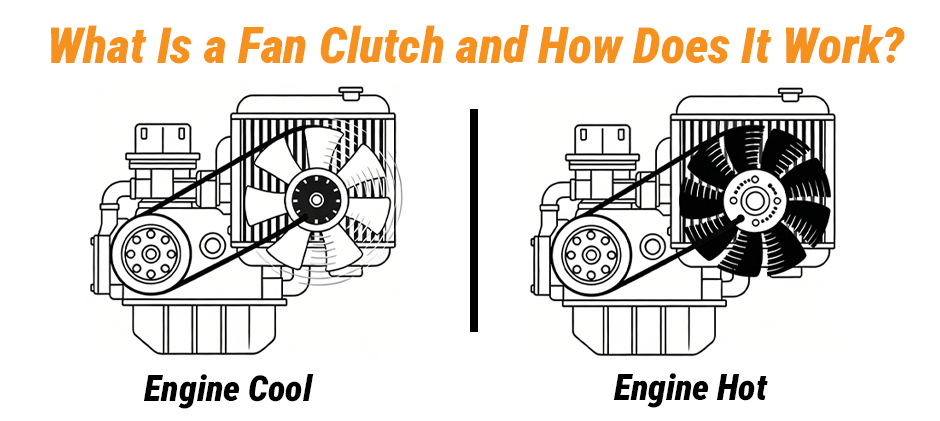
The fan clutch controls how fast your engine’s cooling fan spins.
When the engine is hot, it engages the fan to pull air through the radiator.
When the engine cools down, it disengages, letting the fan spin slower and saving energy.
This system helps:
- Keep your engine at the right temperature
- Reduce engine load and fuel use
- Improve performance and efficiency
In off-road machinery, a working fan clutch is especially important because these engines often run under heavy load and in hot, dusty environments.
How Can a Bad Fan Clutch Cause a Rough Idle?
A bad fan clutch can make the engine idle roughly in two main ways.
1. The Engine Drag Connection
If a fan clutch is stuck on (seized), the fan spins at full speed all the time.
At idle, your engine produces very little power, so this heavy drag makes it struggle to stay smooth.
You might feel vibration, shaking, or a “lumpy” idle.
This constant extra load can also reduce fuel economy.
2. The Vibration Factor
If the bearing inside the fan clutch is worn, the fan may wobble or spin off-center.
This imbalance causes vibration that travels through the engine and frame, which the operator can feel in the seat or steering wheel.
Even if the engine itself is fine, the vibration can feel like a misfire or rough idle.
Tip: A wobbling fan is not just noisy — it’s dangerous. If ignored, the fan could break off and damage the radiator, belts, or even the hood.
5 Symptoms of a Failing Fan Clutch
A rough idle is only one possible symptom.
These are the most common signs your fan clutch may be going bad:
- Engine Overheats at Low Speed: Fan does not engage, so it can’t pull enough air through the radiator.
- Loud Fan Noise: A seized clutch keeps the fan spinning fast all the time, making a roaring sound — even when the engine is cool.
- Power Loss: A stuck clutch puts drag on the engine and makes your machine feel weak or slow.
- Fan Wobble: With the engine off, check if the fan blades move side to side. Any wobble means a bad bearing.
- Poor Fuel Economy: Constant fan engagement means wasted power and higher fuel use.
How to Test Your Fan Clutch in 3 Simple Steps
Always test the fan clutch with the engine off and cool.
These steps can be done easily in the shop or on-site.
1. The Spin Test
- Turn the engine off and wait until it’s cool.
- Try spinning the fan by hand.
What it means:
- Spins freely for more than three turns → clutch is worn out (no resistance).
- Very stiff or doesn’t move → clutch is seized.
- Spins only 1–2 turns and stops smoothly → clutch is healthy.
2. The Wobble Test
- Hold the fan blade at the top and bottom.
- Gently pull and push toward the radiator.
If there’s any looseness or clunking, the bearing is worn. Replace it before it fails completely.
3. The Hot Engine Test
- Start the engine and let it warm to normal temperature.
- Shut it off and immediately try the spin test again.
When hot, a good clutch will feel much stiffer than when cold.
If it feels the same, it’s not engaging — and that means it’s bad.
When Should You Replace Your Fan Clutch?
Replace it if:
- It fails any of the tests above
- You hear loud fan noise at all times
- It leaks fluid
- The fan wobbles or spins too freely
Running with a bad clutch can cause overheating or serious damage if the fan breaks. Replacing it early is simple and prevents expensive repairs later. If you’ve determined your clutch is bad, you can learn how to remove a fan clutch without special tools in our step-by-step guide.
Conclusion
A bad fan clutch can cause a rough idle by adding too much drag to the engine or by creating vibration from a damaged bearing. By using these basic checks — spin, wobble, and hot test — you can tell right away if your clutch is at fault. Fixing or replacing it quickly will keep your cooling system strong, protect your engine, and save fuel.
Keep your off-road machine in top shape by watching for these signs and maintaining the cooling system regularly. A little attention now means fewer breakdowns later. Remember, whatever you need, FridayParts is always your backup.
