

Getting ready to sharpen or swap your mower blades, you go to turn the bolt — and it won’t budge at all. Are mower blades reverse thread? This guide clears everything up. We’ll explain if mower‑blade bolts use reverse threads, show how to tell which thread type you’ve got, and walk you step‑by‑step on how to break loose even the most stubborn blade bolts.
Are Lawn Mower Blades Reverse Thread?
The blades don’t have any threads themselves. It’s all about the bolt or nut holding the blade onto the spindle. Whether it’s regular right‑hand thread or reverse left‑hand thread mostly comes down to how the blade spins and how the manufacturer built it.
With regular threads, turn clockwise to tighten (“righty‑tighty”) and counter‑clockwise to loosen (“lefty‑loosey”). Reverse threads work the exact opposite way.
Reverse threads are there for safety. Manufacturers pick a thread direction that fights against the spinning force from the blade. It won’t crank itself tighter while running, but it stops the bolt from shaking loose — which would be super dangerous. Here’s what you’ll usually see on different mowers:
- Walk‑behind / push mowers: Almost all of these use standard right‑hand threads. When you stand over the mower, the crankshaft spins so normal bolts stay secured while you cut grass.
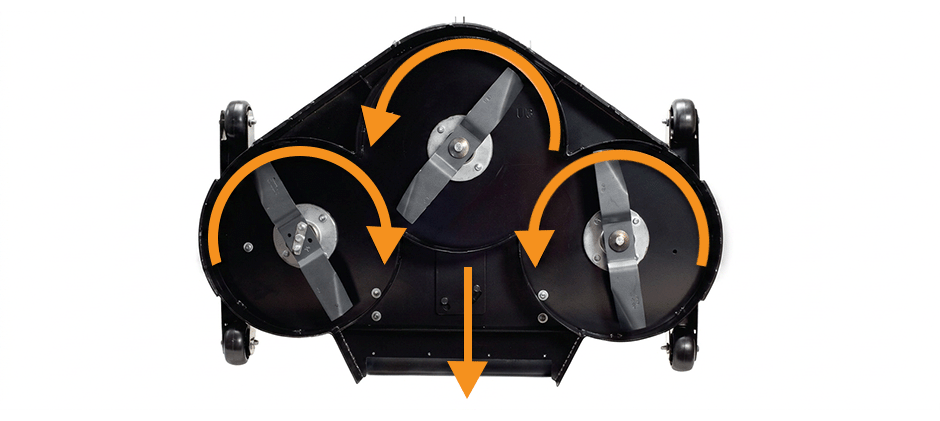
- Riding mowers & lawn tractors: This is where things get confusing. Lots of riding mowers with multiple blades have at least one reverse‑thread bolt. People often ask, “are John Deere lawn mower blades reverse thread?” or “are Cub Cadet mower blades reverse thread?” On many of these decks, one spindle uses regular threads and the other uses reverse threads.
- Zero‑turn & commercial mowers: These heavy‑duty units commonly come with reverse threads. Folks frequently search whether Scag or Toro mower blades use reverse threads. Blades spin really fast on these powerful machines. Brands like Scag, Toro and Bad Boy fit reverse‑thread bolts on one or more spindles to keep blades locked in place under tough working conditions.
How to Know the Thread Direction of Your Mower Blade Bolt?
- Check the Owner’s Manual: This is the quickest, most trustworthy way to check. Your mower manual’s maintenance section tells you which thread the blade bolt uses and the correct torque to tighten it. If you lost the printed copy, just look up your mower model number online — you can almost always find a digital PDF.
- Look for Markings on the Bolt Head: Some brands stamp marks right on the bolt. Watch for “L”, “LH”, or an arrow. If you spot any of these, it’s a left‑hand reverse thread. No marking usually means standard right‑hand thread, though this isn’t 100 % guaranteed.
- Check which way the blade spins: First disconnect the spark plug for safety. Look for rotation direction marks printed on the mower deck. If there aren’t any marks, you can sometimes figure it out from the blade cutting‑edge shape. A bolt with threads matching the blade spin would work itself loose. So if your blade spins clockwise, you most likely have a reverse left‑hand bolt. If it spins counter‑clockwise, it’s probably regular right‑hand thread.
- Do a light test: Wedge a block of wood to hold the blade firmly in place. Put your socket wrench on and apply light pressure counter‑clockwise. If the bolt won’t move, stop right away. Try gentle pressure clockwise instead. You’ll feel which direction starts to turn it. Only use very little force here. You don’t want to strip or over‑twist the bolt.
How to Loosen a Bolt?
Once you know which way to turn it, taking off the blade bolt is usually pretty simple. Follow these steps to get it done safely.
Step 1: Get set up for safety
First, make sure the engine can’t fire up by accident. Unplug the spark‑plug wire and tuck it away from the spark plug. If you’ve got an electric mower, take the battery out. For push mowers, tip it on its side — keep the air filter and carburetor pointing up, so oil and gas don’t leak where they shouldn’t. With riding mowers, lift the deck all the way up. Use blocks or ramps so you can safely get underneath.
Step 2: Lock the blade in place
The blade will spin when you twist the bolt. That won’t get you anywhere and it’s unsafe. Jam a solid block of wood between the blade tip and the inside of the mower deck. This holds the blade still, so all your force goes straight to the bolt.
Step 3: Loosen the bolt
Fit the right‑size socket onto your wrench and slip it over the bolt head. Push hard and steady in the correct loosening direction: counter‑clockwise for regular threads, clockwise for reverse threads. A long‑handle socket wrench or breaker bar gives you extra leverage and makes this job much easier.
If you crank the wrong way with too much power, you can cause real damage. You could round the bolt head so your wrench won’t catch it anymore, strip threads on the bolt or spindle, and in really bad cases crack the spindle housing. Always start with light pressure until you’re totally sure you’re turning it the right way.
How to Remove a Stuck Mower Blade Bolt?
Sometimes, rust, dirt, and over-tightening can create a bolt that refuses to move. When you encounter a truly stuck mower blade bolt, you need to escalate your approach. Here’s how to loosen a bolt that is seized.
- Use Penetrating Oil: This is the first thing you should try. Generously spray a high-quality penetrating oil (like PB Blaster or Liquid Wrench) directly onto the bolt head and the area where it meets the spindle. Let the oil sit for at least 20-30 minutes, or even overnight for heavily rusted bolts. It will work its way into the threads and dissolve rust, making removal much easier.
- Get More Leverage with a Breaker Bar: If a standard wrench isn’t enough, a breaker bar is your best friend. Its long handle multiplies your force, giving you the leverage needed to break the bolt free. Make sure your wood block is firmly in place, fit the socket onto the breaker bar, and give it a smooth, strong pull. Avoid jerky motions, which can cause the socket to slip and round the bolt head.
- Use an Impact Wrench: This is often the ultimate solution. An impact wrench (either air-powered or cordless electric) delivers hundreds of short, powerful rotational impacts per second. These impacts are far more effective at breaking a stuck bolt free than steady pressure. An impact wrench can often remove a seized bolt in seconds, even without penetrating oil.
- Apply Controlled Heat: As a last resort, you can use heat. Heat causes the metal of the spindle around the bolt to expand, which can help break the bond of rust. Use a propane torch to carefully heat the area of the spindle where the bolt is threaded in. Do not heat the bolt itself. The goal is to expand the surrounding metal.
Safety Warning: Be extremely careful when using heat. Remove any flammable debris like dry grass or leaves. Be mindful of fuel lines and oil seals. Have a fire extinguisher nearby. Heat the area for about 30-60 seconds, then try loosening the bolt with a breaker bar.
Conclusion
Figuring out if your mower blade bolt is a reverse thread is the key to avoiding a frustrating and potentially damaging situation. While the answer varies by mower, a systematic approach—checking the manual, securing the blade, and using the right tools—will lead to success. If you do encounter a stuck bolt, escalate your methods patiently from penetrating oil to an impact wrench.
When maintenance reveals a worn blade or a damaged bolt, you need reliable replacements. As an aftermarket parts supplier, FridayParts offer high-quality products at affordable prices. With a vast inventory and wide compatibility for most major brands, we help you get the parts you need to finish the job and get back to mowing.
