

Are you struggling with your AC compressor not turning on? As the summer heat hits the jobsite, a failed AC compressor can be daunting for every heavy equipment operator. It affects the comfort, productivity and even the operator’s safety in the extreme heat. In this guide, we’ll walk you through the common causes and troubleshooting steps. Now, let’s get the cooling system back online fast.
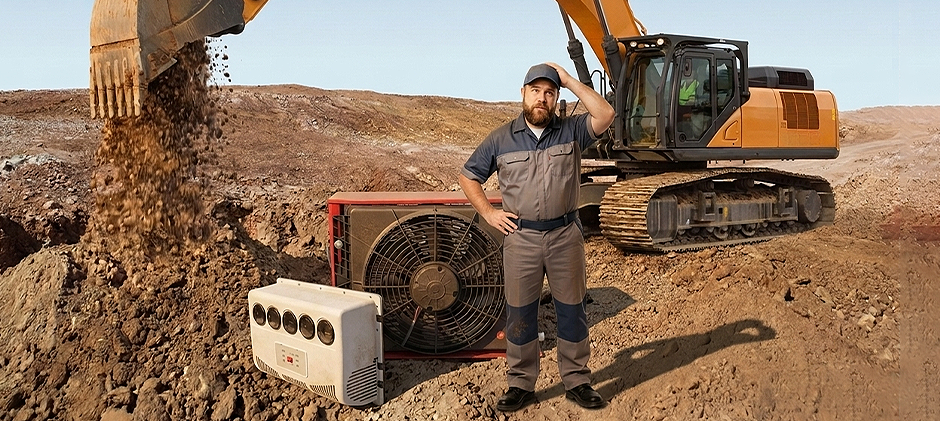
How Does Your AC Compressor Work?
The AC compressor is the heart of your heavy machinery’s cooling system. Its job is to compress refrigerant gas, raise its pressure and temperature and push it through the rest of the system. It goes from the A/C condenser, through the expansion valve and into the AC evaporator before the cycle starts again. This continuous circulation pulls the heat out of the cab and keeps you cool.
Without a functioning compressor, refrigerant stops flowing and cooling stops. Unlike most other AC components, the compressor is one of the few moving parts in the system and is more vulnerable to wear and failure over time.
Signs Your AC Compressor Is Bad
Catching the early warning signs of a failing ac compressor can save you from a costly full compressor replacement. Here’s what to watch for in terms of ac compressor not turning on:
What to Check When AC Won’t Start?
When your excavator AC compressor is not turning on, a simple check can save you hours of unnecessary troubleshooting. Start with these simple steps:
- Visual Inspection: Walk around to check all visible wiring, hoses and connections. You should watch for any signs of burnt insulation, frayed wires, oil stains around the refrigerant fittings or physical damage to the compressor body.
- Compressor Clutch: Use a multimeter to check if the clutch is getting power. No voltage points to an electrical issue upstream; correct voltage with no engagement points to a failed clutch coil or worn disc.
- Fuse Box and Relay: Locate the machine’s fuse panel and check all the fuses related to the AC circuit. A blown fuse is a quick fix. Also, inspect the AC replay.
- Refrigerant Level: Lack of refrigerant can stop the compressor. Measure the refrigerant pressure with a gauge. If the pressure is off, there might be a refrigerant leak.
- AC Control Panel: Confirm the cab’s AC control unit is functioning correctly before assuming the compressor. Check that the ac switch is fully operational and there’s no error code on the panel. A faulty cab control unit or wiring harness to the panel can prevent the signal from ever reaching the compressor.
8 Common Reasons Why Your AC Compressor Is Not Turning on
Here are 8 common reasons accounting for your ac compressor not turning on. Let’s see one by one.
Compressor Clutch Failure
The clutch connects the compressor to the engine’s drive belt. On excavators, the clutch disc wears down, the air gap widens beyond spec, or the coil burns out over time. When this happens, the compressor pulley spins freely but the compressor shaft never rotates. That means no refrigerant is being pumped. This is one of the most common AC compressor problems on heavy equipment and is usually repairable by replacing the clutch assembly without needing to replace the entire compressor.
Electrical Issues
Electrical faults are a leading cause of AC compressor failure on excavators. These issues include blown fuses, failed relays, corroded terminals, burnt wiring, or a faulty pressure switch. Start by checking fuses and relays, then inspect wiring harnesses along their full length, especially near the engine where heat and vibration are most intense. Look for melted insulation, exposed copper, or signs of arcing. Check all terminal connectors at the compressor for corrosion or looseness, as a poor connection here is enough to prevent the compressor from engaging. Excavators are exposed to constant vibration and extreme temperature swings, which accelerate electrical wear faster than in stationary or lighter equipment. Always inspect the full electrical circuit from the cab control unit to the compressor before assuming the compressor itself has failed.
Refrigerant Problems
If the refrigerant level is too low due to a leak, your ac vents are blowing less cold air, you can hear unusual noises from the refrigerant line and the compressor has to work overtime to cool your cabin. Refrigerant leaks are common due to vibration, hose wear, and fitting corrosion. It’s best to catch and fix refrigerant leaks early to avoid significant damage. When contaminants, such as dirt, debris, and oil, enter the refrigerant, they reduce heat transfer efficiency, create blockages, and can cause the compressor to seize over time. In both cases, it’s best to catch and fix these issues early through routine inspection to avoid significant damage.
Condenser Fan Problems
The condenser fan dissipates heat from the condenser coils. A failed condenser fan motor or damaged fan blades can cause heat buildup quickly. Inspect the condenser fan visually to determine whether the AC system is serviced. Common reasons for condenser fan problems are a faulty motor, damaged fan blades, or electrical issues. If the fan doesn’t spin or makes strange noises, shut the system off and call a professional for inspection to determine and conduct any needed repairs to the fan blades, motor, or electrical wiring.
Clogged Cabin Air Filter
A severely clogged cabin air filter restricts airflow through the evaporator, forcing the entire AC system to work harder and increased compressor failure. It is recommended to change the cabin air filter every 250 hours of operation.
Expansion Valve Issues
The expansion valve controls how much refrigerant flows into the evaporator. A faulty expansion valve caused by debris blockage, refrigerant overcharge or internal failure will disrupt the entire refrigerant cycle, causing the compressor not to turn on. If the expansion valve is failing, you may notice the AC running continuously without effectively cooling the cab, frozen evaporator coils, unusual noises from the AC lines, weak or inconsistent airflow from cab vents, or warm air blowing despite the AC being switched on. In harsh, heavy-duty conditions, these symptoms can escalate quickly and affect operator comfort and productivity.
Mechanical Compressor Failure
If the compressor has seized internally due to lubrication failure, debris contamination, or end-of-life wear, it will not turn even when the clutch is engaging correctly. Without proper maintenance, dirt and grime accumulation inside the compressor can cause damaging blockages that accelerate this failure. A seized compressor will often produce a distinctive grinding or squealing noise before complete failure. In some cases, a failed compressor will also shed metal debris into the refrigerant circuit, which means the entire system needs to be flushed before installing a replacement unit.
Capacitor Failure
The capacitor supplies the required power to start the compressor motor. A weak or failed capacitor will prevent the compressor from starting. If you hear a humming sound when the AC is switched on but the compressor doesn’t engage, a faulty capacitor is to blame. Test it with a multimeter and replace it if the readings are outside the rated range.
Troubleshooting Steps for Your Air Conditioning System
Troubleshooting an AC system requires a systematic approach, as the system depends on multiple components working together, including the compressor, fans, electrical wiring, and filters. By breaking the process into specific steps, you can quickly narrow down the cause and decide whether it’s a simple fix or a larger component replacement.
- Check the cabin air filter: A clogged filter restricts airflow through the evaporator and puts unnecessary strain on the entire AC system. Always check the filters first as part of preventive maintenance. See Excavator Cabin Air Filter Location: Where to Find It?
- Examine fans: Confirm the condenser fan is spinning, as a failed fan can cause the compressor to overheat and shut off.
- Inspect electrical components: Check fuses, relays, and wiring harnesses. Look for blown fuses, corroded terminals, or damaged wires near the engine. Rule out electrical faults before replacing major components.
- Examine the compressor clutch: Confirm the clutch engages when the AC is switched on. If the pulley spins but the shaft doesn’t rotate, the clutch is likely worn or failed.
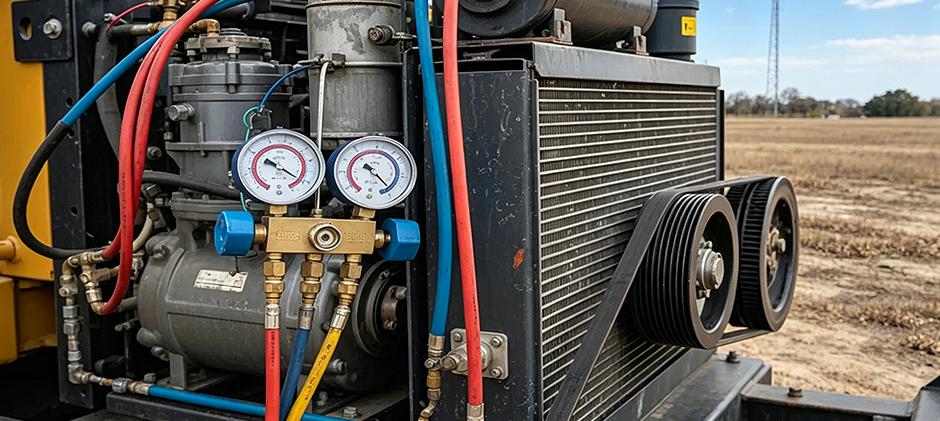
- Test refrigerant pressure: Use manifold gauges to check system pressure. Low pressure indicates a leak; look for oily residue around hoses and fittings before
- Check the condenser fan and expansion valve: Confirm the fan is spinning and listen for unusual noises from the AC lines. Weak airflow while the AC is running can point to an expansion valve issue.
- Inspect the compressor internally: If all other checks pass, the compressor may have seized. Listen for grinding or squealing noises, and check for metal debris in the refrigerant circuit.
Wrapping up
A working air conditioning system is essential for every heavy equipment operator. It is not just about comfort, but closely associated with the productivity, safety and life expectancy of the heavy machinery. Only by watching out for early warning signs and performing regular maintenance can every operator have a smooth operating experience. At FridayParts, you can source a vast selection of high-quality air conditioning parts, including AC compressors, AC condensers, AC expansion valves, AC evaporators and other HVAC parts. Browse our website and you’ll say goodbye to the AC compressor not turning on and enjoy a super cool summer.
Related Articles You Might Also Like
AC Fan Not Spinning? Causes & Fixes 2026
Why Is Your Excavator AC blowing weak? Causes and Fixes
Excavator Maintenance 101: Is Your Excavator Ready for the Summer Heat?
