

Choosing the right tractor is essential to optimizing your farming operations. Many farmers might be struggling with the same question: 2WD vs 4WD tractors? In this guide, we’ll outline the pros and cons of both and help you make an informed buying decision.
Understanding 2WD and 4WD Tractors
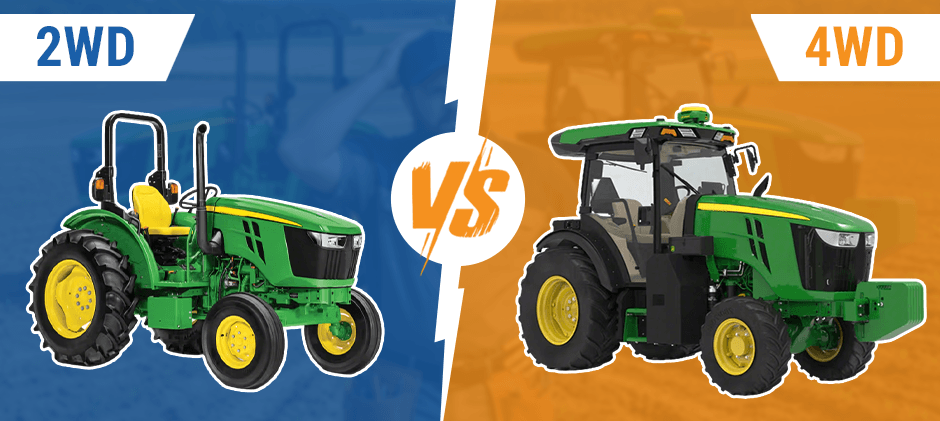
2WD tractors (2-wheel drive), as the name shows, are propelled by the two rear wheels, with the front wheels serving primarily for steering. They are simpler in design, more maneuverable and more cost-effective than their 4WD counterparts. They perform admirably on flat and even terrain, handling lighter tasks efficiently. In contrast, 4WD tractors (4-wheel drive) distribute power to all four wheels, generating enhanced traction and pulling power. This design makes them excel in heavy-duty work, like navigating through rough or even steep terrains with ease and efficiency. Wanna know what’s the Difference Between 4WD and MFWD Tractor?
Pros and Cons of 2WD and 4WD Tractors
Knowing what 2WD and 4WD tractors mean, let’s look at the benefits and limitations of both types of tractors.
Advantages of 2WD Tractors
- Lower purchase price compared to 4WD tractors
- Easy and less expensive repairs with fewer moving parts
- Better fuel efficiency due to the lighter weight and simpler drivetrain
- Superior maneuverability for tight spaces or small fields because of a better turning radius
- Simpler operation due to its straightforward design
Disadvantages of 2WD Tractors
- Limited traction for hilly, wet or muddy operating conditions
- Lower power transfer efficiency, which might reduce performance for heavy-duty work
- Reduced versatility for heavy farming or construction tasks and extreme weather like snow or extremely wet conditions
Advantages of 4WD Tractors
- Enhanced traction on challenging terrains like hills, slopes, mud, snow or uneven ground.
- Greater pulling power for heavy loads and implements without getting stuck or losing traction
- Better stability and control, reducing the risk of wheel slippage and associated accidents during ploughing and hauling on slopes and rough terrain
- Higher versatility across various terrains and weather conditions
- Increased work efficiency for less wear and tear on tires and soil compaction under heavy loads
Disadvantages of 4WD Tractors
- Higher purchase and maintenance costs due to a more complex drivetrain and additional components
- Increased fuel consumption because of the added weight and mechanical complexity
- Less maneuverability due to a larger turning radius, making it harder to operate in small spaces
- Increase soil compaction which is particularly harmful for certain farming practices
How to Choose 2WD and 4WD for Farming
There’s no one-size-fits-all answer for the decision between 2WD and 4WD tractors. Choosing the right tractor depends on your farm’s specific needs. To make the final decision, focus on these three factors:
Assess Your Terrain
If you’ll work on flat or gently sloping lands, just go for 2WD tractors. That may suffice and is more economical. Otherwise, choose a 4WD tractor featuring greater traction and stability for hilly, muddy and extremely uneven terrains.
Consider Your Budget
If your budget is limited, a 2WD tractor is more cost-effective and enough for light work. If you have a higher budget and demanding needs, a 4WD tractor justifies the added investment with greater traction, power transfer and versatility. 2WD tractors have a lower initial purchase price, reduced maintenance costs and less fuel consumption. 4WD tractors have a higher purchase price, increased maintenance and fuel costs, but bring enhanced productivity and potential returns.
Evaluate Your Farming Tasks
If you work on light to medium tasks like mowing, light tillage or general field work, a 2WD is more than capable. If you have tasks that require substantial power and traction, like deep ploughing or hauling heavy loads in adverse conditions, a 4WD tractor is a better choice for you.

Tips for 4WD Tractor Maintenance
Proper maintenance is crucial to ensure optimal performance, longevity and efficiency of your tractor. 4WD tractors feature a complex drivetrain, high-powered components and heavy-duty applications, so they require more extensive maintenance compared to 2WD tractors. See 2026 Tractor Maintenance Checklist here.
Daily or Weekly Checks
The routine checks include:
- Check engine oil, coolant levels, and air filters daily,
- Inspect transmission and hydraulic fluid levels weekly (Click to see How to Check Hydraulic Fluid)
- Look for metallic particles in the oil as an early sign of internal wear
- Monitor tire pressure and condition regularly, and adjust pressure based on field use
- Inspect hydraulic hoses, PTO shafts, and electrical wiring for leaks, cracks, or damage before each use
Seasonal Maintenance
The seasonal maintenance involves:
- Change engine and drivetrain fluids, refresh filters, and calibrate hydraulic systems and implements before planting season
- Grease all PTO shafts, inspect belts and chains, and test brakes and steering before harvesting
- Flush the cooling system if sediment buildup is detected to prevent overheating during long harvesting hours
Long-term Maintenance & Preventive Measures
Below are the long-term maintenance and preventive measures to extend the life of your tractor.
- Schedule major service every 1,000–2,000 hours, including fluid changes, valve adjustments, and differential inspections
- Consider overhauling the transmission and replacing worn belts, pulleys and bearings at 3,000 to 5,000 hours
- Pressure wash the tractor, add fuel stabilizers, and disconnect or trickle-charge the battery to prevent discharge for off-season storage.
Frequently Asked Questions
Does 4WD use more gas?
Generally, 4WD tractors tend to consume more fuel compared to 2WD tractors because they need extra power to drive four wheels simultaneously and the overall weight of the tractors increases the fuel use. But in challenging conditions, like hilly, muddy or uneven terrains, 4WD tractors tend to be more efficient because their superior traction allows them to maintain a better grip and avoid wheel slippage, thus saving fuel consumption in the long run.
Is it practical to switch to a 4WD tractor?
Upgrading to a 4WD tractor is highly practical if you use a front-end loader, work on slopes, or operate in muddy conditions. It can provide superior traction and stability. While 4WD units have higher upfront costs and more maintenance than 2WD, they increase productivity and reduce tire wear by avoiding wheel slippage.
Should I get a 2WD or 4WD tractor?
Choose 4WD if you frequently drive in heavy snow, mud, or off-road, as it provides essential traction. Choose 2WD for better fuel efficiency, lower purchase costs and less expensive repairs if you mainly work on light farming work.
Final Thoughts
The 2WD vs 4WD tractor debate is hot among farmers and tractor fleet owners. Choosing the right one depends on your specific farming needs, budgets and terrains. Both 2WD and 4WD tractors have their distinctive advantages and applications. A 2WD tractor is more cost-effective, an ideal choice for simpler tasks under stable conditions, while a 4WD tractor provides superior traction and stability for more demanding heavy-duty farm use. You can make a wise buying decision that enhances your productivity and efficiency accordingly. Always keep regular tractor maintenance, whether you run a 2WD tractor or a 4WD tractor. FridayParts does not sell tractors but we stock an extensive selection of tractor parts for any of your repair and upgrading needs. Visit our website for high-quality parts now and enjoy your new rigs later.
