

Changing your oil once or twice a year keeps your machine’s powertrain running smoothly. But if you start seeing oil leaking after oil change, that’s a red flag you shouldn’t ignore. Below, we’ll go over all the common reasons why your equipment leaks oil after an oil change, plus how to fix each issue.
The Role of Oil in Engines
The pistons inside your engine move nonstop at high speed, and they also take constant heat and pressure from combustion. Without motor oil to lubricate and protect them, metal parts rub against each other directly. This causes heavy wear at best, and can lead to cylinder scuffing, seizing, or even total engine failure.
Besides lubrication, engine oil does a few other key jobs. It helps cool down the engine and carries away excess heat. It also picks up dirt and tiny metal particles, then sends them to the oil filter to keep the engine clean.
That’s why your engine should never leak oil under normal conditions. Any oil leak means something is already wrong with your equipment. It may start as just a small seep, but if you ignore it, the oil level will keep dropping. Lubrication and cooling get worse over time, and eventually you’ll face serious engine damage — even unexpected machine downtime.
Why Is Oil Leaking After an Oil Change?
If your equipment starts leaking oil right after an oil change, it’s almost always caused by mistakes during the service — not new mechanical problems. Here are the most common issues:
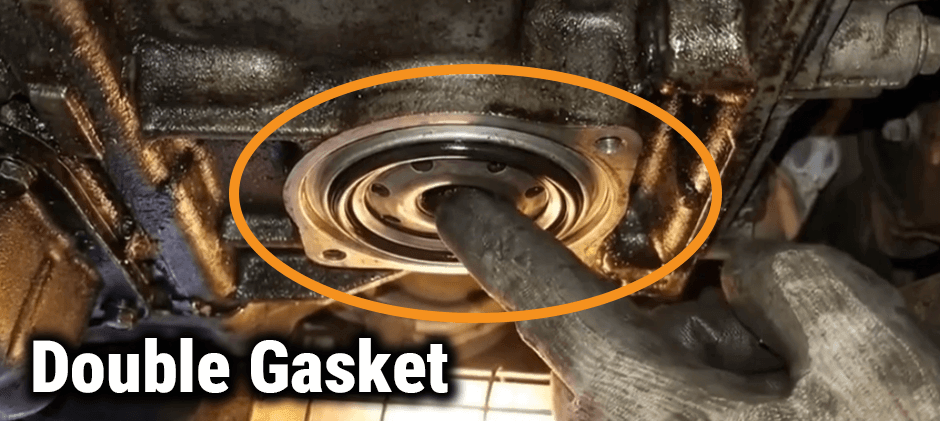
Double Gasket Issue
When you take off the old oil filter, its rubber gasket or O-ring often sticks to the engine face. If you miss it and fit the new filter straight over the old gasket, you’ll have two gaskets stacked up. They can’t seal tightly, and once oil pressure builds up, oil starts leaking out.
Wrong Oil Filter Installation
Oil filters must be fitted properly, especially on heavy equipment that shakes nonstop while working. A lot of people over-tighten the filter with a wrench, which is a mistake. The right way is to hand-twist it until it sits firm, then give it just another quarter turn.
Tighten it too hard, and the filter can bend or strip the threads. Using a filter that doesn’t match your machine model will also cause sealing leaks.
Drain Plug and Washer Issues
The drain plug looks simple, but it’s one of the most common leak spots. For heavy machinery, the drain plug washer is meant for one-time use only. Reusing a squashed, worn old washer will almost always leak.
Crank the plug too tight, and you’ll strip threads or even crack the oil pan. Leave it too loose, and machine vibration will work it looser over time — worst case, it can even fall out.
Damaged Oil Pan or Gasket
While doing maintenance, lifting the machine the wrong way or forcing tools can dent and damage the oil pan. The oil pan gasket can also fail if oil pressure spikes too high or the oil pan isn’t fitted evenly, resulting in oil seepage and leaks.
Overfilled Engine Oil
Putting too much oil in is just as harmful as not having enough. Extra oil ramps up pressure inside the crankcase. The pressure has to release somewhere, so it squeezes oil past seals and gaskets, creating brand-new leaks that didn’t exist before the oil change.
Differentiating Between Spills and Real Leaks
Sometimes what seems like an oil leak is just leftover spilled oil. Oil filters are often tucked in hard-to-reach spots, so it’s normal for oil to drip and spill onto the frame or undercarriage during an oil change.
Here’s how to check if it’s a real active leak: Clean the whole area thoroughly with degreaser. Then start the machine and let it run for a few minutes. Watch that spot closely. If fresh oil appears, you’ve got a real leak.
When you’re working out on site, pay attention to burning oil smells or blue smoke from the exhaust. Those are early signs oil is leaking onto hot engine parts. Also keep an eye on your dash for low oil pressure warnings, and always check the oil level with the dipstick regularly.
The High Cost of Ignoring the Drip
Lose oil, and you lose one of the main things that keeps your engine cool and protected. Once that happens, things go bad really fast:
- Low oil pressure: The engine can’t move oil properly anymore, and the low oil pressure warning light will come on.
- Overheating: Without enough oil carrying heat away, the engine starts to get very hot inside, very quickly.
- Internal damage: Pistons can warp, metal parts wear down, and the cylinder walls can get scored or scratched.
- Engine seizure: If it keeps running like this, the metal parts can overheat and literally stick together. At that point, the engine locks up completely and usually needs a very expensive rebuild or full replacement.
What to Do to Fix?
If you spot oil pooling under your machine, do these steps right away:
- Check the oil level: Pull out the dipstick and take a look. If the oil is below the fill line, don’t start or move the engine. It could be nearly empty, and turning it on might lock the engine up immediately.
- Add oil if it’s safe: If the level is only slightly low and you have to move the machine to get it fixed, top the oil up to the normal mark first.
- Call your technician: Get in touch with the shop or field mechanic who did the oil change. Ask them to come back and check the filter gasket and how tight the drain plug is.
- Take photos for records: Snap clear pictures of the oil puddle and the bottom of the machine. These photos keep your maintenance records solid, and make sure the service shop takes responsibility for repairs and cleanup costs.
Conclusion
An oil change looks simple, but it’s super important for your machine’s health. Oil leaks will drag down equipment performance. Fixing leaks in time keeps serious breakdowns from happening. Shop premium filters and gaskets at FridayParts. Well-made parts create a tight, reliable seal to stop oil leaks.
