

When it comes to lawn mowers, putting too much oil in the engine can cause all kinds of issues. It can make the engine overheat, stall out, and even get seriously damaged. Don’t worry — keep reading to learn the common signs of overfilled oil, plus how to drain the extra oil the right way.
What Are the Risks of Overfilling a Mower with Oil?
For a small engine, even slightly overfilling the oil can cause a chain of issues.
- Oil foaming and poor lubrication: The crankshaft spins rapidly at the bottom of the engine and is designed to stay clear of the oil under normal conditions. When the oil level is too high, the rotating crankshaft churns through the oil just like a mixer beating eggs. This fills the oil with air bubbles and turns it foamy. Foamy oil loses its lubricating ability, making the engine run hotter and wear out much quicker.
- Crankshaft and connecting rod damage (severe cases): An excessively high oil level makes the crankshaft constantly strike the oil as it rotates. This creates massive drag. In severe situations, it can bend the crankshaft or even snap the connecting rod entirely.
- Leaking seals and gaskets: Overfilled oil builds up excessive internal pressure inside the engine. With nowhere else to go, the pressure forces its way out through the weakest points — the seals and gaskets — resulting in oil leaks.
- Engine hydro-lock: Excess oil can slip past the piston rings and enter the combustion chamber. Since liquid oil cannot be compressed like a fuel-air mixture, the piston will jam instantly when you attempt to start the engine. This condition is known as hydro-lock, and it can cause serious damage to internal engine components.
The Symptoms of Too Much Oil in Lawn Mower
If you just put new oil in your engine, watch out for these warning signs.
Hard Start or Sputtering Engine
One of the earliest signs is the engine won’t start at all, or it fires up rough for a second then dies right away. This usually happens when oil fouls the spark plug, or built-up internal pressure makes the engine hard to crank over.
White or Blue Smoke from Exhaust
This is the most obvious sign. If thick white or blue smoke blows out the exhaust, it means extra oil has gotten into the combustion chamber or spilled onto the hot muffler and started burning off. No need to panic — it’s just burning oil, not an engine fire.
Starts Then Stalls Out
You might get the mower running and start mowing, only for it to stall a few minutes later. As the engine warms up, the oil thins out and foams even more. This ruins lubrication and makes the engine overheat, so it shuts down on its own.
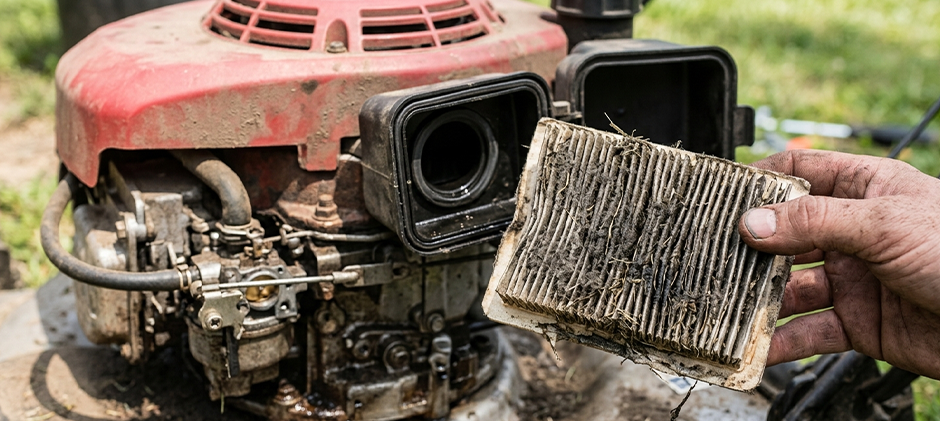
Dirty, Clogged Air Filter
High pressure inside the engine pushes oil mist up through the breather tube and right into the air filter housing. The oil quickly soaks the filter. A clogged filter restricts airflow to the engine, making it run rough, lose power, and use more fuel.
Engine Overheating
Foamy oil doesn’t cool or protect parts well at all. Bad lubrication makes moving parts rub hard against each other, and the engine heats up fast. You’ll feel intense heat from the engine cover, and it’ll sound like it’s struggling to run smooth.
Greasy Spark Plug
Pull out the spark plug, and if the tip is covered in black, oily gunk — that’s oil getting into the combustion chamber. A dirty spark plug can’t make a strong spark, which causes hard starts and engine misfires.
Oil Leaks
When pressure builds up inside the engine, oil will leak out any weak spot. You may see fresh oil dripping on the mower deck, the ground, or seeping from the muffler and carburetor. If you spot oil where it shouldn’t be, overfilled oil is almost always the cause.
If you notice any of these issues — especially right after an oil change — shut off the engine right away and fix your oil level.
How to Remove Excess Oil from Mower Engine?
Once you confirm there’s too much oil, you just need to drain the extra out. It’s not hard, but do it carefully. Pull off the spark plug wire so the engine can’t start by accident. If the engine was running, let it cool down first.
1. Pick a way to remove oil:
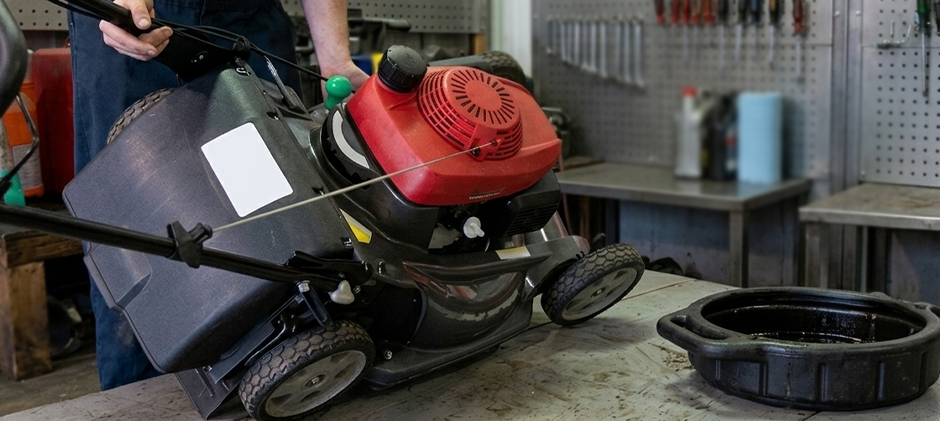
- Tilt method (push mowers): Tip the mower on its side with the air filter and carburetor facing up. Important: don’t tilt it the wrong way, or oil and fuel can flood the air filter and carburetor. The oil will drain out through the fill tube.
- Drain plug method: Some mowers have a drain plug at the bottom of the engine. Put a pan underneath, unscrew the plug, and let the oil flow out. This is usually the cleanest method.
- Oil pump method: You can also use an oil extractor pump. It goes down the dipstick tube and sucks the oil out. This works great for riding mowers where you can’t tilt them.
2. Drain a little at a time: Don’t remove all the oil at once. Take out a small amount first, then set the mower back down. Wait a bit, check the dipstick, and see the level.
3. Repeat if needed: Keep removing small amounts until the oil level reaches the “Full” mark. Don’t go over it.
4. Clean up and finish: Tighten everything back up, wipe off any spilled oil, and reconnect the spark plug wire.
If it’s only slightly overfilled, you can even use a turkey baster or small pump to suck out a little oil through the fill hole.
How to Fix Smoke from Lawn Mower?
Even after you fix the oil level, you may still see some smoke when you start the mower. That’s normal. The smoke usually comes from leftover oil burning inside the muffler and exhaust.
Normal situation: Run the mower outside in a well-ventilated area for 5 to 15 minutes. The smoke should slowly go away as the leftover oil burns off.
When it’s NOT normal: If the smoke smells strongly like gasoline, or you check the oil and it looks thin and smells like gas, something else is wrong. This usually means fuel is getting into the oil.
Common cause: Most often, the carburetor float is stuck. This lets gas leak into the engine oil. So the oil gets diluted and the level may rise.
What you should do: Don’t keep running the engine. Gas-contaminated oil doesn’t protect the engine, and damage can happen fast.
- Drain all the oil
- Refill with fresh oil
- Clean or repair the carburetor so the float works properly
If you don’t fix the carb issue, the problem will come back.
Prevention and Quick Checklist for Future
The easiest way to fix this is to stop it from happening in the first place. If you don’t want to overfill your lawn mower oil again, just follow these easy steps every time you add or change the oil.
- Always park on flat ground: Leave your mower on a level spot. If you check the oil on a slope, the reading will be wrong.
- Check your owner’s manual: It tells you exactly what oil type and how much your engine needs. A regular push mower usually needs around 20 oz (0.6 quarts), and a riding mower can take up to 64 oz (2 quarts).
- Add oil slowly and check often: Pour in roughly 80% of the oil it needs first. Then top it off a little at a time, and check the dipstick each time you add more.
- Always go by the dipstick: The dipstick is what you should trust. Wipe it clean with a cloth, push it all the way in, then pull it out to check. The oil should hit the “Full” line — never go over it.
- Let the oil settle first: After adding oil, wait 1–2 minutes before checking. This lets the oil drain down fully into the tank, so you get a correct level reading.
Conclusion
Add oil slowly and only pour a little at a time. A regular push mower usually needs about 3/4 quart of oil, and a large riding mower can take up to 2 quarts. Always use the dipstick to check your engine oil level. Most mowers have a thin dipstick right under the oil cap to show how much oil is in the tank. Never fill the oil above the “Full” mark on the dipstick. If you need a new dipstick or other mower parts, shop at FridayParts!
