

Inside your machine’s alternator, there is Stator vs. Rotor: the rotor spins and the stator stays still. And they work together to make electrical power. Knowing the difference between the two helps you find problems faster when your charging system stops working. Follow this practical guide and learn now.
What Is a Stator?
The stator is the part of the alternator that does not move. It’s built with copper wire coils wound around a laminated iron core in a circle. When the rotor spins inside it, the magnetic field from the rotor moves across those wire coils. This movement creates an electric current inside the stator. You can think of the stator like the power house where electricity is formed. Because it’s stationary, it’s easier to keep cool and can handle a lot of electric load — perfect for heavy-duty or off‑road machines.
What Is a Rotor?
The rotor is the part that spins inside the stator. It’s a rotating electromagnet; its rotation is powered by the engine through a belt, while its magnetism is created by electrical current. When current flows into the rotor, it becomes magnetic. As it spins inside the stator, its moving magnetic field crosses the stator’s wires — and that’s what creates electricity. If the stator is the “power maker,” the rotor is the “magnetism maker.” It’s always turning when the engine is running.
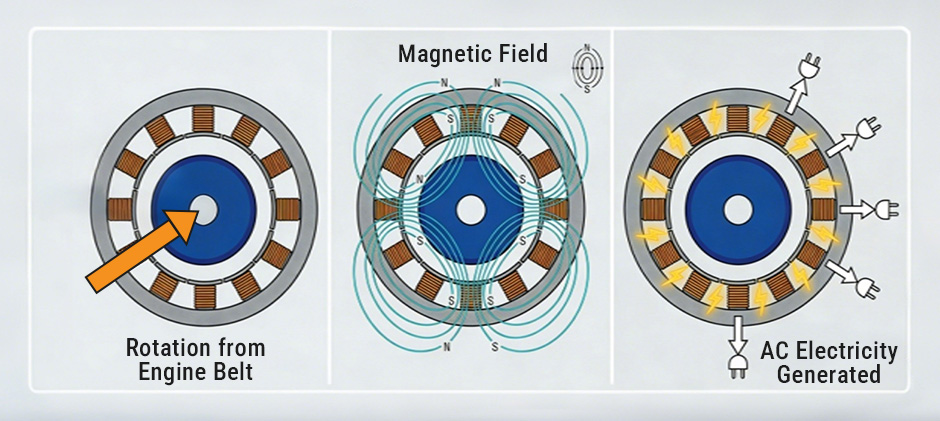
How Do They Work Together to Create Power?
The Stator vs. Rotor uses a simple science rule called electromagnetic induction — electricity is made when a magnetic field moves through a wire.
Here’s how it works step by step:
- The engine turns the alternator pulley.
- This pulley spins the rotor inside the stator.
- As the rotor spins, electric current flows into it, turning it into a magnet.
- The spinning magnetic field crosses the stator’s copper wires.
- That movement creates alternating current (AC) in the stator.
- The alternator then converts AC into direct current (DC) to charge the battery and run lights, sensors, and controls.
In short:
- The rotor creates magnetism.
- The stator turns that magnetism into power.
If either one fails, your machine’s charging system stops working.
What Are 3 Common Symptoms of a Bad Stator?
A bad stator means your alternator can’t make enough power. Typical signs include:
1. Dim Lights or Weak Electricals
- Lights may flicker or dim at low RPMs.
- You might notice the cab accessories acting slowly or cutting off.
2. Dead or Failing Battery
- If the stator stops producing current, the alternator can’t recharge the battery.
- You may need to jump-start often, even with a new battery.
3. Whining Noise or Burning Smell
- Shorted stator coils can make a high, whining sound.
- Overheating or burned wires can cause a plastic or varnish smell.
What Are 2 Common Symptoms of a Bad Rotor?
A failed rotor stops the alternator from making the magnetic field that powers the stator. Here are the main symptoms:
No Charging at All
- If the rotor’s windings break or short, the alternator stops making power completely.
- The battery warning light often turns on right away.
Unstable or Intermittent Output
- Worn slip rings or brushes cause the alternator to charge on and off.
- The voltage may jump between normal and low while the engine is running.
Stator vs. Rotor: Which One Is More Likely to Fail?
Both are built to last, but each fails for different reasons:
- Stators usually fail from heat damage. The copper wire insulation can break down after many hours of high current and high temperature. This is common in off‑road or heavy-use machines that run long hours under load.
- Rotors usually fail from wear and vibration. Because the rotor spins constantly, its slip rings and internal wiring can wear out or break. Vibration from rough terrain or loose bearings can also cause damage over time.
Conclusion
If your alternator stops charging or your battery keeps dying, one of these two parts might be the reason. Checking for vibration, noise, or low power output can help spot the issue early. Regular maintenance and cleaning around the alternator also prevent heat and dust damage — two main causes of failure in off‑road machines. For best results, always replace damaged parts with durable stator and rotor components from a reliable source like FridayParts. That ensures your machine keeps running smoothly in any condition.
