

When an off-road machine starts hard, misfires under load, or loses power during a lift or pull, the spark plug is one of the fastest “proof points” you can check. A plug tells a story about fuel quality, air flow, oil control, heat, and ignition health—often before a bigger failure shows up. This guide gives a field-friendly spark plug condition chart (with causes, effects, and fixes) so you can decide what to adjust, what to repair, and when it’s time to replace parts.
Checking the Performance of Your Engine
Spark plug reading works best when the engine is running normally right before shutdown. If the engine was flooded, repeatedly cranked, or idled for a long time, the plug can look “worse” than it really is.
A quick, reliable plug-check routine
- Warm the engine, then run it under a normal working load for several minutes (if safe).
- Shut down and remove the plug(s) with the correct socket.
- Keep plugs in cylinder order (label them 1–4 / 1–6) to spot one-cylinder problems.
- Inspect four areas:
- Insulator nose (the ceramic tip)
- Center electrode
- Ground electrode
- Threads and sealing area
- If one plug looks very different than the others, that’s usually a cylinder-specific problem (injector/carb issue on that cylinder, intake leak near that runner, valve guide wear, etc.).
How to Read Spark Plug Condition?
Below is a practical spark plug condition chart for off-road machinery. Each condition includes what you’ll see, the most likely cause, what it does to engine performance, and the next action.
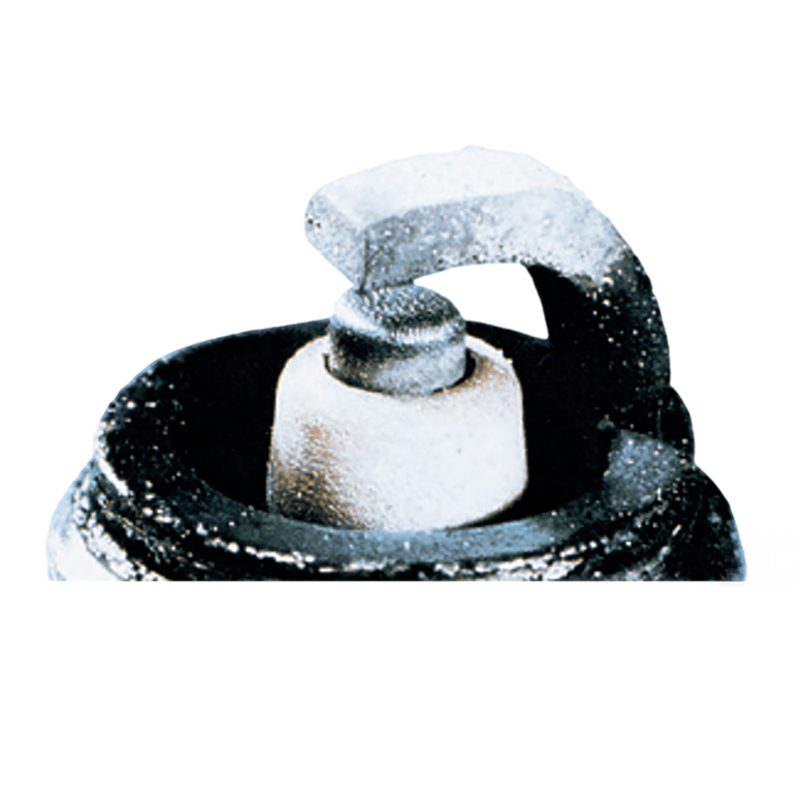
1. Normal Condition
What you see: Insulator nose light gray/gray-yellow to tan/brown. Electrodes intact, no heavy buildup.
Likely cause: Engine is operating correctly—heat range, mixture, and timing are close to spec.
Effect: Stable ignition, normal power, normal fuel use.
What to do: Reinstall if the gap is within spec. Replace only if service hours are near the interval.
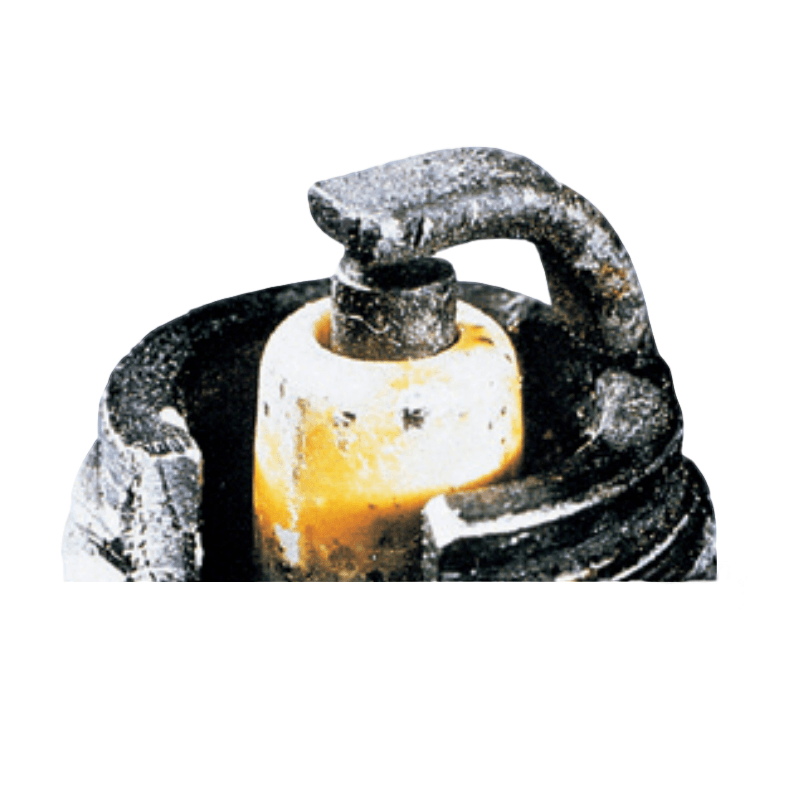
2. Lead Fouling
What you see: Brown/yellow glazed patches on the insulator; sometimes a slightly green tint.
Likely cause: Lead-related deposits from fuel; glazing often follows heavy load after extended light-load running.
Effect: Glaze can become conductive at high load → misfire.
What to do: Replace plug(s). Then reduce the conditions that created repeated glaze (long part-load use followed by hard pulls).
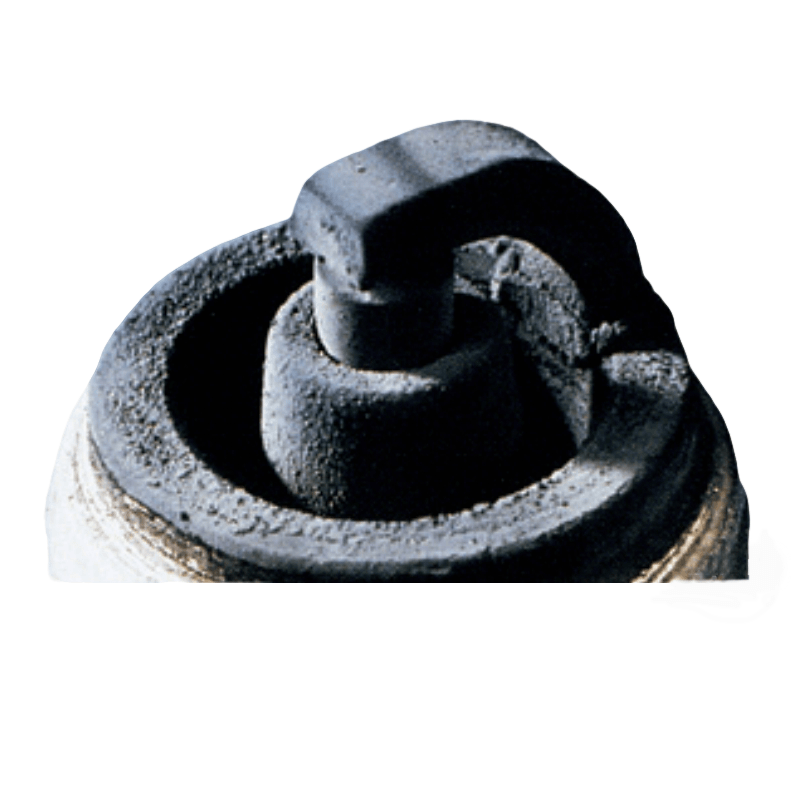
3. Sooted Carbon Fouled
What you see: Dry, velvet-like, dull black soot on insulator, electrodes, and shell.
Likely cause (common on job sites):
- Air/fuel mixture too rich (carb/EFI calibration issue)
- Dirty air filter or restricted intake
- Choke left on too long (manual or faulty automatic choke)
- Excessive idling / short run cycles
- Plug heat range too cold for the duty cycle
Effect: Misfires, rough idle, difficult cold starting.
What to do: - Service the air intake (filter, snorkel, housing seals)
- Correct mixture/choke behavior
- Replace plug(s) and set proper gap
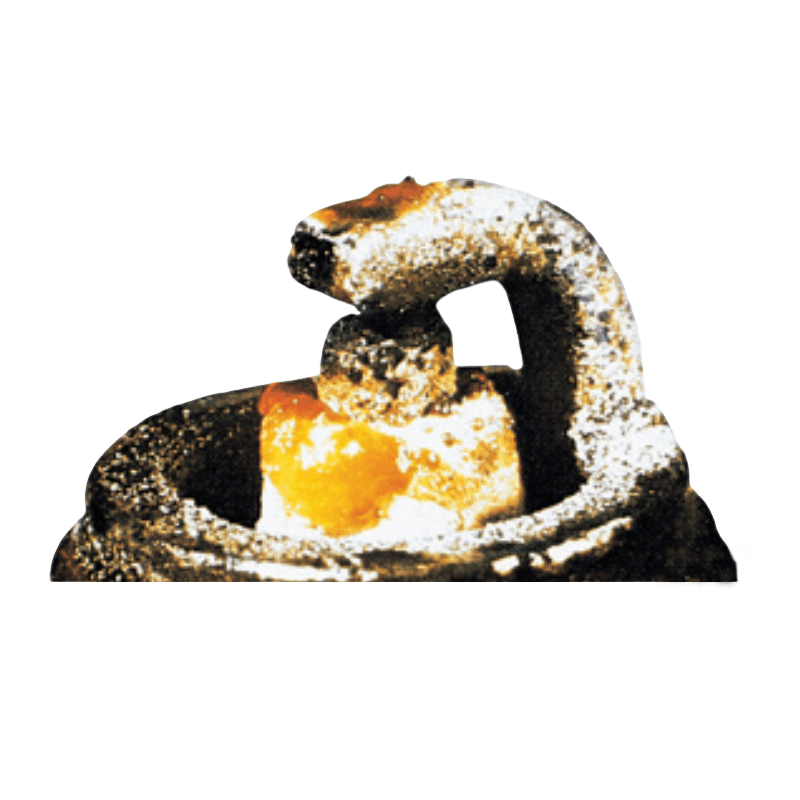
4. Pronounced Lead Fouling
What you see: Thick brown/yellow glazing deposits (can look “varnished”), sometimes greenish.
Likely cause: Same mechanism as lead fouling, but more severe—repeat cycles of part-load then high-load.
Effect: Conductive deposits → stronger chance of misfire under load.
What to do: Replace plug(s) and correct operating pattern if possible (avoid long low-load runs right before heavy pulls).
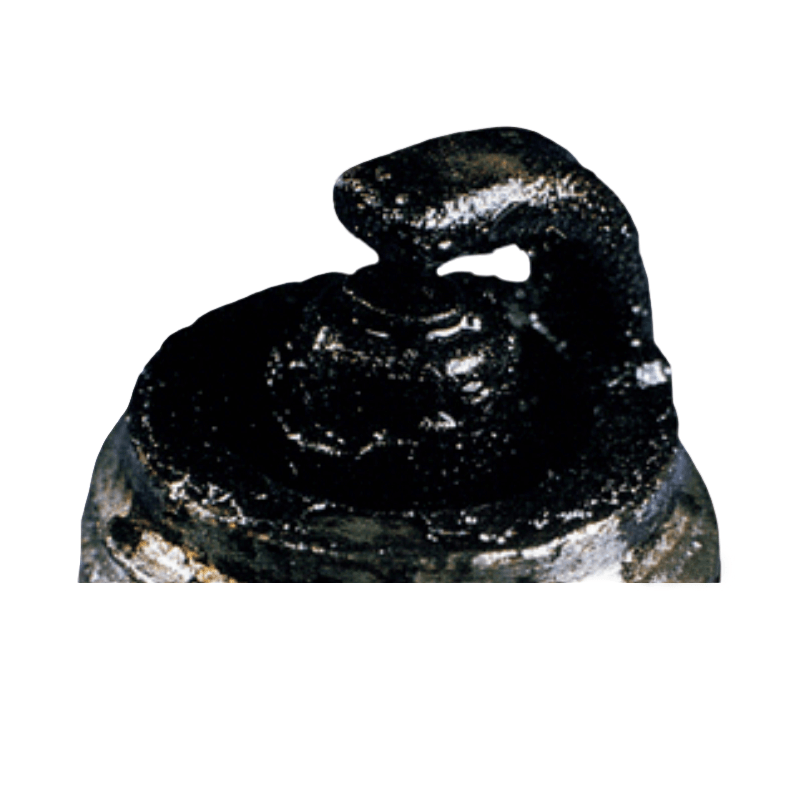
5. Oil-fouled
What you see: Shiny black oily soot/carbon residues on the insulator and electrodes.
Likely cause: Oil entering the combustion chamber—worn rings/cylinder, worn valve guides/seals, overfilled oil; (oil mix issues for 2-stroke applications, where applicable).
Effect: Misfire, hard starting, unstable idle, plug fails again quickly if the root cause remains.
What to do: Fix oil control first (compression/leak-down testing, inspect valve guides/seals). Replace plug(s) after repair.
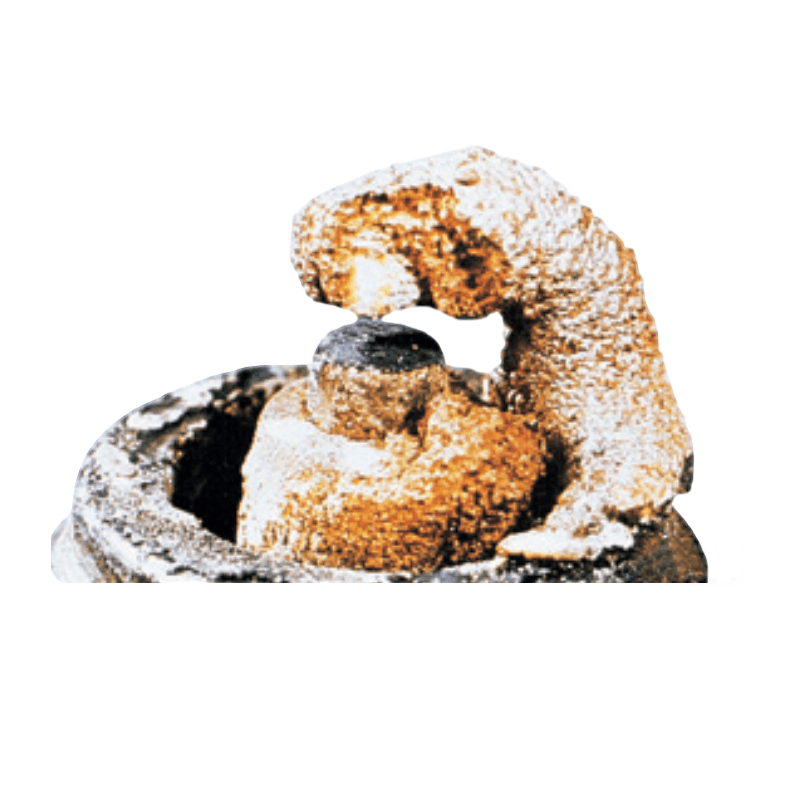
6. Formation of Ash
What you see: Heavy ash deposits on insulator nose and ground electrode; texture can be loose or cinder-like.
Likely cause: Oil or fuel additive residues and oil chemistry leaving ash in the chamber.
Effect: Can trigger pre-ignition/auto-ignition → power loss and possible engine damage.
What to do: Address oil consumption and review oil type/interval. Replace plugs. If ash is heavy, inspect combustion chamber deposits.
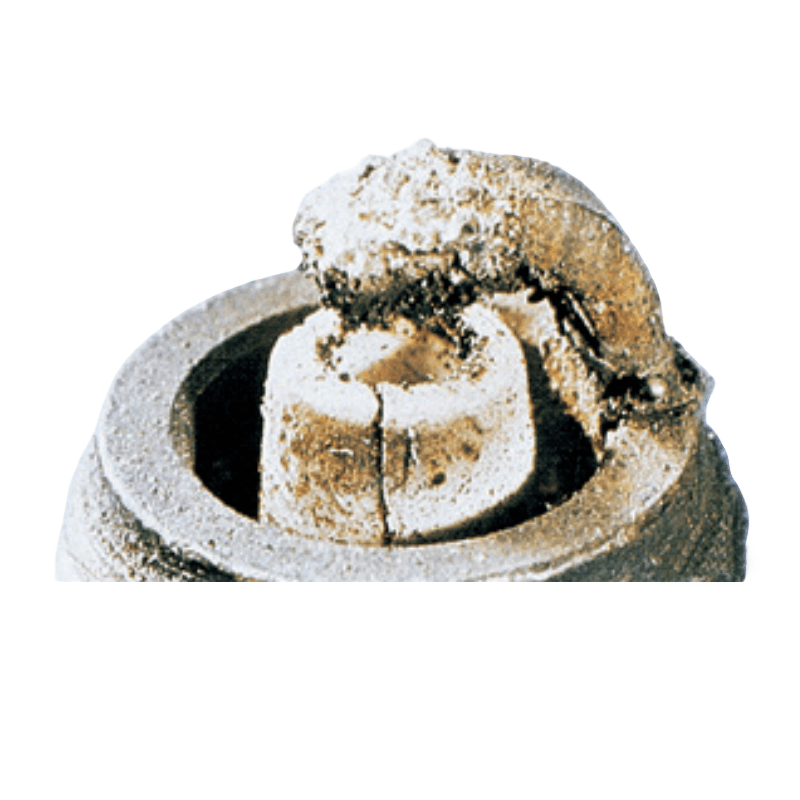
7. Center Electrode Covered with Melted Deposits
What you see: Melted material on the center electrode; the insulator tip may look blistered/spongy/soft.
Likely cause: Overheating from pre-ignition/auto-ignition; possible advanced timing, lean mixture, hot spots from chamber deposits, cooling system issues, or wrong plug heat range.
Effect: Misfire, sharp loss of power; risk of engine damage.
What to do: Stop heavy operations until the cause is found. Check timing, mixture, cooling system, and chamber deposits. Replace plug(s).
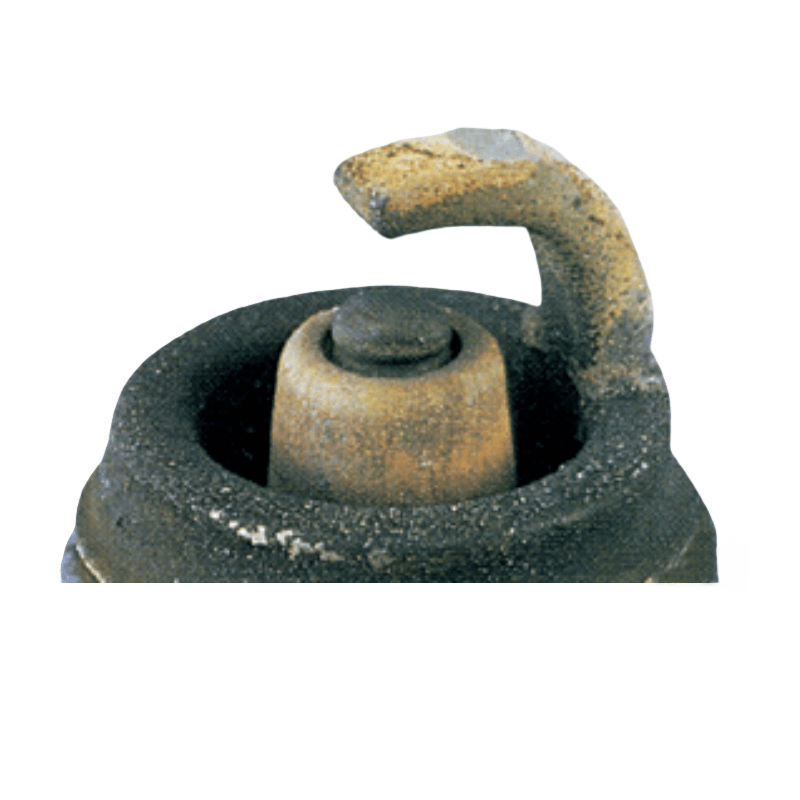
8. Heavy Wear on the Center Electrode
What you see: Rounded/eroded center electrode; gap grows large.
Likely cause: Plug has exceeded service interval or has been run in harsh conditions for too long.
Effect: Misfire under acceleration/load because ignition voltage may not bridge the larger gap; poor starting.
What to do: Replace plug(s). Verify the correct gap on installation and follow the service-hour schedule.
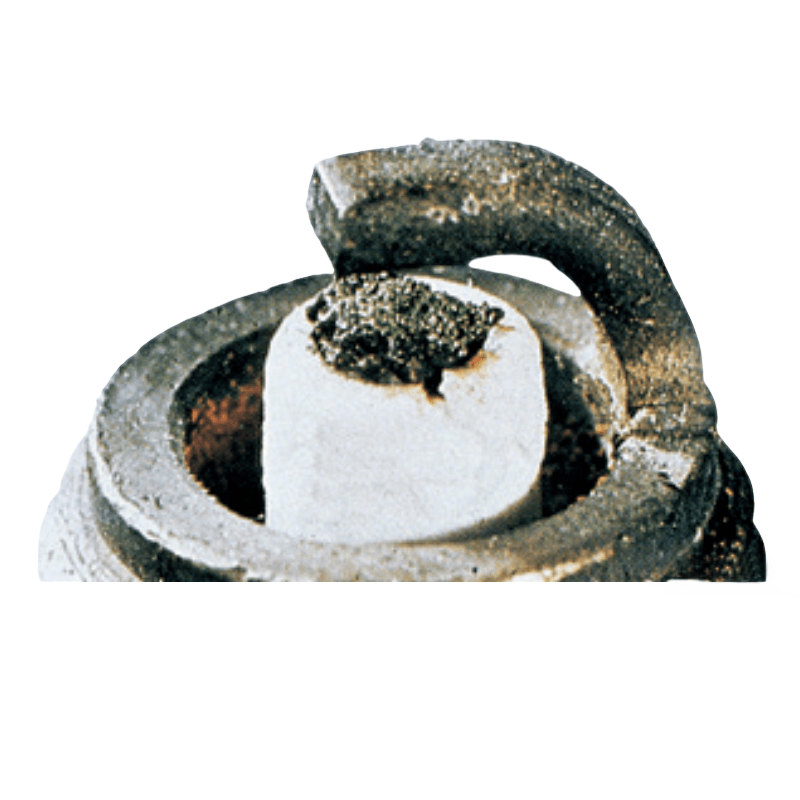
9. Partially Melted Center Electrode
What you see: The center electrode looks melted; the ground electrode is often also damaged.
Likely cause: Severe overheating from pre-ignition/auto-ignition (timing too advanced, too lean, deposits, poor fuel, cooling problems).
Effect: Misfire, major power loss; can crack the insulator nose.
What to do: Treat as an urgent root-cause issue—check cooling, timing, mixture, and deposit sources. Replace plug(s) only after fixing the cause.
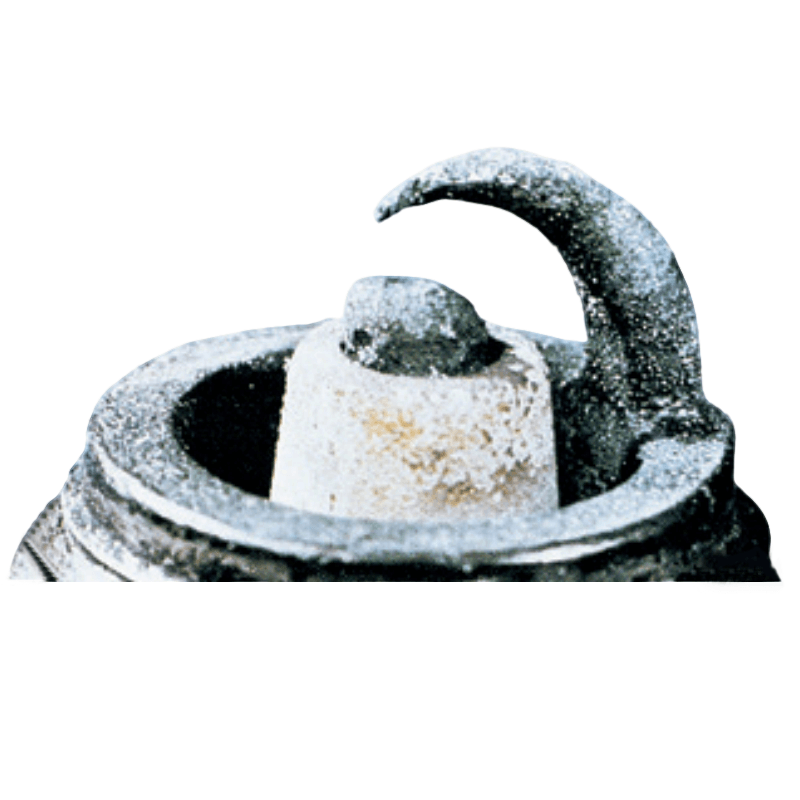
10. Heavy Wear on the Ground Electrode
What you see: Ground electrode eroded heavily; edge rounded; gap grows.
Likely cause: Chemical attack from aggressive fuel/oil additives, and/or unfavorable in-cylinder flow conditions from deposits (without clear overheating signs).
Effect: Misfire under load/acceleration; poor starts.
What to do: Replace plug(s). Review fuel quality, oil choice, and service intervals. If deposits are present, address them.
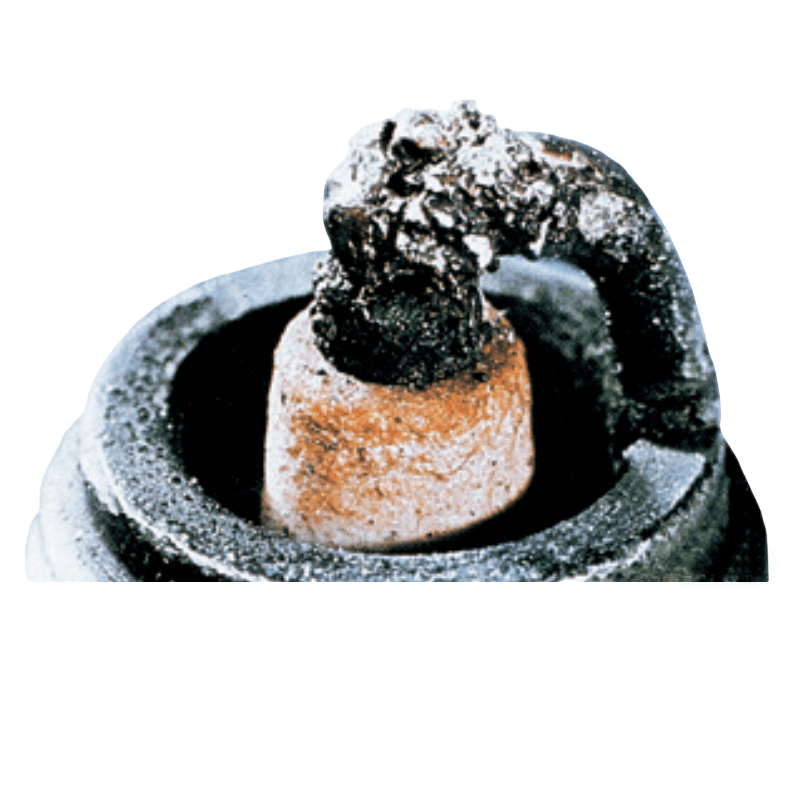
11. Partially Melted Electrodes
What you see: “Cauliflower-like” electrode shape; possible foreign material deposits.
Likely cause: Overheating / pre-ignition events; sometimes material transfer not originally from the plug.
Effect: Power loss becomes noticeable before total failure; high engine damage risk.
What to do: Diagnose overheating causes (timing, mixture, cooling, deposits). Replace plug(s) and inspect cylinder for collateral damage.
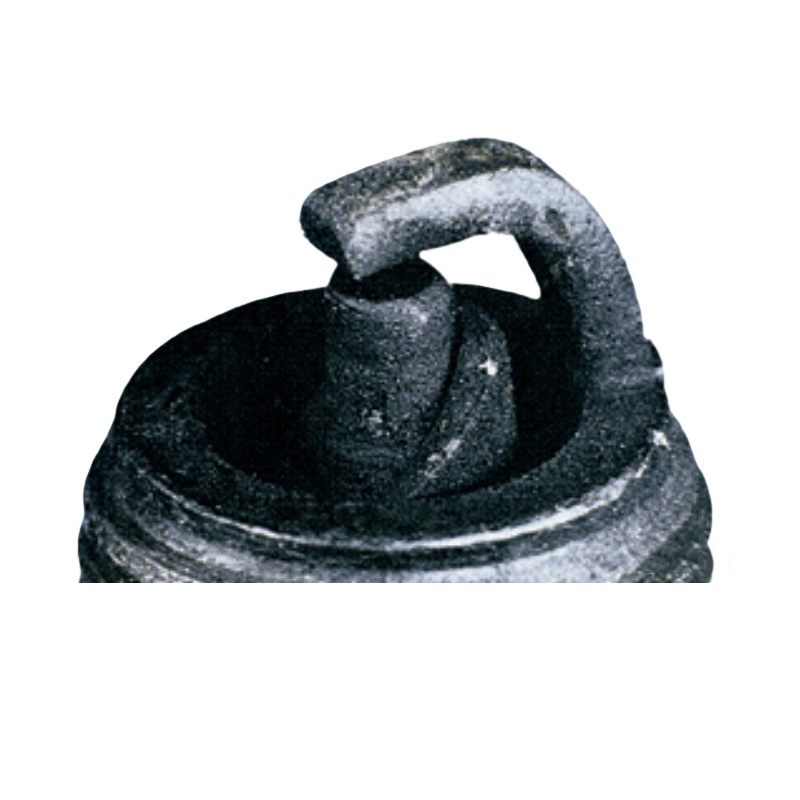
12. Insulator-Nose Fracture
What you see: Ceramic nose cracked or broken.
Likely cause: Mechanical damage (dropped plug, improper gapping tool use, side-loading during install). In rare cases, long service life plus heavy deposits/corrosion can contribute.
Effect: Misfire; spark can jump in the wrong place and won’t light the mixture reliably.
What to do: Replace immediately. Improve handling: proper socket, correct torque, avoid prying on the electrode.
How Spark Plugs Affect the Engine?
On gasoline or spark-ignition off-road engines, the spark plug is the “trigger” for combustion timing and stability. When the plug is fouled, worn, or overheated, the engine usually shows problems in the same few ways:
- Starting reliability: Weak spark or a flooded/fouled tip increases cranking time and battery load.
- Power under load: Under heavy throttle, the cylinder needs a strong spark to light a dense mixture. Worn gaps and deposits raise the required voltage and cause misfire.
- Fuel use: Misfires waste fuel because unburned fuel exits the cylinder, and operators often add throttle to compensate.
- Engine protection: Overheating signs on plugs can warn about pre-ignition risk. Catching it early can prevent piston, valve, or cylinder damage.
A plug reading is also a “bridge” test: it links what you feel (hesitation, surge, rough idle) to what the engine is doing (rich/lean, oiling, heat).
 Spark Plugs Maintenance Tips
Good maintenance is mostly about correct parts, clean installation, and matching the plug to the duty cycle.
1) Use the right plug spec
Off-road engines vary widely. Choose based on:
- Thread size and reach
- Heat range
- Electrode gap
- Intended engine application
If a replacement is needed, sourcing from an off-road-focused catalog helps reduce wrong-fit risk. Here’s the correct category link to shop spark plug options for off-road machinery.
2) Inspect on a schedule that matches working hours
A practical rule:
- Inspect at the start of the busy season, and after heavy-duty periods
- Replace earlier if the machine does lots of idling, dusty intake exposure, or frequent cold starts
3) Don’t ignore the supporting parts
A “new plug, same problem” outcome often means another engine part is causing the deposits or heat.
Mid-article note for planned repairs: if plug reading shows oil fouling, overheating, or mixture problems, you may also need related engine parts (filters, ignition components, cooling parts, gaskets, and other service items) to fix the root cause instead of just the symptom.
4) Installation best practices that prevent damage
- Clean the area around the plug before removal (keeps grit out of the cylinder head)
- Start threads by hand to avoid cross-threading
- Use correct torque (over-tightening can damage threads; under-tightening can cause heat issues)
- Set gap carefully (don’t pry on delicate electrodes)
5) Fix the cause, not just the plug
Use this simple decision flow:
- Carbon fouling? → service air filter/intake + mixture/choke behavior
- Oil fouling or ash? → check oil consumption and compression/leak-down
- Melted deposits? → check cooling, timing, lean condition, chamber deposits
- Wear only? → replace on interval and verify correct heat range/gap
Conclusion
A spark plug condition chart turns guesswork into a clear plan: read the plug, identify the deposit or damage pattern, then correct the cause before it becomes a bigger engine issue. For off-road machinery, the biggest wins come from clean air intake, correct mixture/timing, and staying ahead of wear intervals. When it’s time to replace, FridayParts supports repairs with affordable, high-quality aftermarket parts, broad compatibility, and a large inventory to help keep equipment running.
