

Unexpected downtime is the single greatest threat to a project’s bottom line. When a high-production excavator or a wheel loader drops a code in the middle of a shift, the mechanical rhythm of the entire job site breaks down. A flashing check engine light or a sudden drop in cycle speeds isn’t just a nuisance; it is a direct hit to your productivity. This guide serves as a technical roadmap for mastering, diagnosing, and resolving the P0744 diagnostic trouble code.
What Does the P0744 Code Mean?
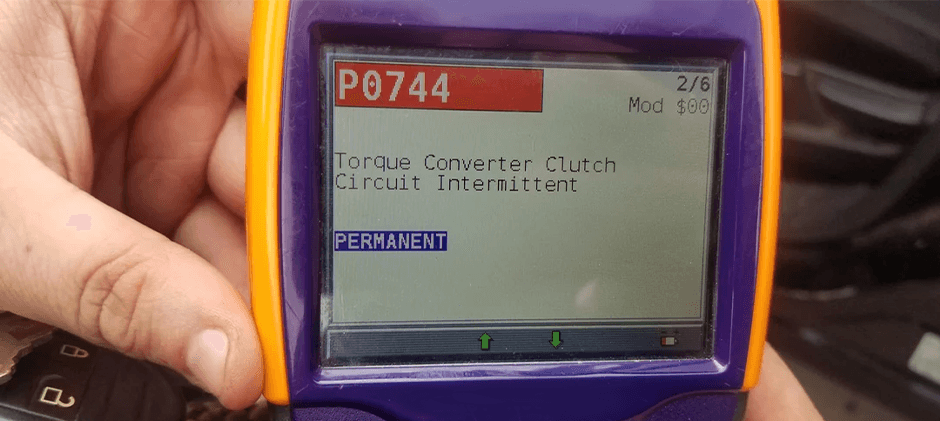
Diagnostic Trouble Code (DTC) P0744 is defined as “Torque Converter Clutch Circuit Intermittent.” To resolve this, you must first grasp the physical role of the torque converter in heavy-duty machinery. In an off-road application, the torque converter acts as a fluid coupling between the engine’s flywheel and the transmission’s input shaft. It allows the engine to keep running while the machine is stationary under load, providing the necessary torque multiplication for digging or pushing heavy material.
The core of this code involves the “lock-up” mechanism. To maximize fuel efficiency and eliminate power loss during high-speed travel or heavy pulling, the Transmission Control Module (TCM) or Powertrain Control Module (PCM) engages a mechanical clutch inside the torque converter. When the TCM determines that the engine and transmission should be in sync, it energizes the Torque Converter Clutch (TCC) solenoid. This solenoid opens a hydraulic path, sending “clutch apply” pressure to lock the turbine and impeller together. When this happens, the engine and transmission rotate at a 1:1 ratio, removing the slip inherent in fluid couplings.
The “intermittent” designation of the P0744 code is critical. It signifies that the TCM has detected a state where the clutch is failing to maintain its commanded position consistently. The TCM monitors the input and output speeds of the converter. If it sees the slip speed deviate from the programmed parameters—even for a split second—it flags the circuit as unstable. This is not a total circuit “open” or “short” (which would trigger different codes), but rather a failure to maintain a consistent mechanical or electrical state during the machine’s operation.
What Are the Causes of the P0744 Code?
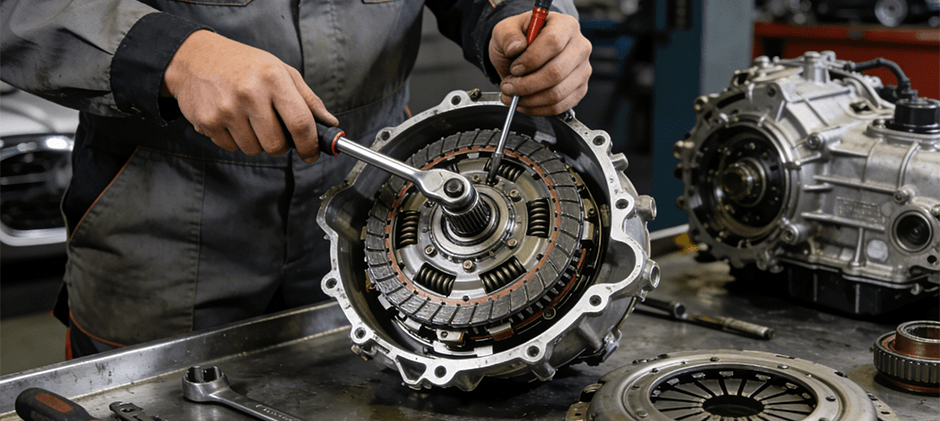
Identifying the root cause of an intermittent fault requires looking at the intersection of high-vibration environments and high-pressure hydraulics. The following failure points are the most frequent culprits for a P0744 in off-road machinery:
1. Low Transmission Fluid Levels
If the fluid level is even slightly below the required mark, the pump may draw in air during high-angle operations (like working on a grade). This air creates foam, which is compressible, preventing the TCC solenoid from maintaining the steady hydraulic pressure needed to keep the clutch locked.
2. Contaminated or Degraded Fluid
Over time, transmission fluid loses its viscosity and accumulates microscopic debris. This contamination leads to “stiction” within the solenoid plunger. Because the debris causes the valve to hang up momentarily, the hydraulic signal becomes inconsistent, triggering the intermittent code.
3. Faulty TCC Solenoid Valve
The solenoid is an electro-hydraulic component that lives in a high-heat, high-vibration environment. The internal copper windings can develop hairline fractures that only lose continuity when the machine hits a specific temperature or vibration frequency, causing the TCM to lose control of the circuit temporarily.
4. Engine Coolant Temperature (ECT) Sensor Malfunction
This is a frequently overlooked cause. In heavy equipment, the TCM will often refuse to command a torque converter lock-up if the engine is too cold. If the ECT sensor sends an intermittent “cold” signal due to a bad connector or internal resistance, the TCM will disengage the lock-up suddenly, leading to a P0744.
5. Worn Transmission Pump
A pump that is reaching the end of its service life may fail to provide consistent line pressure. As the pump fluctuates, the volume of oil reaching the lock-up circuit drops, causing the clutch to slip in and out of engagement during high-load cycles.
6. Wiring Harness Damage
Heavy equipment is subject to extreme frame-flex and heat-soaking. These conditions can cause the insulation on the TCC solenoid harness to fray. When the machine vibrates during a heavy dig, the wire may briefly touch the chassis, creating a momentary ground or “ghost voltage” that disrupts the TCM signal.
7. Internal Mechanical Wear
If the friction material on the torque converter clutch itself is worn thin, it may struggle to “bite” the pressure plate. This physical slipping is detected by the TCM as a circuit logic failure because the expected RPM drop does not occur when the solenoid is energized.
8. Internal Valve Body Blockages
The valve body is the hydraulic brain of the transmission. If the narrow passages leading to the torque converter are partially blocked by sludge or metallic flakes, the hydraulic fluid cannot reach the clutch fast enough, resulting in a delayed and intermittent lock-up response.
9. Malfunctioning Transmission Control Module (TCM)
While less common, the TCM can develop internal solder joint failures. As the module heats up during the workday, the circuit board can expand, causing a temporary loss of the output signal to the transmission.
What Are the Common Symptoms of the P0744 Code?
When a machine is suffering from a P0744, the symptoms are often felt before the warning light is noticed. Operators who are familiar with the “feel” of their machinery will detect changes in the power transfer and heat management of the drivetrain.
| Symptom | Operational Impact |
|---|---|
| Erratic or Harsh Shifting | The machine may lurch or “hunt” for the right gear as the TCC engages and disengages rapidly, causing unnecessary stress on the planetary gears |
| Transmission Overheating | Because the lock-up is not holding, the torque converter stays in “fluid drive” mode, which generates massive amounts of friction heat that can bake seals and degrade oil. |
| Slippage Under Heavy Load | You may notice the engine RPMs screaming while the machine barely crawls forward, indicating that the power is being lost as heat within the converter rather than moving the tracks. |
| Increased Fuel Consumption | Without the 1:1 mechanical lock, the engine must burn more fuel to compensate for the efficiency losses in the fluid coupling, raising your hourly operating costs. |
Pro Tip: If you notice your transmission temperature gauge climbing during high-speed roading or long hauling cycles, but the check engine light only flickers occasionally, do not ignore it. This behavior is a classic sign of an intermittent TCC circuit failure. The heat generated by the slipping clutch will eventually cook the entire transmission if you don’t address the P0744 early.
How to Diagnose the P0744 Code?
Diagnosis in an off-road environment must be systematic to account for the “intermittent” nature of the fault. You are looking for a problem that might only appear when the machine is hot and under load.
Step 1: Fluid Condition and Level Inspection
Check the fluid while the engine is running and the transmission is at operating temperature. Look for a burnt smell, which indicates the clutch has been slipping and overheating the oil. Pull a sample and check for metallic debris or a “milky” appearance. If the fluid is dark or full of particles, the intermittent code is likely caused by “stiction” in the solenoid or a physical blockage in the valve body passages.
Step 2: Electrical Circuit Testing
This is where many technicians miss the mark. You must check the electrical integrity of the TCM all the way to the solenoid. Use a digital multimeter to check the continuity of the solenoid coil.
- Logic Check: On systems hardwired to power, the TCM looks for 12 volts at the controlled side of the solenoid when it is not energized. On systems hardwired to ground, the TCM looks for a ground signal on the controlled side.
- Vibration Test: While the multimeter is connected, have an assistant wiggle the wiring harness at the transmission entry point. If the voltage jumps or drops, you have found a frayed wire or a loose pin. Look for “ghost voltage”—a low-level reading that suggests a high-resistance connection caused by corrosion in a connector.
Step 3: ECT Sensor Verification
Using a diagnostic scanner, monitor the Engine Coolant Temperature. If the temperature reading “drops out” to a default cold value while the engine is clearly hot, the TCM will instantly kill the lock-up command. This mimics a transmission failure when the actual culprit is a $50 sensor on the engine block.
Step 4: Hydraulic Pressure Testing
Install a high-pressure gauge into the TCC test port on the transmission case. Command the lock-up using a scan tool and watch the gauge. If the pressure is slow to rise or fluctuates wildly while the command is steady, the issue is hydraulic—either a worn pump, a leaking seal, or a sticking TCC solenoid plunger.
How to Fix a P0744 Code?
Resolving a P0744 requires choosing a repair path that matches your diagnostic findings. In heavy equipment, a “patch job” usually leads to more downtime, so focus on high-quality restorations.
Fluid and Filter Service
If contamination was the primary finding, a simple drain-and-fill is rarely enough. Off-road transmissions can hold up to 40 gallons of fluid, much of which stays trapped in the torque converter and coolers. You must perform a full system flush to ensure all debris is removed. Replace all filters with high-efficiency aftermarket options to prevent future blockages. Ensure the replacement fluid exactly matches the manufacturer’s viscosity and additive requirements to maintain correct clutch friction.
Electrical and Solenoid Repairs
Frayed harnesses should be replaced rather than spliced, as splices often fail under the extreme vibration of a loader or excavator. If the TCC solenoid showed high resistance or failed the pressure test, it must be replaced. Accessing the solenoid usually requires dropping the transmission pan to reach the valve body. This is a precision job; if we introduce any dirt during this process, the new solenoid will stick.
Component Replacement and Upgrades
When the diagnosis points to a total failure of the lock-up circuit’s mechanical parts, sourcing the right components is the priority. When your repairs require replacing heavy-duty transmission parts, selecting high-quality aftermarket options is essential for long-term machine uptime. These parts must meet or exceed original specifications to ensure the TCM can maintain perfect control over the circuit.
If the internal clutch lining has burned away or the turbine seals have failed, a complete torque converter replacement is the only way to restore full power. This is a major repair that involves separating the engine and transmission, but it is the only way to clear the P0744 for good if the internal mechanical coupling has failed. Replacing the converter together with the TCC solenoid refreshes the entire lock-up system, preventing the intermittent fault from returning.
Conclusion
The P0744 code is a complex warning that signals a breakdown in the efficiency of your machine’s drivetrain. Whether the cause is a faulty ECT sensor, a sticking TCC solenoid, or contaminated fluid, a systematic approach to diagnosis will save you from unnecessary parts-swapping and further downtime. We are a premier supplier of aftermarket parts, committed to providing the heavy-duty components you need at a price that keeps your operation profitable. Our vast inventory covers a wide range of brands, ensuring that you can find the exact torque converters and transmission solenoids needed to get your equipment back to work.
