

If you’re maintaining gravel lanes, farm roads, parking pads, or jobsite access on a tractor, the land plane vs box blade question comes up fast—usually right after the first potholes, washboards, or ruts show up. We’ll help you pick the attachment that matches your surface, your tractor, and the results you want, so you don’t waste hours “grading” only to make the problem worse.
What Is a Land Plane and a Box Blade?
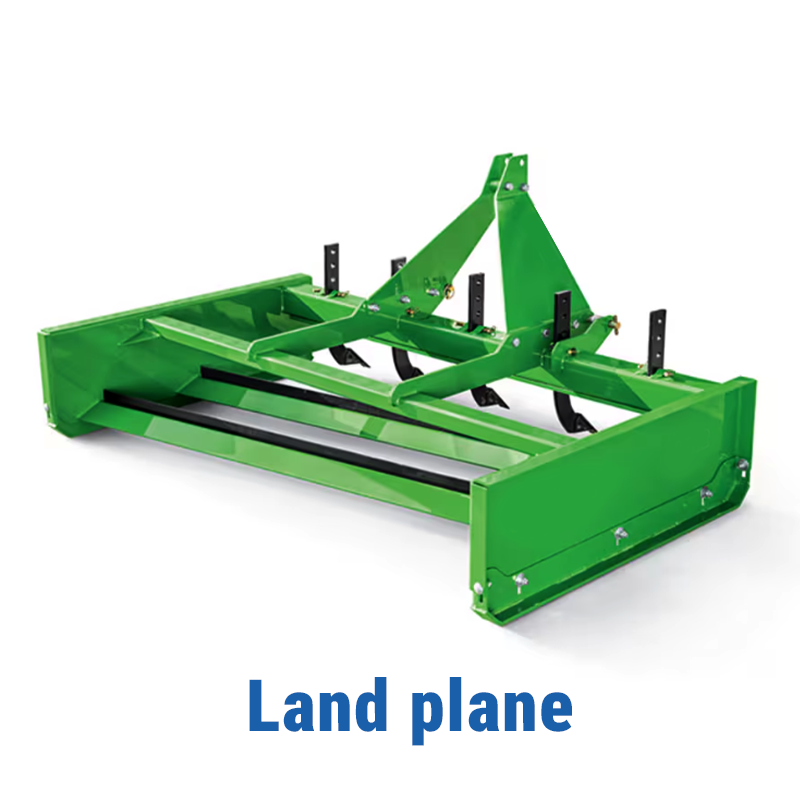
What is a Land Plane?
A land plane (often called a land leveler or grader) is a 3-point hitch attachment with an open frame and two (or more) fixed cutting blades set inside the frame. As you pull it forward:
- The front blade shaves high spots.
- Material rolls and blends inside the frame.
- The rear blade leaves a flatter finish.
A land plane does its best work when there’s already material on the surface (like gravel), and the goal is regular maintenance instead of heavy reshaping.
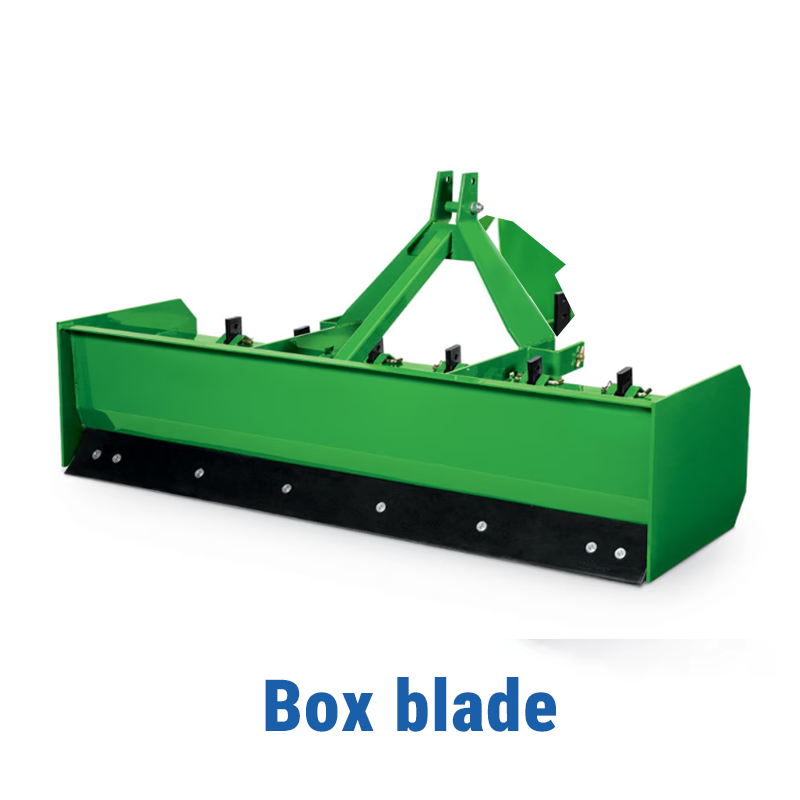
What is a Box Blade?
A box blade is a 3-point hitch attachment shaped like a partial box with side plates that help trap and carry material. Most box blades have:
- Front and rear cutting edges
- A “box” cavity to hold soil or gravel
- Scarifiers (ripper shanks) that can be lowered to break hard ground
A box blade is the better choice when you need to cut, loosen, and move material—not just smooth it.
Land Plane vs Box Blade: What’s the Difference?
Both tools mount to a tractor’s 3-point hitch, and both can grade—so the difference isn’t “which one works,” it’s how they work and what they’re best at.
1. Material flow: trapped vs. blended
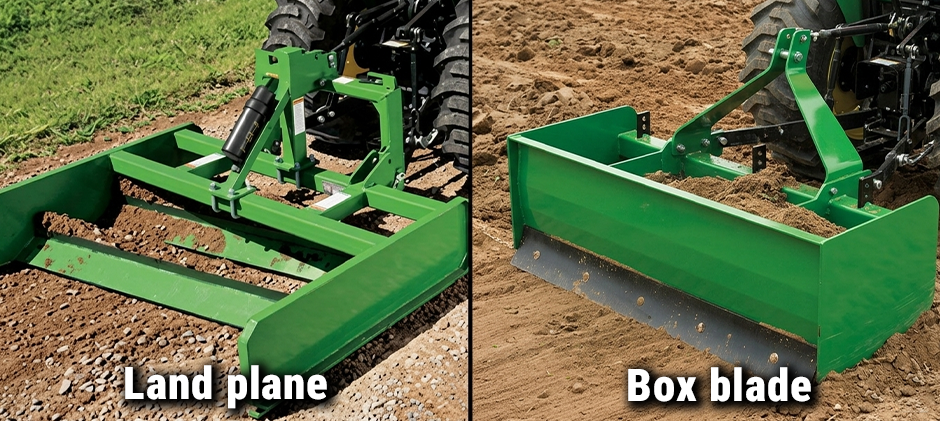
Box blade: Side plates trap material. That makes it useful for carrying gravel into low spots, backfilling, and rebuilding edges.
Land plane: Open frame lets material flow through after it fills. That makes it strong for consistent smoothing and blending.
2. Aggressiveness: cutting power vs. surface control
Box blade: Can bite hard, especially with scarifiers down. Great for pothole repair that requires depth, but easier to gouge if the top link and height aren’t managed properly.
Land plane: More “self-leveling” during steady pulls. It’s harder to accidentally dig a trench, which is why many operators find it easier for routine driveway work.
3. Surface finish: “rebuild” vs. “finish.”
Box blade: Can leave a good finish, but it takes more adjustments. It often excels in the rough and mid stages.
Land plane: Strong finishing tool for washboards, light ruts, and re-spreading loose gravel.
4. Best matches by job type
Land plane: routine gravel maintenance, removing washboards, keeping a consistent plane, pulling gravel back from edges (depending on design and technique).
Box blade: cutting crown, filling major washouts, moving material from pile to problem area, cutting new grade, breaking compacted base.
Comparison table
| Feature | Land Plane | Box Blade |
|---|---|---|
| Main strength | Smoothing and blending | Cutting, carrying, rebuilding |
| Design | Open frame, fixed blades | Side plates + cutting edges |
| Handles washboards well | Yes | Sometimes (more tuning) |
| Fixes deep potholes fast | Only if the material is already loose | Yes (especially with scarifiers) |
| Operator skill needed | Lower for maintenance | Moderate (more adjustments) |
| Works in hardpan | Limited | Strong (scarifiers) |
| Typical use cycle | “Maintain often” | “Repair when damage is heavy.” |
Once the design differences are clear, the real decision comes down to your surface, your tractor, and how often you want to touch the driveway or lane.
How to Choose the Right One?
Choosing between a land plane and a box blade is easier when the decision is tied to the problem you’re solving, not the tool name. Use the steps below to match the attachment to your conditions.
Step 1: Define the job—maintenance or reconstruction?
Ask one straight question:
- Are you trying to keep a decent surface smooth?
→ Favor a land plane. - Are you trying to rebuild grade, repair serious damage, or cut a new shape?
→ Favor a box blade.
Examples that usually mean land plane:
- Washboard bumps that come back every few weeks
- Light ruts from turning or braking
- “Loose gravel drift,” where stone moves, but the base is still okay
Examples that usually mean box blade:
- Deep potholes that expose the base or subgrade
- Washouts from runoff
- Hard-packed areas that need ripping before reshaping
- A new lane, pad, or drainage shape where you must cut material
Step 2: Look at what the surface is doing
Two surfaces can look “rough,” but behave differently:
- If the surface is loose and moving, a land plane can re-blend and level without tearing it up.
- If the surface is bonded/compacted, a box blade with scarifiers can break it, so grading actually changes the shape.
A quick test: drag a steel bar or shovel edge across the surface.
- If it scratches and lifts material easily → land plane can work.
- If it barely marks it → box blade (with scarifiers) is more realistic.
Step 3: Match implement width and tractor capability
For either attachment, you want the tool to cover the tire tracks, but not be so wide that the tractor can’t pull it under load.
General fit checks:
- Target implements a width that covers the rear tire width (or slightly wider).
- Heavier and wider implements pull harder—especially uphill, in wet gravel, or with scarifiers down.
- If traction is limited, you may do better with a slightly narrower tool and more passes.
Tip: Traction often matters more than engine power for grading work. Loaded tires, proper ballast, and a stable 3-point setup can change results more than a few horsepower.
Step 4: Decide how much “control work” you’re willing to do
A box blade is versatile, but it rewards correct setup:
Box blade setup points that affect results
- Top link length: shorter often makes it more aggressive; longer often softens the bite.
- Scarifier depth: too deep can stall the tractor or create trenches.
- 3-point height control: small changes can turn “leveling” into digging.
Land planes tend to be more forgiving:
- Set a steady height.
- Use consistent speed.
- Make repeat passes until the surface calms down.
Step 5: Consider runoff, crown, and drainage
Many gravel problems aren’t caused by the tool—they’re caused by water.
- If water sits on the lane, potholes return quickly.
- If runoff cuts channels, washboards, and ruts follow.
Tool implications:
- A box blade is usually better when you must rebuild the crown or cut drainage shape.
- A land plane is excellent once the shape is already decent and you’re maintaining the surface.
A practical strategy many owners use:
- Rebuild problem areas with a box blade (especially after winter or heavy rain).
- Maintain weekly/monthly with a land plane to reduce washboards and keep the plane consistent.
Step 6: Factor in material handling needs
If you often need to move material from point A to point B, side plates matter.
- A box blade can carry and “batch deliver” gravel into low spots.
- A land plane mainly redistributes what’s already there.
If the gravel is thin and the base is showing, a box blade can help place new material more effectively, and then a land plane can make it look and drive better.
Common Mistakes
Mistake 1: Trying to fix deep potholes with a land plane alone
If the pothole edges are hard and the hole is deep, the land plane may ride over or only shave the top. The fix often fails because the base isn’t reset.
Better approach: rip/loosen and reshape first (often box blade + scarifiers), then maintain.
Mistake 2: Over-ripping with scarifiers
Scarifiers are powerful. Too deep can:
- Pull up large rocks
- Create soft sections that pump under tires
- Leave a surface that won’t pack
Better approach: make multiple shallow passes and only go deep where needed.
Mistake 3: Ignoring wear parts until results get bad
A grading tool with worn cutting edges won’t cut cleanly. Loose pins and worn bolts also add slop and uneven results.
This is where parts planning matters. If you’re refreshing your setup—cutting edges, scarifier shanks, hitch pins, top link components, hydraulic couplers, filters—use a reliable source for heavy equipment and tractor-related parts so downtime doesn’t become the “real project.”
Maintenance and Parts Notes
Even the right attachment won’t perform if the hitch and wear items are sloppy. Before blaming the tool, check:
- 3-point hitch play: stabilizers/limit chains adjusted so the implement doesn’t swing excessively
- Top link condition: bent links or worn ends change cutting angle under load
- Cutting edges: rounded edges reduce bite and increase chatter
- Scarifier shanks (box blade): worn tips reduce penetration; bent shanks track unevenly
- Fasteners: loose bolts on cutting edges can shift and create a wavy grade
If you’re rebuilding a worn grading setup or doing seasonal maintenance, stocking common replacements ahead of time helps. A broad catalog of aftermarket tractor parts makes it easier to keep different machines and model years running without hunting across multiple sellers.
With the tool choice and upkeep handled, the final decision is about how you’ll use it over the next year—not just this weekend.
Quick decision guide
Choose a Land Plane if most of these are true:
- The gravel surface is mostly intact
- The main issue is washboards, light ruts, and unevenness
- You want quick, repeatable maintenance passes
- You prefer fewer top-link adjustments
Choose a Box Blade if most of these are true:
- You need to move gravel/soil to fill low spots
- The lane needs reshaping, crown work, or cutting
- The surface is hard and needs ripping
- You expect to do heavier repair work a few times a year
If you can only buy one:
For mixed-property work where tasks change often, the box blade’s versatility is hard to beat. For properties where the main job is keeping gravel smooth with minimal fuss, a land plane tends to earn its keep fast.
Conclusion
The land plane vs box blade choice comes down to your surface and your goals: land planes maintain and smooth; box blades rebuild and move material. If you’re dealing with deep potholes or hardpack, start with a box blade. If your lane mostly needs regular smoothing, a land plane is usually the faster path to a clean finish. When wear items or service parts slow you down, we can help with aftermarket parts—high-quality products at affordable prices, vast inventory, and wide compatibility for many heavy equipment brands.
