

No, SAE 30 and 10W‑30 oils are not the same — though they seem similar, they work differently in cold weather. SAE 30 is a single‑grade oil made for warm conditions, while 10W‑30 is a multi‑grade oil that protects your engine in both cold and hot temperatures. Using the wrong oil can make your engine harder to start, reduce performance, or shorten its life. This guide explains the difference and helps you choose the right one for your off‑road equipment.
What Is the Main Difference Between SAE 30 and 10W‑30?
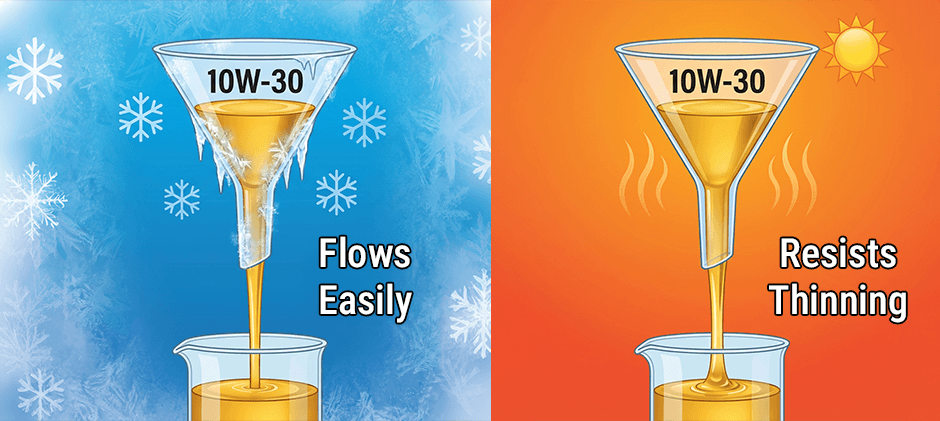
The difference lies in how each oil behaves at different temperatures.
Both are the same thickness (30‑weight) once the engine is hot, but 10W‑30 flows better when the engine is cold.
That’s why it’s more flexible for all‑season use, while SAE 30 is built for steady warmth.
How SAE 30 Works
SAE 30 is a single‑grade oil, which means it doesn’t change much with temperature.
When cold, it becomes thick and slow to flow — this can make cold starts harder.
But once the engine warms up, it stays consistent and protective.
This makes SAE 30 ideal for hot climates or older engines that always run at higher temperatures.
Think of SAE 30 as a summer‑season oil that performs best in steady, warm conditions.
How 10W‑30 Works
10W‑30 is a multi‑grade oil that changes with temperature.
The “10W” stands for Winter, meaning it flows easily like a light 10‑weight oil when cold.
Once warm, it resists thinning to protect your engine like a 30-weight oil.
You can think of 10W‑30 as an all‑season oil — easy to start in winter, and strong under heavy work in summer.
When Should You Use SAE 30 Oil?
SAE 30 is the right choice in a few specific cases:
- Warm‑Weather Use: Works best when temperatures stay above 40°F (4°C).
- Hot‑Running Air‑Cooled Engines: Great for small engines like mowers and generators that run very hot.
- Older Engines: Some older equipment is designed for thicker oil to maintain good oil pressure.
When Is 10W‑30 the Better Choice?
Use 10W‑30 if your machine needs to start easily in cold conditions and handle heat during long jobs.
- Year‑Round Operation: Performs well in both cold winters and hot summers.
- Cold‑Start Protection: Flows quickly at startup, reducing engine wear.
- Modern Engines: Works best in liquid‑cooled engines in newer tractors or equipment.
Why Do Some Engines Burn 10W‑30 Oil Faster?
If your air‑cooled engine burns through 10W‑30 quickly, it’s because of high heat.
10W‑30 contains additives called viscosity improvers that help it adapt to temperature changes.
Under very high heat, these can break down, making the oil thinner and easier to burn.
SAE 30 doesn’t have these additives, so it stays thick and stable in hotter engines.
Can You Mix SAE 30 and 10W‑30?
Avoid mixing them.
In an emergency, topping off once is okay, but mixing regularly changes how the oil behaves.
You’ll lose the cold‑start benefit of 10W‑30 and the high‑heat strength of SAE 30.
For best results, drain old oil completely before switching to a different type.
Is It Worth Upgrading to a Full Synthetic Oil?
Yes, a full‑synthetic 10W‑30 offers stronger performance and protection.
Synthetic oil resists heat better, flows easily in the cold, and lasts longer between changes.
It’s a good choice if you work in extreme conditions or rely on your machine every day.
Summary
Both SAE 30 and 10W‑30 have their place.
- Use SAE 30 for warm climates and older, air‑cooled engines.
- Choose 10W‑30 for all‑weather reliability and easier cold starts.
The most important rule — always follow your machine’s manual and change oil regularly for lasting performance. When it’s time for an oil change, ensuring you have all the right components is key. Find reliable engine filters, drain plugs, and other engine maintenance parts at FridayParts to keep your off-road machinery in peak condition.
