

Water in your hydraulic oil can affect performance and damage equipment. Dealing with water-contaminated hydraulic oil is a real headache, so you need effective ways to fix it. In this guide, we’ll show you how to remove water from hydraulic oil and share some simple tips to help prevent it from happening again.
Symptoms of Water Contamination
Water contamination may not be immediately apparent, but if you pay attention, the machine will actually give a clear signal. When too much water gets into the hydraulic fluid, some typical problems can occur.
Loss of Power and Slow Response
You may feel that the machine becomes less flexible, with slow movements, card issuance, and especially when it is first started. This is because water affects the performance of hydraulic oil, making it unable to transmit power and lubrication properly, and the equipment naturally becomes unsmooth.
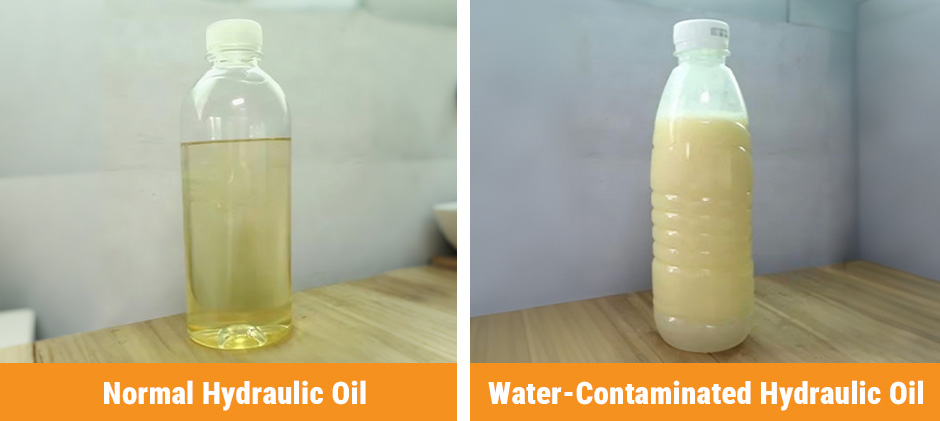
The Oil Becomes Milky and Turns White
If the hydraulic fluid looks white, muddy, or even like “cream”, it means that the water and oil have mixed together. In severe cases, there are also bubbles in the oil that look like “chocolate milk”. This usually means that there is already quite a bit of water in the system.
Why Water in Hydraulic Oil is a Serious Problem?
Water doesn’t just mix with oil — it can also damage the hydraulic fluid and system components over time.
Freezing Risk
If the equipment is used or parked in cold conditions, the water in the system is dangerous. When the temperature drops, water will freeze in pipes, valves or cylinders, or even block oil passages. In this way, the hydraulic system may not work directly. More seriously, it is possible that the sudden increase in pressure can cause the oil pipe to burst and even damage important components such as the cylinder piston rod.
Rust and Internal Wear
Water and metal come into contact and can easily cause rust. Once water enters the system, the pump, valves, hydraulic motor, and the interior of the tank will slowly corrode. Fine particles from rust circulate through the system with hydraulic fluid, just like “fine sandpaper”, constantly wearing out precision parts and causing premature damage to the equipment over time.
Oil Deterioration and Reduced Protection
There are actually many additives in hydraulic oil, which are used to prevent wear, rust, foaming, etc. But water accelerates oil deterioration, allowing these additives to be consumed and also producing sludge and acid. Once it becomes like this, even if the water is removed, the oil will no longer protect the equipment.
How to Remove Water From Hydraulic Oil?
The method you choose depends on how much water is in the oil and what tools you have. Generally speaking, water has three states in hydraulic fluid. Free water: Water that sinks to the bottom. Emulsified water: Mix with oil to make it look gray and milky. Dissolved water: has been “absorbed” by oil and is not visible to the naked eye. Here are a few common water removal methods, ranging from simple to more specialized:
Let It settle (simplest)
This is the most basic method and is suitable for treating free water. Let the machine sit for a while (a few hours or a night) and the water will slowly sink to the bottom of the tank. Then open the bottom oil drain and drain the water out until you see clean oil. This method is a quick answer, but it can only remove free water and is useless for emulsified water and dissolved water.
Centrifugal Separation
It can be understood as a faster version of settling. Put the oil into the centrifuge and spin it at high speed, using centrifugal force to quickly separate the water and oil. The effect is much better than natural sedimentation, and it can also remove some emulsified water.
Water-Absorbing Filter
This type of filter has special materials inside that can “absorb water”. As the oil passes through the filter element, water is sucked in and locked away. This method is suitable for handling small amounts of moisture and is also suitable for daily preventive use. But if there is a lot of water, it will quickly become saturated and is not suitable for dealing with serious water contamination.
Vacuum Dehydration (best results)
This is currently the most effective method and can remove three types of water (free water, emulsified water, and dissolved water).
The principle is to heat the oil slightly and then treat it in a vacuum environment, allowing the water to evaporate at a lower temperature before being pumped away. This will remove water without damaging the oil. This method works best and removes water most thoroughly. However, the equipment is expensive and is generally used for professional or large equipment.
Some equipment users also make their own simple devices (such as vacuum tanks + vacuum pumps) to achieve similar effects.
Clean the Oil or Replace It?
Hydraulic oil isn’t cheap. One oil change can cost hundreds or even thousands of dollars. So many equipment owners ask: Should I clean the old oil and keep using it, or just replace it?
The Case for Cleaning the Oil: It comes down to one thing: saving money. For large machines like excavators and bulldozers, oil changes are expensive. If you have the right tools—like a simple vacuum dehydration setup—you can remove the water and reuse the oil. That can save a lot of money.
This is especially appealing if you run older machines or used equipment.
The Case for Replacing the Oil: The key issue is the oil itself. As we mentioned earlier, water damages the additives in hydraulic oil. And the process of removing water—especially overheating—can make it even worse. These additives are important. They prevent wear, rust, and foaming.
Even if the oil looks clean after treatment, it may no longer protect your machine properly. The only way to be 100% sure is to drain the old oil and fill it with new, clean oil.
Our Recommendation
- For smaller equipment, just replace the oil. It’s the safest choice.
- For large systems with very high oil costs, cleaning the oil can be an option. But be aware, there is still some risk that the oil may not perform as it should.
How to Prevent Water From Entering Hydraulic Systems?
After removing water from your hydraulic oil, the last thing you want is for it to come back. The best fix is always prevention. Here are some simple ways to keep your system dry:
- Check seals regularly: Worn or damaged seals are a common way water gets in. Check cylinder rod seals, tank covers, and filler caps often. Replace them as soon as you see wear.
- Use a desiccant breather: A standard breather lets air in—and moisture too. A desiccant breather removes moisture from the air before it enters the tank. It’s a simple and affordable upgrade.
- Store oil drums the right way: Don’t leave oil drums standing upright outside. Water can collect on top and get pulled inside as temperatures change. Store them on their side or keep them indoors.
- Keep things clean: Before opening the tank to add oil, clean around the fill cap. This helps keep water, dirt, and other contaminants out.
Final Thoughts
Follow this guide, and you’ll not only fix water contamination but also improve the life and performance of your hydraulic system. Whether you choose to clean the oil, replace the filter, or look for high-quality aftermarket parts at a fair price, we’ve got you covered. We offer a wide range of hydraulic parts and seals for many types of equipment.
For more tips and solutions, visit the FridayParts blog.
