

A working transmission solenoid is super important for smooth shifting. If your machine suddenly won’t shift gears, or jerks hard when you put it in gear, the transmission solenoid is likely bad. In this easy guide, we’ll go over the most common transmission solenoid symptoms, what causes the issue, and how to diagnose it step by step.
What Is a Transmission Solenoid?
A transmission solenoid is basically a little valve that controls transmission fluid inside the gearbox. It lets your heavy equipment shift gears nice and smoothly.
Most modern heavy machines with powershift or automatic transmissions run on multiple solenoids working as a team. The equipment’s TCM or ECU sends signals to the right solenoids based on engine speed, workload, and how you operate the machine.
When a solenoid gets that signal, it opens or closes the fluid path. So the machine can shift up, shift down, or switch travel direction. But once a solenoid starts going bad, it messes up the hydraulic flow. The machine may rough shifting, delayed gear engagement, transmission slipping, or even the machine not move at all.
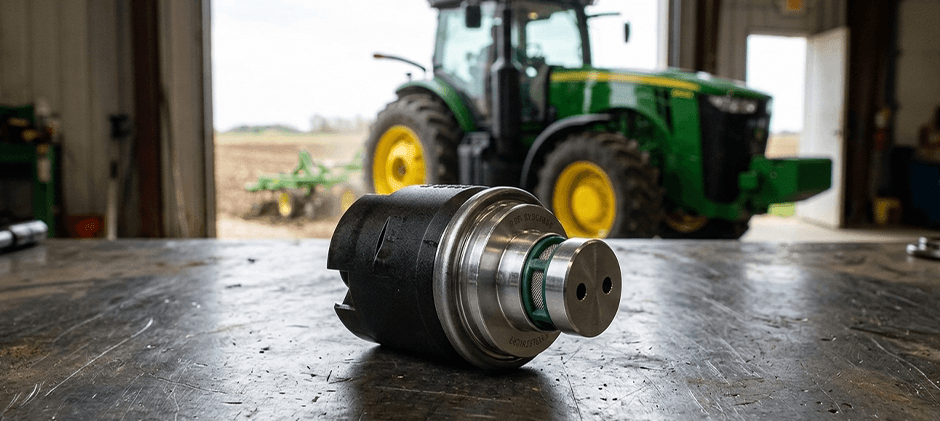
Common Signs of a Failing Transmission Solenoid
Common Signs of a Bad Transmission Solenoid
A faulty transmission solenoid almost never fails without warning. It always shows clear signs something’s wrong.
Delayed or Jerky Shifting
After you shift gears, there’s a long delay before the transmission. actually engages. When it finally kicks in, you’ll feel a hard jolt or hear a loud clicking noise. This issue is much worse under heavy load. This is because the solenoid can’t control hydraulic pressure properly and on time.
Stuck in One Gear (Limp Mode)
If the TCM detects a serious solenoid problem, it will put the machine into limp mode to protect the transmission. The gearbox locks into one fixed gear, usually 2nd or 3rd, to avoid more damage.
Unpredictable Shifting
A failing solenoid works erratically. It may make the machine upshift or downshift at the wrong time, or even skip gears completely.
Transmission or Check Engine Light Comes On
All modern heavy equipment has an onboard diagnostic system. When the TCM notices the solenoid’s voltage or resistance is out of normal range, it stores a trouble code and turns on the warning light on the dashboard.
Engine Revs High But Machine Won’t Move
You hit the throttle, the engine revs up fast, but the machine moves very slowly or doesn’t move at all. This is transmission slipping.
The bad solenoid can’t send enough hydraulic pressure to the clutch packs. It’s like staying in neutral, and engine power can’t transfer to the wheels or tracks.
What Causes Transmission Solenoid Failure?
Transmission solenoids sit deep inside the gearbox in really harsh working conditions. Add the tough job sites heavy equipment works in, and they’re bound to fail over time. Here are the main reasons:
Dirty or Degraded Hydraulic Fluid
Dirt, water, and tiny metal shavings mix into the oil and circulate through the system. These contaminants clog the small inner passages of the solenoid and jam the valve stuck. Over time, high heat also burns out the hydraulic fluid, speeding up wear on all internal parts.
Electrical and Wiring Faults
Solenoids are electric-hydraulic parts that need steady electrical signals. Worn wires and loose plugs cause bad connections, so the solenoid can’t work properly.
Transmission Overheating
The gearbox builds up a lot of heat during operation. Extreme heat melts down the insulation on the solenoid’s internal coil and can cause a short circuit. It also hardens the rubber seals inside, leading to oil leaks. This drops system pressure and makes shifting erratic.
Natural Wear and Aging
Solenoids have moving parts like valves and springs. They wear out little by little and lose spring tension over time. It’s only a matter of time before they fail on older, high-hour machines.
How to Diagnose a Faulty Solenoid?
1. Pull Diagnostic Trouble Codes (DTCs)
Plug in a diagnostic scanner that fits your equipment brand. The TCM saves fault codes that tell you exactly where the problem is. You may get a code like “Shift Solenoid A Circuit Low,” which instantly points to the faulty solenoid and gives you a clear starting point.
2. Check the Transmission Fluid
Take a small sample of the hydraulic oil and give it a quick check.
- Color & smell: Good fluid stays its normal red or amber color, with just a plain oily smell. If it’s dark brown or black and smells burnt, the transmission has overheated and the fluid has gone bad.
- Contamination: Rub a little fluid between your fingers. If it feels gritty, there are tiny metal particles from worn parts. If it looks milky, water has gotten inside the system. Dirty fluid alone is enough to cause solenoid problems.
3. Do Basic Electrical Tests
If you suspect a certain solenoid, use a multimeter to run a few simple checks. First, unplug the solenoid wiring connector.
- Test resistance: Measure the ohms across the two pins on the solenoid. Check your service manual for the correct range. If the reading shows infinite or zero ohms, the internal coil is broken.
- Test power: Turn the key on, then check for voltage at the harness connector. If there’s no power coming through, the issue is bad wiring or a faulty TCM — not the solenoid.
4. Mechanical Inspection
If the fluid is clean and the solenoid tests fine electrically, the issue is mechanical. Access the valve body where the solenoids are installed. Check for dirt and debris stuck inside the valve body, and solenoids and their housings for any visible damage.
Repair and Replacement for Solenoid Issues
Once you know the reasons, the fix depends on how bad the damage is.
- If the transmission fluid is dirty or worn out, change the fluid and filter. But if the fluid is heavily contaminated, the solenoid could already be damaged inside. In that case, just replacing the fluid won’t fix it.
- Confirm the solenoid itself is bad — whether it’s an electrical fault or a stuck valve — repairing it usually isn’t worth it. Replacing it directly is necessary.
- For older equipment, it is better to replace the whole set of solenoids. All of them work under the same conditions and have the same service time. When one fails, the others are usually worn out, even if no symptoms show yet.
From real repair experience, replacing the whole pack costs a bit more. But it cuts down on repeated breakdowns and downtime, saving you trouble in the long run.
Final Thought
Even though transmission solenoids are small parts, they play a huge role in how your machine performs. If you’re dealing with rough shifting or warning lights on the dash, a bad solenoid is very likely the cause. Catch the issue early and keep up with regular maintenance, and you can avoid costly full transmission breakdowns. Shop durable, perfect-fit transmission solenoids at FridayParts, with fast shipping ready for you.
