

A failing muffler on off-road machinery is not just “more noise.” It can signal exhaust leaks, unsafe fumes near the operator area, lost power from incorrect backpressure, and faster wear on nearby components from heat and vibration. This guide helps you spot the most common warning signs early, understand what causes mufflers to fail on job sites and farms, and decide when inspection is enough—and when replacement is the safer, cheaper call.
What Does a Muffler Do?
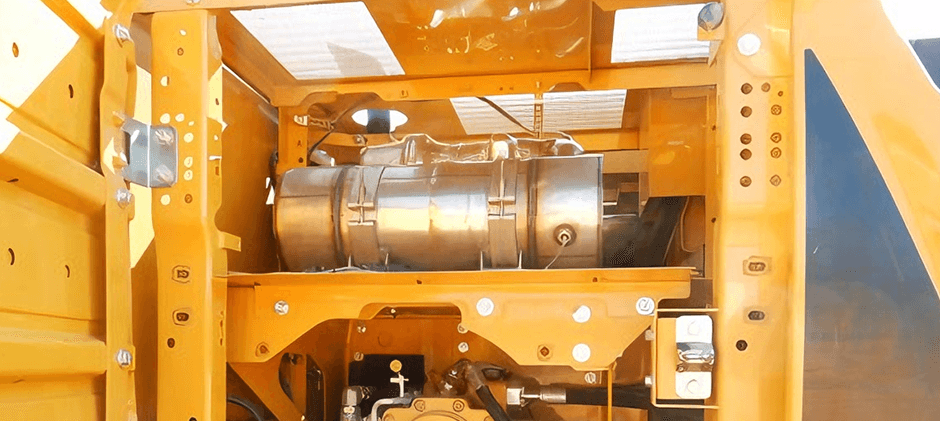
On many off-road machines (excavators, skid steers, loaders, tractors, compact utility machines), the muffler is part of the exhaust system that manages noise, exhaust flow, and pressure balance (often called backpressure). It does this through internal chambers or baffles that reduce sound energy while still letting exhaust gases exit efficiently.
A healthy muffler supports three goals:
- Noise control: Helps keep the machine within acceptable sound levels for the site and reduces operator fatigue over long shifts.
- Stable exhaust flow: Prevents restrictions or leaks that can hurt throttle response and fuel use.
- Safer exhaust routing: Keeps hot gases and fumes moving away from sensitive areas
- Areas (operator zone, hoses, wiring, plastics, fuel lines).
Important note for heavy equipment owners: Many off-road machines use diesel engines; diesel systems may not rely on “tuned backpressure” the same way some gasoline engines do, but exhaust leaks and restrictions still matter for performance, heat management, and reliability. A cracked muffler can also change how heat and fumes move around the machine—often the real problem on dusty, enclosed, or low-speed work sites.
What Causes a Muffler to Fail?
Off-road machines live a different life from road vehicles. They see more vibration, more debris impacts, and more “heat soak” from steady load work. The most common failure drivers include:
1) Corrosion
- External corrosion: Mud, fertilizer, moisture, and chemical washdowns attack the shell and welds.
- Internal corrosion: Exhaust creates moisture during heat/cool cycles. If the machine runs short cycles, moisture may not fully evaporate, speeding internal rust.
2) Vibration and fatigue cracking
Job sites punish exhaust parts:
- Continuous vibration loosens mounts and stresses weld seams.
- Cracks often start near brackets, inlet/outlet joints, and seams.
3) Impacts and rubbing
Stumps, rocks, debris, and accidental contact during service can dent or tear the muffler. Even a dent can:
- Restrict flow
- Break internal baffles
- Stress welds until a crack forms
4) Excess heat
If exhaust flow is restricted (collapsed pipe, plugged spark arrestor screen, damaged baffles), temperatures rise and metal weakens. Nearby hoses and wiring also suffer.
5) Poor fitment or installation problems
- Misaligned clamps and stressed joints lead to early leaks.
- Missing isolators or worn rubber mounts let the muffler “hammer” the frame.
6) Normal wear
Mufflers are consumables. In off-road duty, service life can be shorter because conditions are harsher and repairs are often delayed until a failure becomes obvious.
Once you know why mufflers fail, the next step is learning the signs that show up before the muffler falls apart—or before exhaust heat damages something else.
8 Signs of a Bad Muffler
1) The machine suddenly gets much louder
What you notice: A sharp increase in exhaust noise, deep rumble, or “open pipe” sound—often worst when pushing into a pile, climbing, or digging.
Why it happens: Holes, cracks, blown-out seams, or failed welds let exhaust escape before it’s silenced.
What to check:
- Look for soot trails around seams and joints.
- Listen for a “chuffing” sound near the muffler or pipe connections.
Best next step: If the sound jumped quickly, treat it like a leak until proven otherwise—inspect immediately.
2) Rattling or metallic buzzing from the muffler area
What you notice: Rattle at idle, buzzing at certain RPM, or a clunk when the engine shakes.
Why does it happen:
- Internal baffles or tubes break loose and bounce around.
- External heat shields or brackets loosen.
- Mounts fail, letting the muffler hit guards or the frame.
Why it matters: A loose muffler can crack the pipe, damage mounts, or fall into a hazardous position near moving parts.
Best next step: Check hangers/isolators and mounting hardware first; if the rattle is internal, replacement is usually the practical fix.
3) Visible rust, pinholes, or cracked welds
What you see: Flaking metal, rust-through, holes, or seam splits—often on the bottom side where moisture sits.
Why it happens: Corrosion + heat cycling + vibration.
Field tip: Even a small hole can act like a “pressure jet,” cutting nearby components with hot exhaust flow.
Best next step: If rust is structural (thin metal, holes), replacement is safer than patching.
4) Exhaust smell where you shouldn’t smell it
What you notice: Exhaust odor near the cab/operator zone, under the side panels, or when standing beside the machine during warm-up.
Why it happens: Leaks upstream of the outlet change where fumes travel. On compact machines, airflow patterns can pull fumes toward the operator area.
Why it matters: Exhaust exposure is a safety issue. Also, leaks can heat plastics, wiring, and hydraulic hoses.
Best next step: Do not ignore this. Inspect the muffler and the full exhaust routing (joints, flex sections, gaskets). Fix promptly.
5) Soot marks or black staining around joints, clamps, or the muffler body
What you see: Dry black soot lines, streaks, or “spray patterns” on the muffler, heat shield, or adjacent panels.
Why it happens: Exhaust gas carries carbon particles; leaks leave a visible trail.
Why it matters: Soot is often the easiest proof of a leak—before noise becomes extreme.
Best next step: Tighten/realign clamps if applicable; if soot comes from a seam or rusted area, plan replacement.
6) Loss of power, sluggish response, or higher fuel use
What you notice: The machine feels “flat,” struggles under the same load, or uses more fuel for the same work.
Why does it happen:
- Restriction: Collapsed internals, crushed pipe, plugged spark arrestor, or severe denting increases exhaust restriction.
- Leak + sensor effects: On some engines/systems, exhaust leaks can affect readings or tuning behavior.
How to confirm: If the muffler is very hot, discolored, or you hear a “whoosh” through a restricted outlet, suspect restriction. Compare to a known-good machine if you run a fleet.
Best next step: Check for physical blockage and internal collapse; replace if a restriction is found.
7) Excess heat around the muffler area
What you see or smell: Paint discoloration, scorched covers, brittle wiring loom, heat-cracked plastics, or melted shielding.
Why it happens: Leaks aim hot gas where it shouldn’t go, or restrictions raise exhaust temps.
Why it matters: Heat damage can turn a muffler problem into a wiring, hose, or fire-risk problem.
Best next step: Inspect immediately. If heat damage exists, replace the muffler and correct root causes.
8) Loose, sagging, or misaligned exhaust components
What you notice: Muffler sits lower than normal, exhaust outlet points the wrong way, frequent clamp loosening, or visible movement when the engine shakes.
Why it happens: Broken mounts, failed isolators, cracked brackets, or fatigue at pipe joints.
Why it matters: Misalignment increases stress and creates a loop: loosen → leak → hotter metal → more cracking.
Best next step: Replace worn mounts/isolators and correct alignment. If the muffler brackets are cracked or the shell is weakened, replacement is usually the durable fix.
When to Replace vs. Repair?
Repair can make sense when:
- The issue is a loose clamp, minor gasket leak, or mount hardware problem
- The muffler shell is solid, and corrosion is not structural
Replacement is usually the better option when:
- There are holes, seam splits, heavy rust, or internal rattling
- The muffler is restricted
- Heat damage has started affecting nearby components
Mid-to-late maintenance note: a muffler job often reveals other overdue items—gaskets, clamps, brackets, heat shields, and related components. If you’re planning downtime efficiently, it can help to bundle exhaust work with other engine parts service items.
Choosing a Replacement Muffler
A good replacement muffler should match:
- Machine model fitment and exhaust routing
- Mounting points and bracket geometry
- Required features (for example, spark arrestor style mufflers on certain work sites)
- Material quality and corrosion resistance
If you’re sourcing parts, a direct-fit aftermarket catalog reduces guesswork. For heavy equipment applications, you can shop compatible options here: muffler. For broader repairs beyond the exhaust, this engine catalog is useful for planning one-stop maintenance: engine parts.
Conclusion
A bad muffler shows up as louder operation, rattles, soot marks, exhaust smells, heat damage, and sometimes power loss from restriction. On off-road machinery, these signs matter because leaks and excess heat can quickly damage nearby components and create safety risks. If structural rust, cracks, or internal failure are present, replacement is usually the reliable fix. FridayParts supports downtime planning with affordable, high-quality aftermarket parts, wide compatibility, and a large inventory for many heavy equipment brands.
