

The function of the starter solenoid is to send the current from the battery to the starter motor, allowing heavy equipment to start smoothly. It is a very important component in the starting system and can adapt to high current and a relatively harsh working environment. Generally speaking, it is rare for a starter solenoid to fail suddenly and completely. Before problems arise, there are often some obvious signs that can be detected in advance and inspected or replaced.
How Starter Solenoids Work?
The starter solenoid connects the ignition switch to the starter motor. When you turn the key, the ignition switch sends a small electrical signal to the solenoid. The solenoid then switches on and sends battery power directly to the starter motor. At the same time, the solenoid pushes the starter gear forward so it can engage with the engine flywheel. Once the gear is engaged, the starter motor turns and cranks the engine. When you release the key, the solenoid switches off, the gear moves back, and the power to the starter motor is cut. Because the starter solenoid controls both the electrical power and the gear movement, a failure can stop the engine from starting.
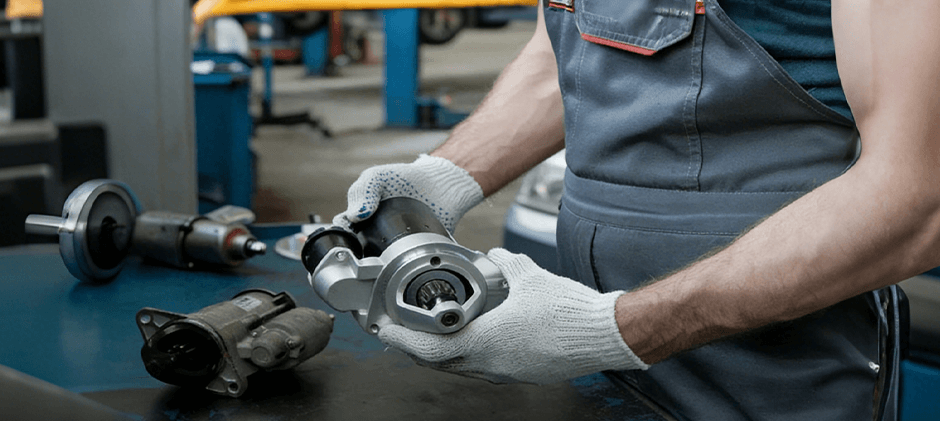
Signs of a Bad Starter Solenoid
A starter solenoid rarely dies out of the blue. Your equipment will usually give you hints that something’s off. Catching these signs early can save you from getting stuck with a dead machine.
The Engine Won’t Crank at All
You turn the key. Dashboard lights come on. The fuel pump hums. But the engine does nothing. No cranking. No starter noise. Just silence. You know the battery is good and fully charged; this silence almost always means a dead starter solenoid. Or bad wires hooked up to it. Either the solenoid isn’t getting the signal from the ignition switch. Or it gets the signal but is broken inside and can’t send power to the starter motor.
A Single, Loud “Click” When You Try to Start
You turn the key. The engine won’t start. You only hear a click under the hood. That click means the starter solenoid is trying to work. But the starter motor doesn’t spin at all. Usually, the contacts inside the solenoid are worn or rusted. They can’t pass the electric current through. The solenoid still moves and makes noise. But the circuit isn’t closed. So the starter motor doesn’t get enough power. The engine won’t start. Sometimes this click happens if the starter motor itself is stuck—but the solenoid is always the first thing to check.
The Starter Motor Whirs, But the Engine Doesn’t Turn
You hear a high-pitched whir. But the engine doesn’t crank at all. This means one part of the solenoid works. The other doesn’t. The electrical part is fine. It sends power to the starter motor. The motor spins. But the mechanical part fails. The plunger doesn’t push the starter gear forward. It can’t lock onto the engine’s flywheel. The starter spins. But it’s useless. It’s not connected to the engine.
Intermittent Starting Problems
This is the most annoying symptom. One minute your machine starts perfectly— the next, it won’t crank at all. You might try the key five or six times, then suddenly it starts like nothing was wrong. This on-again, off-again behavior is a dead giveaway that the solenoid is dying. The copper contacts inside are worn or pitted—sometimes they connect well enough to start the engine, sometimes they don’t. This is a clear warning: the solenoid will die completely soon.
Slow Engine Cranking
Slow cranking usually means a weak battery or bad cables—but sometimes it’s a faulty solenoid. Over time, the burned, worn contacts inside create electrical resistance. That resistance blocks the full current from reaching the starter motor. The starter gets some power, but not enough to crank the engine at normal speed. If you’ve checked and confirmed the battery and cables are in great shape, the solenoid is the main suspect for that sluggish crank.
Common Causes of a Broken Starter Solenoid
Starter solenoids on heavy equipment work in tough conditions. A few things can make them fail over time.
Heat and Vibration
Engines in off-road machines get super hot when running for hours. This nonstop heating and cooling breaks down the solenoid’s internal wires and insulation. To make it worse, construction and farm work mean constant, rough shaking. The shaking loosens internal connections, cracks the solenoid case, and wears out electrical parts—until the solenoid stops working.
Electrical Issues
Electrical problems are one of the top causes of failure. A weak battery or broken alternator makes the solenoid run on low voltage. This makes the internal contacts connect poorly, creating tiny sparks that burn and damage the contact surfaces. Then the solenoid has trouble passing power and finally fails. Loose or rusty battery cables and ground straps cause the same problem.
Environmental Contamination
Heavy machines work in dusty, muddy, wet places. This gunk and moisture get into the starter and solenoid. Dust and dirt can jam moving parts like the plunger. Moisture causes rust on both the outside terminals and inside parts, blocking the flow of electricity.
Simple Wear and Tear
A starter solenoid is a moving part—it works hard every time you start the engine. The internal contacts handle huge amounts of current. The plunger moves back and forth with each start. After thousands of uses, these parts just wear out. Contacts erode, springs get weak, and the whole mechanism quits working.
How to Diagnose a Bad Starter Solenoid?
Think your starter solenoid is bad? Follow these simple checks to be sure.
- Safety First: Always put the machine in neutral. Engage the parking brake. Disconnect the battery’s negative terminal before touching or replacing any starter parts.
- Start with the Basics: Don’t blame the solenoid right away. First, make sure your battery is fully charged.(12.6V for 12V systems, 25.2V for 24V systems.) Check the battery terminals. They need to be clean and tight. A weak battery is the top cause of starting problems. Also, check the main ground strap. It runs from the battery to the machine frame. Make sure it’s tight and not rusted.
- Listen Carefully: The sound your machine makes (or doesn’t make) is your best first clue. One single click? That’s probably the solenoid. Rapid clicking? Likely a weak battery. No sound at all? It could be the solenoid, ignition switch, or neutral safety switch.
- Do a Visual Check: Get a good look at the starter and solenoid. Watch for obvious problems. Loose or rusted wires on the solenoid terminals; A cracked solenoid case; Signs of burning or melting.
Test with a Multimeter (For experienced users only)
- Test the Signal Wire: Reconnect the battery. Find the small wire hooked to the solenoid’s S (Start/Signal) terminal. Have a helper turn the ignition key to the “start” position. Touch the multimeter’s positive lead to the S terminal post, and the negative lead to a good metal ground. You should see full battery voltage (12V or 24V). If not, the problem is in the ignition switch or the wiring before the solenoid.
- Test for Voltage Drop: Hook the multimeter’s positive lead to the big solenoid terminal (where the battery cable connects). Hook the negative lead to the other big terminal (the one going to the starter motor). Have a helper try to crank the engine. A good solenoid will show less than 0.5 volts. A much higher reading means the solenoid has too much internal resistance — it’s bad and needs to be replaced.
See the Starter Solenoid Wiring Diagram here.
Preventive Maintenance Tips
You can’t make a starter solenoid last forever. But simple care can make it last longer. It also keeps your machine from breaking down unexpectedly.
- Regular Inspections: Check the starter and solenoid when you do routine maintenance. Make sure all wires are tight. Make sure connections are free of rust.
- Maintain Battery Health: A fully charged, healthy battery is great for the solenoid. Clean battery terminals often. Make sure the machine’s charging system works right. This stops extra stress on the starting parts.
- Keep Components Clean: Wash your equipment regularly. Don’t blast high-pressure water right at sensitive electrical parts. Keep the starter area free of thick mud, grease and dirt. This helps it cool off better.
Replace a Bad Starter Solenoid
The starter motor and starter solenoid are usually serviced or replaced as a single unit. They’re rarely fixed separately. And this job should be done by a trained technician. Costs vary by equipment type, brand and labor hours. Replacement usually runs from $800 to $2,000. It can cost more for large machines or if you use OEM parts. You can cut repair costs a lot by choosing the right aftermarket parts. FridayParts offers reliable, budget-friendly starters and related components. They’re fully compatible. You get great performance while keeping overall repair costs low.
